
TL;DR

Get home appliances delivered free — and shop member deals
- Fast, free delivery on millions of items
- Access to Prime Big Deal Days deals on October 6–7
- Prime Video, Amazon Music and more included
A House Beautiful report featuring professional organizers challenges two familiar decluttering rules: removing one item for every new purchase and discarding clothes not worn in a year. The organizers say regular reviews, available storage space and whether items suit a person’s life are more useful guides than automatic deadlines.
Professional organizers interviewed by House Beautiful say people do not need to follow two widely repeated decluttering rules: getting rid of one item every time they buy something new, and discarding clothes they have not worn in a year. The advice is that regular reviews and practical decisions can work better than fixed quotas or deadlines, though organizers say the rules may still suit people who find them helpful.
The first rule, often called “one in, one out,” treats each new purchase as a reason to remove another possession. Kenika Williams, founder of Tidied by K., said in the report that not every purchase needs to trigger a purge. Jayna Lattimore, founder of Ordered Professional Organizing, said decluttering can instead happen as a regular rhythm, with householders removing items they no longer use during periodic sweeps.
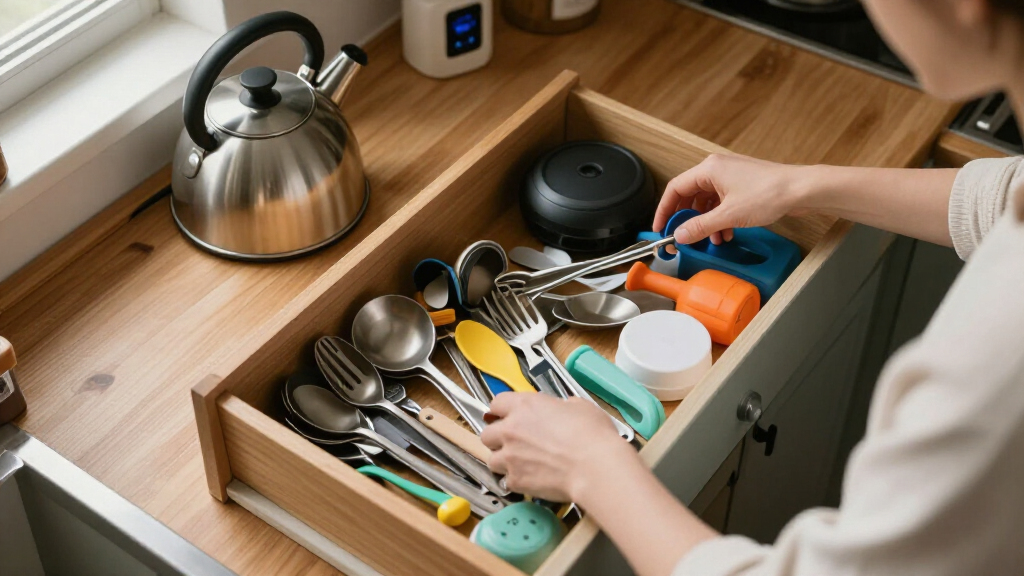
Williams said new purchases should have a functional place to go, rather than adding to items that have no designated home. Lattimore said an organized space should leave some room for future needs; when every drawer, shelf or closet is full, the system can become harder to maintain as new items arrive.
The second rule sets a one-year limit for unworn clothing. Millie Naor, founder of Bella Organizers, said some rarely worn pieces may still be worth keeping, provided people limit them and know why they matter. Beth Ruck, founder of Conquering Clutter, said a time limit alone is not the best test. She recommends weighing whether a garment works with other clothes and suits the owner’s current lifestyle.
A More Flexible Way to Manage Clutter
The advice matters to readers because rigid rules can turn routine organizing into a series of forced decisions, even when a household has room for a new item or a rarely worn garment remains useful or meaningful. The organizers’ alternative is not to ignore clutter, but to judge possessions by whether they have a place and serve a purpose in the home.
That approach also shifts attention from a single purchase or calendar date to ongoing maintenance. Periodic reviews can help people notice what they no longer use, while leaving room for objects they genuinely value. The report does not establish that one method works for everyone; it presents organizers’ professional views and allows that people may keep a rule if it works for them.
storage bins for closet organization
As an affiliate, we earn on qualifying purchases.
As an affiliate, we earn on qualifying purchases.
Why Organizers Question Fixed Rules
The two guidelines are familiar shortcuts: one aims to prevent possessions from accumulating as new ones come in, while the other gives people a clear deadline for deciding about clothes. In the House Beautiful report, organizers questioned whether those shortcuts account for differences in space, routines and personal needs.
For purchases, their focus is on whether an item has a suitable home and whether storage systems have some capacity left. For clothing, they point to practical compatibility and lifestyle rather than time since last wear alone. These are recommendations from the organizers quoted in the article, not findings from a study comparing decluttering methods.
“I don’t think every purchase needs to trigger a purge.”
— Kenika Williams, founder of Tidied by K.
clothing review and folding organizer
As an affiliate, we earn on qualifying purchases.
As an affiliate, we earn on qualifying purchases.
No Universal Rule Replaces These
The report does not specify how often households should conduct decluttering sweeps or how much spare storage capacity is appropriate. It also does not offer research showing that the suggested approaches outperform the two rules for all households. The guidance is professional advice from organizers interviewed by House Beautiful, not a universal standard; individual needs and living arrangements may differ.
As an affiliate, we earn on qualifying purchases.
Apply the Advice to Your Home
The report sets no formal next step or timetable. Readers can use the organizers’ suggestions during their own routine reviews: check whether possessions have a usable place, and whether clothing fits their current wardrobe and life. People who find the original rules helpful can continue using them; the organizers’ point is that neither needs to be applied automatically in every case.
As an affiliate, we earn on qualifying purchases.
Key Questions
What is the one-in, one-out decluttering rule?
It is the practice of removing one possession whenever a new one comes into the home. The organizers quoted by House Beautiful say each purchase does not have to trigger an immediate purge.
Should I keep clothes I have not worn in a year?
The organizers say elapsed time alone is not a definitive test. Consider whether the garment works with other clothes, suits your current lifestyle and is worth the closet space it takes up.
What do the organizers suggest instead of strict rules?
They recommend periodic decluttering reviews, giving new items a functional place and making considered decisions about what remains in the home.
Does the report say everyone should stop using these rules?
No. Williams said people can keep using one-in, one-out if it works for them. The article presents alternatives to applying either rule rigidly.
Source: rss
Fall yard work Picks
leaf blowers
As an affiliate, we earn on qualifying purchases.