
When choosing natural stone for your kitchen, quartzite and marble are popular options that bring unique beauty and durability. Quartzite offers a resilient surface that resists scratches and stains, making it a practical choice, while marble provides timeless elegance with striking veining but requires more careful maintenance. Both stones have eco-friendly qualities if sourced responsibly. Exploring their specific benefits and care tips will help you select the best fit for your style and lifestyle.
Key Takeaways
- Quartzite offers durability and a marble-like appearance, making it a stylish yet resilient kitchen surface.
- Marble provides a timeless, luminous look with unique veining but requires more maintenance due to its porosity.
- Both stones are natural options with eco-friendly benefits when responsibly sourced, minimizing environmental impact.
- Proper sealing and gentle cleaning are essential for maintaining the beauty and longevity of both quartzite and marble.
- Understanding each stone’s characteristics helps in selecting the best natural stone for kitchen durability and aesthetic goals.
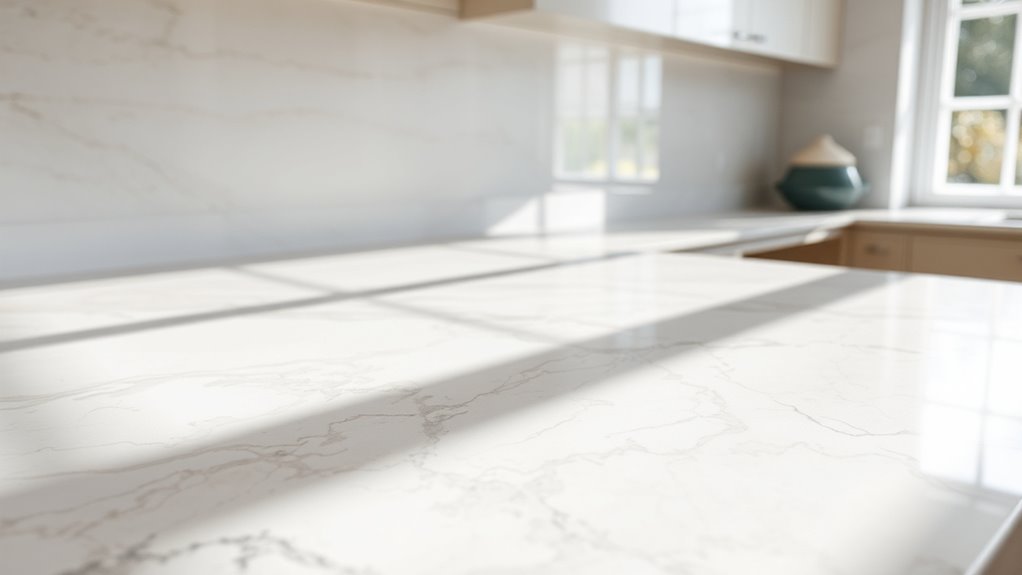
Are you considering natural stone for your kitchen? If so, you’re making a stylish and durable choice, but it’s important to understand the options and how to care for them properly. When exploring natural stones, quartzite and marble are two popular choices, each offering unique aesthetic qualities and practical benefits. Both can elevate your kitchen’s look, but they also come with specific maintenance needs and eco-friendly considerations that you should keep in mind.
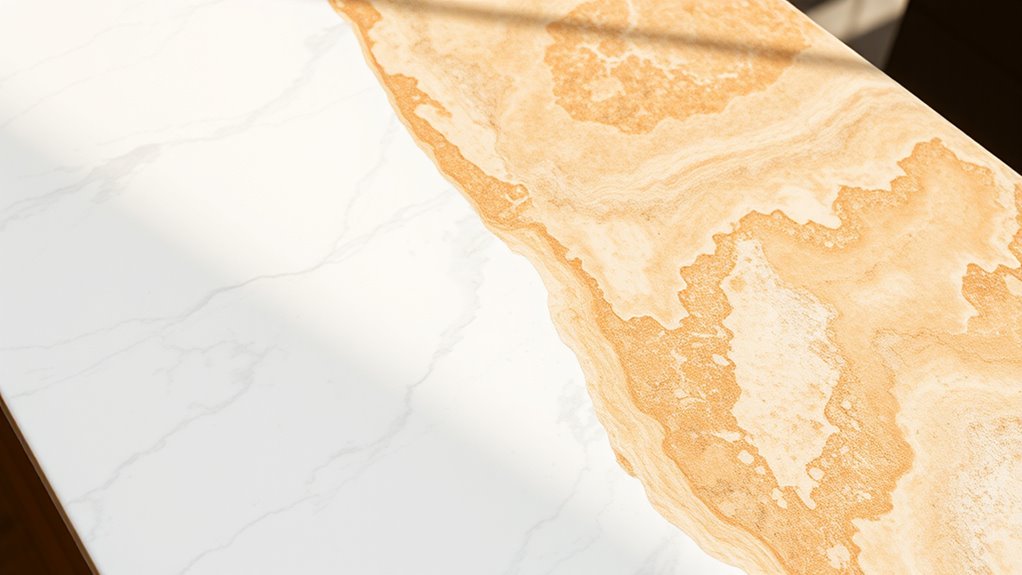
Quartzite is a stunning natural stone that combines the elegance of marble with exceptional durability. It’s formed from sandstone subjected to intense heat and pressure, transforming it into a dense, hard surface. Because of its resilience, quartzite is a sensible choice if you want a surface that can withstand daily kitchen activities without easily scratching or staining. When it comes to eco-friendly options, quartzite ranks well because it’s a natural material mined directly from the earth without the need for extensive chemical processing. However, it’s essential to choose suppliers committed to responsible quarrying practices to minimize environmental impact. To keep your quartzite looking its best, follow some simple maintenance tips: clean spills immediately, avoid acidic or abrasive cleaners, and regularly seal the surface to prevent staining. Sealing is especially important because, although quartzite is tough, its porous nature can absorb liquids if left untreated.
Marble is renowned for its timeless beauty, with striking veining and a luminous appearance that can instantly elevate any kitchen’s aesthetic. Still, marble is softer and more porous than quartzite, making it more susceptible to scratches, etching, and staining. If you love marble, be prepared to dedicate time to its maintenance; wiping up spills quickly and avoiding acidic substances like lemon juice or vinegar is crucial. For eco-conscious homeowners, marble is a natural stone that requires minimal processing, making it an environmentally friendly option in terms of raw materials. That said, sourcing marble from reputable quarries with sustainable practices can further reduce its ecological footprint. Maintenance tips for marble include using pH-neutral cleaners, applying a high-quality sealant regularly, and avoiding harsh scrubbers. These steps will help preserve its beauty and prolong the lifespan of your investment.
Frequently Asked Questions
How Does Natural Stone Affect Kitchen Resale Value?
Choosing natural stone for your kitchen can boost your resale value and home appeal. Buyers often see high-quality materials like quartzite and marble as luxurious, making your kitchen stand out. This upgrade signals durability and style, attracting more interest. When you invest in natural stone, you enhance your home’s overall charm, encouraging quicker sale and potentially higher offers, so your kitchen becomes a key selling point.
Can Natural Stone Be Used for Outdoor Kitchen Countertops?
You can definitely use natural stone like quartzite or marble for outdoor kitchen countertops, but keep in mind, not all stones are cut out for the job. Weather resistance and outdoor durability are key—quartzite is tougher against the elements, while marble may require extra sealing. Don’t put all your eggs in one basket; choose wisely to guarantee your outdoor space stays stunning and functional for years to come.
What Are the Best Maintenance Tips for Natural Stone Surfaces?
To keep your natural stone surfaces looking their best, follow regular sealing routines to prevent stains and damage. Use gentle cleaning methods, like a pH-balanced stone cleaner or warm water with mild soap, avoiding acidic or abrasive products. Wipe spills immediately, especially on marble and quartzite, and avoid harsh scrubbing. Regular maintenance preserves the beauty and durability of your countertops, ensuring they stay stunning for years to come.
Are There Eco-Friendly Options Within Natural Stone Choices?
Yes, you can choose eco-friendly materials within natural stone options. Opt for stones that are sustainably sourced, ensuring minimal environmental impact. Look for suppliers committed to sustainable sourcing practices and eco-friendly materials, which reduces your carbon footprint. By selecting responsibly mined quartzite or marble, you support environmental conservation. Prioritizing sustainable sourcing aligns your choices with eco-conscious living, benefiting both your home and the planet.
How Does Natural Stone Compare to Engineered Surfaces in Cost?
You’ll find natural stone generally costs more than engineered surfaces when considering the initial cost and installation expenses. The cost comparison shows natural stone like marble or quartzite often has higher material prices and requires skilled installation, which adds to expenses. Engineered surfaces tend to be more affordable and easier to install, making them a budget-friendly option if you’re looking to save without sacrificing style.
Conclusion
Choosing between quartzite and marble for your kitchen means weighing beauty against durability. Did you know that quartzite is 90% more resistant to scratches and stains than marble? That means your countertop stays stunning longer with quartzite, while marble offers timeless elegance. Ultimately, your choice depends on your lifestyle and style preferences. Whichever you pick, incorporating natural stone adds a touch of luxury and character to your kitchen that lasts for years.