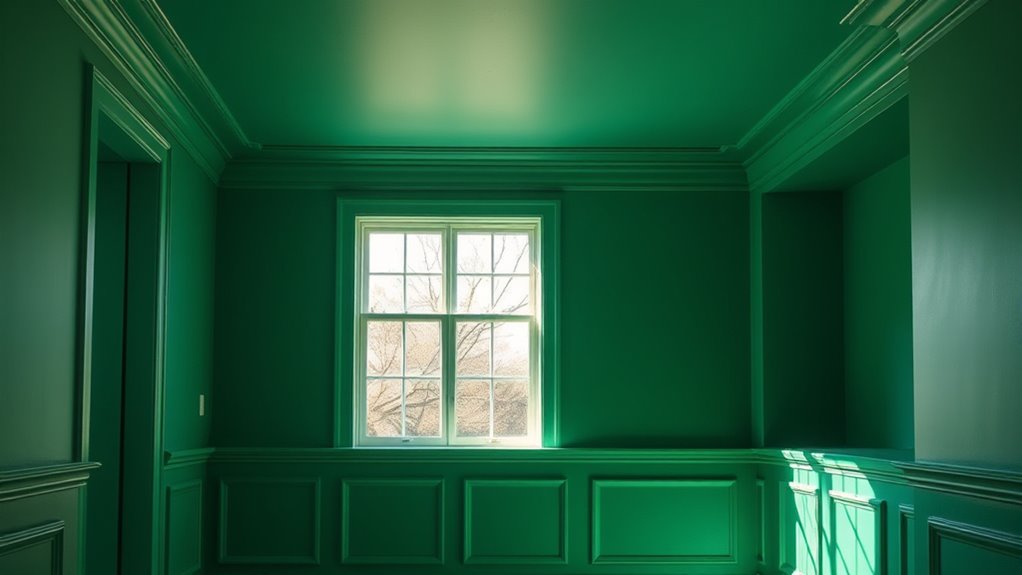

Color drenching involves painting your walls, trim, and ceiling in one consistent hue, creating a seamless, unified look that makes your space feel more open and harmonious. This technique emphasizes a monochromatic palette, which boosts visual cohesion and promotes a calming atmosphere. Historically, it’s associated with luxury and simplicity across eras. Using color psychology, the right shade can influence mood, making your room feel relaxing or energized. Keep exploring to understand how this approach can transform your interior.
Key Takeaways
- Color drenching involves painting walls, trim, and ceiling in a single hue for a seamless, unified look.
- It enhances room openness and creates a cohesive, harmonious space through monochromatic color palettes.
- This technique influences room perception, making spaces feel larger and more inviting.
- Historically, monochromatic rooms symbolize luxury and sophistication, continuing in modern minimalism.
- Choosing different hues affects mood; soft blues promote calmness, while warm neutrals create coziness.

Choosing to paint walls, trim, and ceiling in one hue can create a seamless, unified look that makes a room feel more open and cohesive. This technique, often called color drenching, is more than just a stylistic choice—it taps into the principles of color psychology and reflects evolving historical trends in interior design. When you opt for a monochromatic palette, you’re leveraging the power of color to influence mood, perception, and the overall ambiance of your space. Historically, bold, single-tone rooms have been associated with luxury and sophistication, dating back to opulent royal chambers and grand mansions of the past. These trends highlight a timeless appeal that continues to resonate today, emphasizing simplicity and harmony.
Color psychology plays a pivotal role in this approach. Different hues evoke distinct emotional responses, and by choosing a single color for all surfaces, you can amplify those effects without distraction. For example, soft blues promote calmness and serenity, making them perfect for bedrooms or relaxing lounges. Warm neutrals like beige or taupe create a cozy, inviting atmosphere, ideal for living rooms or family areas. Bright reds and yellows energize a space, encouraging activity and conversation. When you paint your walls, trim, and ceiling the same hue, you reinforce these emotional cues, creating an environment that supports your desired mood.
Historically, monochromatic color schemes have been favored in various cultural and aesthetic movements. During the Victorian era, rooms often featured rich, uniform tones to symbolize stability and grandeur. The modern minimalist movement also embraces this concept, favoring clean, unified spaces that feel uncluttered and calming. You can see how these trends influence your decision—whether you want to evoke timeless elegance or contemporary simplicity, drenching your interior in a single hue unites the space and emphasizes the design’s intent.
Top picks for "color drench paint"
Open Amazon search results for this keyword.
As an affiliate, we earn on qualifying purchases.
Frequently Asked Questions
How Do I Choose the Perfect Monochromatic Color Palette?
To select the perfect monochromatic color palette, focus on achieving harmony through subtle variations of a single hue. Start by choosing a base color you love, then pick shades and tints that complement it, creating monochromatic harmony. Consider the room’s lighting and mood you want to set, and use these factors to guide your color palette selection. This approach guarantees a cohesive, elegant look that feels balanced and intentional.
What Tools Are Best for Achieving Seamless Color Drenching?
Use high-quality brushes and precise tape application to guarantee seamless color drenching. Opt for angled brushes for edges and trim, while rollers work best for large wall areas. Apply painter’s tape carefully along edges, removing it before paint dries to prevent bleeding. For extra smoothness, use a paint sprayer for even coverage. These tools and techniques help you achieve a flawless, unified look with minimal streaks or gaps.
Can Color Drenching Make a Room Appear Larger or Smaller?
Color drenching can make a room appear larger or smaller based on your choices. Lighter, neutral shades enhance visual perception of space, creating an open, airy feel. Darker colors, on the other hand, can make a room seem smaller and more intimate. By understanding color psychology, you can select hues that manipulate the room’s perceived size, whether you want to expand or cozy up your space.
How Do I Prevent Color Bleeding Between Walls and Trim?
To prevent color bleeding between walls and trim, use an edge painter or painter’s tape for a crisp separation. Apply the tape carefully along the edges, pressing down firmly to prevent any seepage. When painting, work slowly and maintain a steady hand, ensuring the tape stays in place. Removing the tape promptly once the paint is dry helps achieve clean lines and a polished look without unwanted color mingling.
What Lighting Conditions Enhance the Effects of One Hue?
You enhance the effects of one hue by optimizing both natural light and artificial lighting. During the day, let in plenty of natural light to showcase the true richness of your color. In the evening, use warm artificial lighting to add depth and warmth. Combining these lighting conditions accentuates the hue’s nuances, making your painted space feel vibrant and cohesive. Adjust light placement to highlight specific areas for the best effect.
Conclusion
By choosing to paint your walls, trim, and ceiling in one hue, you create a seamless, modern look that can make your space feel 20% larger, according to interior design experts. This bold approach not only simplifies your decorating process but also boosts visual harmony. So, why not embrace color drenching? With a little prep and confidence, you’ll transform your room into a cohesive, stylish retreat that truly reflects your personality.