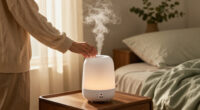
Choosing a bedroom humidifier means balancing quiet sleep against cleaning, mineral dust, and control over moisture. Evaporative models use a fan to draw air through a wet wick; ultrasonic models vibrate water into a fine mist. That design difference shapes their daily upkeep: ultrasonic units are often quieter, but hard-water minerals can settle on nearby surfaces, while evaporative units capture much of that mineral content in a replaceable filter and tend to regulate output as humidity rises. Choose an ultrasonic model if low operating noise and a visible mist matter most and you can use distilled water or clean it regularly. Choose an evaporative model if you prefer less mineral residue and a more self-limiting output, and can tolerate fan noise and wick replacement.

Get home appliances delivered free with Prime
- Fast, free delivery on millions of items
- Prime Video, Amazon Music and more included
- Member-only deals all year

DREO 3L Humidifiers for Bedroom, 30H Runtime, 26 dB Quiet, New Edition
- ✔ Tank capacity: 3 liters
- ✔ Listed runtime: Up to 30 hours in sleep mode
- ✔ Listed coverage: Up to 300 square feet

Levoit Top Fill Humidifiers for Bedroom, 2.5L Tank for Large Room, 25dB
- ✔ Tank capacity: 2.5 liters
- ✔ Listed runtime: Up to 25 hours on low
- ✔ Listed coverage: Up to 219 square feet

Clarston Humidifiers for Bedroom, 2L Cool Mist Humidifier, 24dB Quiet Sleep
- ✔ Tank capacity: 2 liters
- ✔ Listed runtime: Up to 25 hours on low
- ✔ Listed coverage: Up to 260 square feet
At a Glance
| Criteria | Evaporative humidifiers | Ultrasonic humidifiers | Winner |
|---|---|---|---|
| Sound during sleep | Fan noise is audible, though some models offer quiet or low settings | Typically very quiet, with no fan in many models | B |
| Mineral residue | Wick captures many minerals; little white dust is typically released | Minerals can disperse with the mist and settle as white dust; distilled water reduces this | A |
| Humidity behavior | Evaporation slows as room air becomes more humid | Output can continue even when the room is already humid unless a humidistat or timer limits it | A |
| Cleaning and upkeep | Clean the tank and base; replace the wick as directed | Clean the tank and mist path frequently to limit buildup and microbial growth | Depends |
| Moisture output | Fan-assisted output varies by model and room conditions | Can provide strong mist in a compact unit, but results vary by model | Depends |
| Room comfort | Often feels less like a visible mist is being blown into the room | Cool mist may feel noticeable nearby; placement matters | Depends |
| Running cost | Wick replacements add recurring cost; water costs depend on local conditions | Often avoids wick purchases, but distilled water and cleaning supplies can add cost | Depends |
DREO 3L Humidifiers for Bedroom, 30H Runtime, 26 dB Quiet, New Edition
The DREO 3L earns our top spot for a bedroom where the smaller tanks in this lineup may feel limiting. Its 3-liter reservoir is the largest here, and the listed runtime reaches 30 hours in sleep mode. That combination can reduce how often we need to refill it, though actual runtime will vary with the chosen output. DREO also lists coverage up to 300 square feet, the broadest of these three options, which makes it the most plausible fit for a spacious bedroom.What separates it from the simpler Levoit Classic 160 is its humidistat and timer. Those controls give us more ways to manage operation overnight than Levoit’s manual dial, which has no automatic humidity control. DREO’s 26 dB sleep-mode claim is close to Levoit’s 25–28 dB range, so neither should be chosen on a meaningful noise advantage alone. Adjustable lighting can be turned off, and an aroma pad tray adds flexibility; the Clarston also advertises essential-oil use, while the Levoit does not.The tradeoff is a more feature-rich unit that still needs regular attention. DREO’s listed wattage is higher than Levoit’s, and its larger coverage claim does not guarantee even humidity in every room. Its demineralization cartridge is a relevant detail for buyers concerned about mineral residue, but we should still follow the care instructions and consider water quality. Choose it when bedroom size and automatic controls are priorities; skip it if a compact, bare-bones bedside humidifier is all we need.
Pros:
- Largest tank in this comparison at 3 liters
- Listed coverage up to 300 square feet
- Humidistat and timer provide more overnight control
- Sleep mode is listed at 26 dB, with lighting that can be turned off
Cons:
- At 29 watts, listed power use is higher than the Levoit’s 17 watts
- The 30-hour runtime is specified for sleep mode; higher output can shorten it
- A larger coverage claim does not remove the need to clean the unit and manage water minerals
Best for: People with medium to larger bedrooms who want a longer listed runtime and humidity and timer controls.
Not ideal for: Buyers seeking the smallest bedside footprint or the simplest possible manual unit.
Bottom line: For a larger bedroom where runtime and automatic controls matter, DREO offers the most complete feature set in this comparison.
“For a larger bedroom where runtime and automatic controls matter, DREO offers the most complete feature set in this comparison.”
Levoit Top Fill Humidifiers for Bedroom, 2.5L Tank for Large Room, 25dB
The Levoit Classic 160 is the straightforward choice for a bedroom where hassle-free filling and cleaning matter more than automatic settings. Its 2.5-liter tank is larger than Clarston’s 2-liter reservoir, and the manufacturer lists up to 25 hours on low. A wide top opening lets us fill the tank without flipping it over and makes the inside more accessible for cleaning. That practical design helps with the recurring maintenance every humidifier requires.For sleeping, Levoit lists a 25–28 dB operating range and says its lights turn off. That is comparable to DREO’s 26 dB sleep-mode claim, while Clarston claims 24 dB. These figures do not establish how each unit will sound in a particular room, so we would treat them as a rough comparison. Levoit’s single manual dial is easier to understand than a feature-heavy control panel, but it also means no humidistat or auto mode. DREO is the better match if we want the unit to regulate humidity or use a timer.Levoit lists coverage up to 219 square feet, below both competitors’ stated figures. That makes it a more sensible match for a small or medium bedroom than for a large open space. It also does not support essential oils, unlike DREO’s aroma tray and Clarston’s aromatherapy claim. Use purified or distilled water if mineral residue is a concern; the listing notes that hard tap water can produce white dust. Pick Levoit for uncomplicated bedside operation and accessible cleaning, and look elsewhere if room coverage or automatic control is the deciding factor.
Pros:
- Top-fill tank with a wide opening for filling and cleaning
- Up to 25 hours of listed runtime on low
- Lights can be off for a darker sleep environment
- Simple manual mist adjustment and 360-degree nozzle
Cons:
- No built-in humidistat, timer, or automatic humidity mode
- Listed coverage is lower than DREO and Clarston
- Essential oils are not supported, and the listing recommends replacement filter cotton
Best for: People who want a quiet, uncomplicated humidifier for a small or medium bedroom and value an accessible tank for cleaning.
Not ideal for: Buyers who need automatic humidity control, aroma use, or the broadest stated room coverage.
Bottom line: Levoit is the most appealing fit when easy upkeep and simple controls matter more than automation or maximum coverage.
“Levoit is the most appealing fit when easy upkeep and simple controls matter more than automation or maximum coverage.”
Clarston Humidifiers for Bedroom, 2L Cool Mist Humidifier, 24dB Quiet Sleep
Clarston is the compact pick in this group: it weighs 1.7 pounds and has the smallest tank, at 2 liters. Its listed dimensions are also shorter than Levoit’s, making it easier to place on a suitable hard surface when bedside space is tight. The description gives a 25-hour runtime on low and up to 260 square feet of coverage, which places it between Levoit and DREO on stated coverage. That middle-ground coverage claim makes it more versatile than its compact footprint might suggest, though room layout and output settings will affect results.The main draw for light sleepers is its claimed 24 dB operation and total light-off feature. That is the lowest noise figure among the three descriptions, but the difference from the Levoit and DREO claims is small enough that we would not treat it as a guarantee of a quieter experience. Clarston also has a 360-degree nozzle and advertises essential-oil use. DREO offers a similar aroma option along with a larger tank and humidistat; Clarston’s appeal is the smaller, lighter package rather than the most extensive control set.A 2-liter tank is the clearest compromise. Compared with DREO’s 3 liters and Levoit’s 2.5 liters, it leaves less water available between refills, especially if we use the higher mist setting. The description highlights top filling and a wide opening for cleaning, plus automatic shutoff when water is low. Those are useful basics, but the provided product details do not specify a humidistat or timer. Clarston makes the most sense for a compact bedroom setup with simple needs; choose DREO for larger-room capacity and automated controls, or Levoit if its larger reservoir and detailed cleaning design matter more.
Pros:
- Lightest unit listed at 1.7 pounds
- Claims 24 dB operation and a total light-off feature
- Top-fill design and wide opening for cleaning
- 360-degree nozzle and essential-oil use are listed
Cons:
- Smallest tank in this lineup at 2 liters
- 25-hour runtime is specified on low, not high output
- The product details do not clearly list a humidistat or timer
Best for: People furnishing a small bedroom or bedside area who want a lightweight unit, lights-off operation, and an aromatherapy option.
Not ideal for: People who want the largest tank, clearly specified humidity automation, or the longest refill interval at higher output.
Bottom line: Clarston suits a space-conscious bedroom setup, provided we accept its smaller reservoir and more limited published control details.
“Clarston suits a space-conscious bedroom setup, provided we accept its smaller reservoir and more limited published control details.”
As an Amazon Associate we earn from qualifying purchases.
Key Differences
The most noticeable difference at night is sound. Ultrasonic humidifiers usually have the advantage because their mist is produced by vibration rather than a fan. An evaporative unit moves air through a wick, so even a quiet model can produce a steady fan sound. For light sleepers, that can make ultrasonic the easier fit. For people who prefer background noise or can place the unit farther from the bed, the gap matters less.
Water quality and moisture control pull the decision the other way. Ultrasonic mist can carry minerals from tap water into the room, leaving fine white residue on furniture or electronics. Evaporative wicks catch much of that mineral content, though the wick then needs replacement. Evaporative output also tends to ease as the room becomes more humid; ultrasonic output may keep going without a humidistat or manual adjustment. Both designs need routine cleaning, and neither should be run in a way that leaves the room damp or encourages condensation.
Neither type is automatically the better value. An ultrasonic model can cost less to maintain if tap water is soft and cleaning is consistent, but hard water may make distilled water worthwhile. An evaporative model avoids much of that airborne mineral residue, at the cost of periodic wick purchases and fan noise. Choose based on the water you have, the sound you can sleep through, and whether you will keep up with cleaning.
Detailed Comparison
Sound during sleep (Ultrasonic humidifiers wins — major)
Ultrasonic models usually win for quiet operation because they do not need a circulation fan. Evaporative models produce fan noise, often low and steady, but it can be distracting in a quiet bedroom. The gap is moderate to major for noise-sensitive sleepers and minor for people who sleep through gentle background sound.
Mineral residue (Evaporative humidifiers wins — moderate)
Evaporative units generally win with hard tap water: minerals collect in the wick instead of dispersing with the moisture. Ultrasonic models can leave white dust on nearby surfaces, so distilled or demineralized water may be needed to avoid it. The gap is moderate for hard-water homes and minor when using low-mineral water.
Humidity behavior (Evaporative humidifiers wins — moderate)
Evaporative units have an advantage in naturally limiting output as the air gets more humid, which can reduce the chance of adding excess moisture. Ultrasonic output is easier to adjust on some models, but without a humidistat or attentive manual control, mist may continue too long. This is a moderate difference for people who want simpler moisture management.
Cleaning and upkeep (minor difference)
There is no universal winner. Ultrasonic models avoid wick replacement, but their tanks and mist pathways need frequent cleaning. Evaporative models also need tank and base cleaning, plus a wick change when the manufacturer recommends it. The gap is minor and depends on whether you find filter replacement or detailed mist-path cleaning more burdensome.
Moisture output (moderate difference)
Neither design wins across all bedrooms. Ultrasonic units can produce a strong mist from a compact body, while evaporative output depends on fan speed, wick condition, and room airflow. Compare the rated output and room guidance for each specific model. The difference is moderate when the bedroom is large or particularly dry, and minor in a small room with modest needs.
Room comfort (minor difference)
Comfort depends on placement and preference. Ultrasonic mist is visible and can make the air feel cooler nearby; placing it close to bedding or a wall may leave surfaces damp. Evaporative units disperse moisture through moving air and are less likely to create a localized plume, but the fan can be felt or heard. The practical gap is minor to moderate.
Running cost (moderate difference)
Ultrasonic models can have lower maintenance costs when tap water works well and regular cleaning is manageable. In hard-water areas, distilled water adds a recurring expense. Evaporative models need replacement wicks, so their upkeep is more predictable but never quite filter-free. The difference is moderate over time and hinges on water quality, model prices, and replacement schedules.
Evaporative humidifiers: Pros and Cons
Pros:
- Captures much of the water’s mineral content in the wick
- Output tends to slow as room humidity rises
- Avoids much of the white dust associated with ultrasonic mist
Cons:
- Fan sound may bother light sleepers
- Wicks need periodic replacement
- Output and noise vary with fan setting and wick condition
Ultrasonic humidifiers: Pros and Cons
Pros:
- Usually quieter during sleep
- Many compact models offer convenient controls
- No evaporative wick to replace
Cons:
- Hard water can leave white mineral dust on surfaces
- Needs frequent cleaning of the tank and mist path
- May add moisture continuously without a humidistat or manual adjustment
Who Should Choose What
Choose Evaporative humidifiers if:
- Your tap water is hard and you want to limit mineral dust on furniture.
- You prefer moisture output that naturally eases as the room gets more humid.
- A low, steady fan sound will not disturb your sleep.
Choose Ultrasonic humidifiers if:
- Quiet operation is your top priority.
- Your water is soft, or you are willing to use distilled water to limit residue.
- You want a compact unit with adjustable mist and will clean it regularly.
Skip both if: Skip both if you cannot clean and dry the unit as directed, or if the room already has condensation or persistent dampness. Address the moisture source first and monitor room humidity before adding a humidifier.
Value for Money
Pay more for an ultrasonic model when its quieter operation or useful humidity controls directly improve sleep and you can manage water quality. With hard water, include the cost of distilled water in your calculation; a low purchase price can be offset by ongoing water costs. An evaporative model may be the better value if replacement wicks are affordable and avoiding mineral residue saves you from buying distilled water or repeatedly wiping surfaces. Check replacement-part availability before choosing either type, since upkeep costs depend on the specific model.
Final Verdict
For most light sleepers who want a bedroom unit, an ultrasonic humidifier is the better fit because it usually runs more quietly. Choose one with a humidistat or timer if you want more control, and use low-mineral or distilled water when tap water leaves residue. Choose an evaporative humidifier if your water is hard, mineral dust would be a nuisance, and you can accept fan noise and wick replacement. The deciding factor is usually whether quiet operation or managing minerals and moisture matters more in your bedroom.
Frequently Asked Questions
Which bedroom humidifier is quieter, evaporative or ultrasonic?
Ultrasonic models are usually quieter because they produce mist without a circulation fan. Check the sound rating and user guidance for a specific model; controls, water movement, and other design details can still make noise.
Will an ultrasonic humidifier leave white dust?
It can. Minerals in hard tap water may travel with the mist and settle on nearby surfaces. Distilled or demineralized water can reduce this residue, though it adds to running costs.
Which type is easier to maintain?
Neither is maintenance-free. Both need regular cleaning. Evaporative models also require wick replacement, while ultrasonic models need their tank and mist pathway cleaned to limit mineral buildup and microbial growth. Follow the maker’s cleaning schedule.
Is an evaporative humidifier safer from over-humidifying a bedroom?
Its output generally slows as the room’s humidity rises, which can help. That does not remove the need to monitor moisture: use a hygrometer, follow the unit’s instructions, and stop if condensation or dampness appears. An ultrasonic model with a humidistat can also regulate output.
Which type is better value over time?
It depends on local water quality and replacement costs. Ultrasonic can be less expensive to maintain with soft water; hard-water homes may spend more on distilled water. Evaporative units need replacement wicks but can reduce mineral dust. Compare ongoing costs for the models you are considering.