
TL;DR

Get home appliances delivered free with Prime
- Fast, free delivery on millions of items
- Prime Video, Amazon Music and more included
- Member-only deals all year
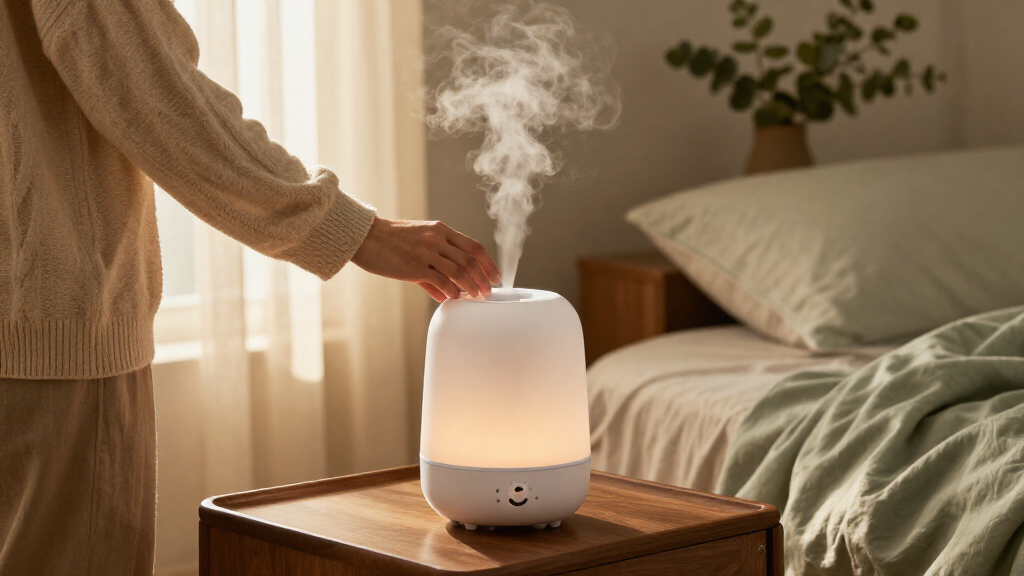
A bedroom humidifier helps when indoor air is genuinely dry, but only if you keep relative humidity between 30 and 50 percent. Clean the tank regularly, measure humidity with a hygrometer, and stop the unit if windows fog or walls feel damp.
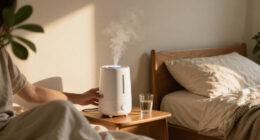
You wake up with a scratchy throat and cracked lips. The radiator has been blasting all night, turning your bedroom into a desert. You reach for the small machine on the nightstand, the one you bought because a friend said it would “detox your air.” You switch it on, and the mist fills the room. But does it actually help, or are you just making your walls damp?
A bedroom humidifier can make dry, indoor air more comfortable, especially during heating season. But it is not a cure-all. The right humidity level, cleaning routine, and humidifier type matter as much as the device itself. Poorly maintained or overused humidifiers can spread microbes or create conditions for mold and dust mites.
This guide walks you through the practical basics: the humidity target that actually works, how to clean the tank so you are not breathing in bacteria, and when to turn the machine off. You will learn to treat a humidifier as a comfort tool for dry air, not a universal health treatment. Let’s get your bedroom air right.
Keep bedroom humidity between 30 and 50 percent using a hygrometer, and stop the humidifier if windows fog or surfaces feel damp.
Clean the tank weekly with vinegar and water, empty standing water daily, and replace filters on schedule to avoid dispersing microbes.
Choose cool mist for safety around children and pets, and use distilled water in ultrasonic models to prevent white mineral dust.
Treat a humidifier as a comfort tool for dry air, not a medical treatment for colds, snoring, or asthma.
Prioritize easy cleaning access and reliable humidistat controls over app features or marketing claims like "kills viruses."
The Humidity Target That Actually Matters
The sweet spot for bedroom humidity is 30 to 50 percent relative humidity. This range is not arbitrary; it represents the equilibrium where human comfort intersects with structural safety. The U.S. Environmental Protection Agency advises keeping indoor humidity below 60 percent, ideally between 30 and 50 percent, to help limit mold and other moisture problems [1]. The implication of this narrow window is critical: humidity is a zero-sum game for your health and your home. Below 30 percent, your mucous membranes dry out, compromising your body’s first line of defense against pathogens and causing static electricity that can damage electronics. Above 50 percent, you enter a danger zone where mold spores germinate and dust mites—major allergens—thrive in your mattress and bedding.
Guessing is a bad strategy because relative humidity changes rapidly with temperature and occupancy. A small hygrometer costs less than a coffee and removes the guesswork. Place it on a nightstand, away from the direct mist of the humidifier, and check it in the morning. If the reading sits at 35 percent, your throat dryness is likely from the air. If it reads 65 percent and your window is fogged, you are over-humidifying. The tradeoff here is clear: you must prioritize measurable data over subjective comfort. A room might feel “crisp” at 20 percent, but that dryness is actively harming your respiratory health. Conversely, a room might feel “cozy” at 60 percent, but that moisture is silently inviting biological contaminants.
Consider a real scenario: a couple in a drafty old house in Chicago runs their furnace hard in January. The bedroom humidity drops to 20 percent. They add a humidifier set to maintain 45 percent. The scratchy throat vanishes. The next morning, the window pane is clear, not dripping. That is the target. If you live in a milder climate, you may not need the machine at all. Measure first, then decide. The implication is that a humidifier is not a set-and-forget appliance; it is a dynamic tool that requires constant feedback via a hygrometer to ensure you are adding comfort, not risk.
Products Worth Considering

Ring Alarm 14-Piece Wireless Security System Kit

Ring Alarm 8-Piece Kit (2nd Gen) Home Security System
Shark Navigator Swivel Pro Upright Vacuum NV151
As an affiliate, we earn on qualifying purchases.
Cool Mist vs. Warm Mist: Which One Fits Your Bedroom?
Neither cool mist nor warm mist is universally better for health. Your choice should depend on safety, noise, and how easy the unit is to clean. Cool mist humidifiers avoid hot-water burn hazards, which makes them the safer pick for rooms with children or pets. Warm mist models heat water to produce steam, which can feel soothing to some users, but they pose a burn risk and may consume more electricity. The deeper implication here is that “healthier” mist is a myth; the mist itself is just water vapor. The health difference lies entirely in the maintenance burden and the safety profile of the delivery mechanism.
Here is a quick comparison of the main types and their trade-offs:
| Type | How it works | Main considerations |
|---|---|---|
| Evaporative | A fan moves air through a wet wick or filter | Self-regulating: the air can only hold so much moisture, reducing over-humidification risk. However, the wick is a breeding ground for mold if not replaced frequently, and the fan noise can disrupt light sleepers. |
| Ultrasonic | Vibrations create a fine mist | Usually quiet, making them ideal for bedrooms. However, they do not discriminate between water and minerals. If you use tap water, you inhale dissolved minerals as “white dust,” which can irritate lungs and coat furniture. |
| Warm mist / steam | Heats water to produce steam | Boiling kills many bacteria in the tank, offering a slight hygiene advantage. But the burn risk is significant, and the energy cost is higher. The warm vapor can also feel uncomfortably humid in already warm rooms. |
| Impeller | A rotating disk throws water into a fine spray | Relatively quiet and mechanical simplicity. But like ultrasonics, they disperse everything in the water, including microorganisms if the tank isn’t scrupulously clean. |
No single type wins for every bedroom. Compare noise ratings, cleaning access, and replacement-part cost, not just the price tag on the box. A quiet ultrasonic unit sounds great until you realize you must scrub a narrow tank every three days. The tradeoff is often between convenience and hygiene: evaporative models are safer regarding white dust but require more frequent filter changes, while ultrasonic models are cheap to run but demand distilled water to be truly safe to breathe.
How to Clean the Tank So You Are Not Breathing Bacteria
Standing water and mineral deposits support microbial growth, so cleaning is non-negotiable. Follow the manufacturer’s cleaning and replacement instructions, empty and dry the tank when it is not in use, and use fresh water every time you refill. A dirty unit can disperse microbes into the air you breathe all night. People with significant immune-system vulnerabilities may want medical advice before using one. The reason this is critical is that humidifiers create an ideal environment for biofilm—a slimy layer of bacteria and fungi—to form on tank walls. Once biofilm establishes, simple rinsing is insufficient; you must physically scrub to break it down, or you will aerosolize pathogens directly into your lungs.
Here is a simple weekly routine that keeps the tank safe:
- Unplug the unit and empty any remaining water. Do not let water sit in the tank for more than 24 hours. Stagnant water allows bacteria to multiply exponentially, turning your clean water source into a contaminant reservoir.
- Scrub the tank with a soft brush and a solution of one tablespoon of white vinegar per cup of water. Let it sit for 20 minutes to dissolve mineral scale. The acid breaks down the mineral deposits that harbor microbes, while the brush physically removes the biofilm layer.
- Rinse thoroughly with clean water until the vinegar smell is gone. Residual vinegar can irritate your nose when the unit runs, defeating the purpose of soothing dry air.
- Air-dry the tank upside down on a towel before refilling. A damp tank is an invitation for mold. Moisture without airflow is the primary driver of fungal growth in these devices.
- Replace filters or cartridges on schedule. A clogged filter reduces output and can harbor growth. Do not try to wash reusable filters if the manufacturer says to replace them; porous materials trap contaminants that cannot be fully cleaned out.
Think of it like a water bottle. You would not drink from a bottle that sat on your desk for a week, so do not breathe from a tank that sat full for a week. If the tank has narrow crevices you cannot reach, consider a model with a wider opening next time. The implication is clear: if you cannot clean it thoroughly, you should not use it. The health risk of inhaling mold spores or bacteria far outweighs the benefit of added moisture.
When a Humidifier Helps and When It Does Not
Humidified air may ease dryness in the nose, throat, skin, or lips when indoor air is very dry. People sometimes find it more comfortable during a cold, but a humidifier does not cure infections or reliably prevent them. Evidence for broader health claims, such as preventing illness, improving sleep for everyone, or treating asthma, is limited or depends on the person and situation. The key distinction is between symptom management and treatment. A humidifier manages the symptom of dryness by keeping mucous membranes moist, which helps them function normally. It does not address the underlying cause of an infection or an allergic reaction.
Consider a concrete example. You have a mild cold and your nasal passages feel like sandpaper. Running a cool-mist humidifier at 45 percent humidity can soothe that irritation. It does not kill the virus. It does not shorten the cold. It simply makes the air less abrasive while your immune system does the work. If your congestion is thick and productive, adding moisture may not help and could make you feel more stuffed up. In fact, for some asthma sufferers, high humidity can trigger attacks by increasing dust mite populations. The tradeoff is that while humidity soothes dry irritation, it can exacerbate inflammatory conditions if pushed too high.
For persistent congestion, breathing difficulty, frequent nosebleeds, or worsening asthma symptoms, a humidifier is not a substitute for medical advice.
Too much moisture can encourage mold and dust mites, which aggravate allergies or asthma in some people. If you wake up sneezing more than usual, check your hygrometer. You may have pushed the room past 55 percent without realizing it. The implication is that a humidifier is a delicate balancing act: it helps when air is too dry, but harms when air is too moist or when the user is sensitive to the biological byproducts of high humidity.
Placement and Water Choice: The Details That Prevent White Dust
Where you put the unit matters as much as how you run it. Keep the humidifier on a stable, water-resistant surface and direct mist away from walls, bedding, curtains, electronics, and wooden furniture. Stop or reduce use if nearby surfaces become damp. A unit blasting mist at your headboard can leave a damp patch on the wall that eventually grows mold. The physics here is simple: mist is heavy water droplets. If they land on a surface before evaporating, they create localized high-humidity zones that are perfect for mold growth, even if the overall room humidity seems fine.
Water choice is the other big variable. Tap water is acceptable for many units, but mineral-rich water may leave deposits or airborne white dust in some models. This white dust is mineral content that an ultrasonic or impeller unit shatters into fine particles and releases into the air. Distilled or demineralized water can reduce mineral buildup, particularly in ultrasonic units, though it adds cost. The implication of using tap water in an ultrasonic model is that you are effectively inhaling the minerals in your water. While not always toxic, this can irritate lungs and coat your bedroom in a fine, gritty residue that is difficult to clean.
Try this: run your tap water through a coffee filter for a week and watch the filter. If it turns brown or gritty, your water is hard. That mineral load will end up in your air if you use an ultrasonic model with tap water. Switch to distilled water or choose an evaporative model, which traps minerals in the wick instead of launching them into the room. The tradeoff is cost versus air quality: distilled water is an ongoing expense, but it protects your lungs and your furniture from mineral contamination.
Buying Smart: Features That Are Worth the Money
Recent products increasingly emphasize built-in humidity sensors, app controls, and easier-to-clean designs. But you should distinguish features from proven health benefits. Claims such as “medical-grade,” “kills viruses,” or “prevents illness” need careful scrutiny and should not be treated as established just because they appear in product marketing. The implication of marketing hype is that you may pay a premium for features that do not improve the fundamental task: adding moisture safely. A “smart” humidifier that cannot be easily cleaned is less valuable than a dumb, simple model you can scrub every week.
Here is what to prioritize when you shop:
- Room size and output: Match the stated coverage to the bedroom, while remembering that open doors and connected spaces affect performance. An undersized unit will run constantly without reaching the target humidity, wasting energy and water.
- Cleaning access: A tank that is easy to open and scrub is often more valuable than extra smart features. If you hate cleaning it, you won’t do it, and the health risks outweigh the benefits.
- Operating costs: Account for filters, cartridges, replacement parts, electricity, and distilled water if needed. A cheap unit with expensive, proprietary filters can cost more over a year than a pricier model with standard parts.
- Controls and safety: Consider automatic shutoff when empty, adjustable output, and a reliable humidistat. A humidistat is the single most important feature because it automates the safety boundary, preventing you from over-humidifying while you sleep.
- Quieter operation: Look for sleep-mode details and independent sound measurements, since “quiet” is not a standardized guarantee. Noise can disrupt sleep, which counteracts the comfort benefits of humidified air.
Combination devices, like humidifier-air purifier hybrids, are marketed as all-in-one options, but each function has separate maintenance needs. A purifier does not make a dirty humidifier safe, and a humidifier does not clean the air. Buy the tool that solves your specific dry-air problem, and skip the bells and whistles you will not maintain. The tradeoff is complexity versus reliability: simpler devices are often more durable and easier to keep hygienic.
Frequently Asked Questions
What humidity level should a bedroom be?
A commonly recommended range is 30 to 50 percent relative humidity. Avoid routinely exceeding 60 percent, and use a lower setting or stop the humidifier if condensation or dampness appears on windows or walls.Should I leave a humidifier on all night?
It can be reasonable if the room is dry and humidity is monitored, but it is not automatically safe or necessary to run one continuously. Use a suitable setting or humidistat, and stop if the room becomes damp.Is cool mist or warm mist better?
Neither is universally better for health. Cool mist avoids hot-water burn hazards; warm mist heats water but can cause burns and may consume more energy. Ease of cleaning, noise, and household safety are good deciding factors.Can I use tap water?
Check the manual. Tap water is acceptable for many units, but mineral-rich water may leave deposits or airborne white dust in some models. Distilled or demineralized water can reduce mineral buildup, particularly in ultrasonic units.Can a humidifier cause mold?
Yes, if it raises humidity too much or wets nearby surfaces. Monitor humidity, keep the unit away from walls and fabrics, and stop use if condensation or mustiness develops.Conclusion
A bedroom humidifier earns its place on your nightstand only when the air is genuinely dry and you run it with intention. Measure the humidity, clean the tank like you mean it, and stop before the walls get damp. The machine is a tool, not a health device, and it works best when you treat it that way.
Go check your hygrometer tonight. If it reads below 30 percent, fill the tank with fresh water and set the target to 45. If it reads above 55, crack a window and skip the mist. Your throat will thank you, and your walls will stay dry.