This checklist is for homeowners and renters planning a more connected setup for lighting and climate control. It covers everyday upgrades, from bulbs and switches to thermostats, fans, and motorized blinds.

Get home appliances delivered free with Prime
- Fast, free delivery on millions of items
- Prime Video, Amazon Music and more included
- Member-only deals all year
The sections follow the main product categories, with a pick where one was provided and practical guidance for each slot. The smart-bulb section is advice only, so use it to shape your shortlist rather than compare a named product.
Use each section to check your room, existing controls, and device compatibility before buying. Confirm the details that matter for your home, including wiring, dimensions, and control requirements, against the product listing and your setup.
Smart Bulbs
Smart bulbs are a straightforward place to plan room-by-room lighting control. Before choosing any bulb, identify the fixture and bulb base, how many bulbs it needs, and whether the bulb will sit behind a dimmer or other control. Those details help prevent a purchase that does not fit or behave as expected. Also consider who needs access to the controls and whether the setup should work through a wall switch, an app, or both.
A common buying mistake is to focus on the word “smart” without checking the home’s existing controls and the bulb’s intended use. Check the listing for the required connection method, supported control options, and any stated limits for fixtures or enclosed shades. For rooms with several fixtures, make a simple inventory first and choose consistently where practical. If you are replacing only one bulb, confirm its dimensions and base rather than assuming bulbs with similar shapes are interchangeable.
Plan for easy everyday use: make sure household members know how to turn the lights on, and consider what happens when someone uses a physical switch. Fit, controls, and compatibility are the essentials to verify before adding smart bulbs to the checklist.
What to look for:
- Bulb base and fixture compatibility
- Required connection method and supported controls
- Fit in the intended fixture or enclosure
- Compatibility with existing dimmers or switches
- A control approach household members can use
Smart Light Switches
The ELEGRP DPR30 Smart Wi-Fi Dimmer Switch, 10-Pack is a pick for planning switch-based control across multiple locations. A switch can make lighting control accessible at the wall, so it is useful to think through which rooms and circuits you want to include before settling on a pack. List the lights each switch would control and check whether the setup suits your household’s preferred way to operate lighting.
A frequent mistake is buying switches before confirming the electrical setup. Check the product listing for wiring requirements, supported loads, and any stated compatibility limits for the lights on the circuit. Dimming compatibility deserves particular attention: the switch and connected lighting need to be suitable for one another. Confirm the wall-box space and installation requirements as well, and have a qualified electrician handle work if you are unsure about wiring.
With a 10-pack, map the intended locations first so you can confirm the quantity matches your project. Review how the switch is configured and controlled, including any app or network requirements stated by the manufacturer. Wiring, load, and dimmer compatibility should guide the final check before purchase.
What to look for:
- Wiring requirements for the existing switch boxes
- Compatibility with the lights and loads on each circuit
- Dimming support for the specific connected lighting
- Installation and wall-box requirements
- Control and network requirements listed by the manufacturer
ELEGRP DPR30 Smart Wi-Fi Dimmer Switch, 10-Pack

Control and dim compatible lights using the ELEGRP Home app, Amazon Alexa, or Google Assistant, with scheduling and scene features. Each switch supports single-pole or 3-way setups, requires a neutral wire and a 2.4 GHz Wi-Fi network, and does not need a hub.
Pros:
- Supports app, voice, scheduling, and scene controls
- Works in single-pole and 3-way setups
- Slim profile leaves more room in the electrical box
- No hub required
Cons:
- Requires a neutral wire
- Supports only 2.4 GHz Wi-Fi
- In a 3-way circuit, the other switch must be a standard switch
Best for: Projects planning several smart dimmer locations
Not ideal for: Homes with unverified wiring or incompatible lights
Bottom line: Confirm the wiring and lighting compatibility at every planned location.
Smart Plugs
The Kasa Smart Plug Mini EP10P4, 4-Pack can be considered for adding plug-in control to compatible devices. Before choosing a location, identify what will be plugged in and whether that device should be controlled by switching its power. A plug is a fit for some lamps and small appliances, but a connected device may have its own controls or need to stay powered continuously. Make a room-by-room list to keep the intended uses clear.
A common mistake is treating every powered device as a good smart-plug candidate. Check the product listing for supported electrical limits, outlet requirements, and any restrictions on the types of devices it can control. Confirm that the plug will not obstruct an adjacent outlet and that the device’s behavior after power is restored works for your use. Also review the app, network, and voice-control requirements stated by the manufacturer before relying on a particular way to operate it.
For a four-pack, decide where each unit will go before buying and verify those outlets are accessible. Keep controls simple enough that household members can still operate the connected device when needed. Device suitability, outlet access, and stated limits are the key checks for this pick.
What to look for:
- Electrical limits stated for the plug
- Compatibility with the device being controlled
- Clearance for neighboring outlets
- Device behavior when power is switched
- App, network, and control requirements
Kasa Smart Plug Mini EP10P4, 4-Pack
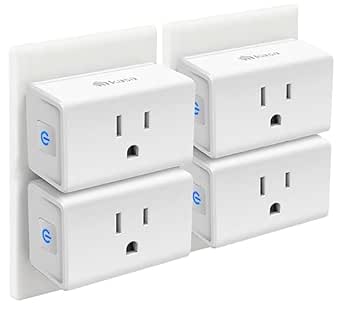
Four compact Wi-Fi smart plugs let you control lights and small appliances by voice or through the Kasa app. They connect to 2.4 GHz Wi-Fi without a hub and support schedules, timers, and Away Mode.
Pros:
- Compact design leaves the second outlet accessible
- Supports voice control and app-based control from anywhere
- Schedules, timers, and Away Mode are included
- UL certified
Cons:
- Requires a 2.4 GHz Wi-Fi connection
- Kasa app is required for setup and control
Best for: Households adding control to suitable plug-in devices
Not ideal for: Devices that must remain continuously powered
Bottom line: Check each connected device and outlet before assigning a plug.
Smart Thermostats
The Honeywell Wireless WiFi Thermostat, 7 Programmable is the pick for households looking to review thermostat options. Before choosing, identify the current heating and cooling equipment and check the thermostat’s compatibility information against it. Also note how many stages or systems your home uses if that information is available. The product name alone does not establish which equipment or wiring it supports, so use the manufacturer’s listing and your system details to confirm.
A common mistake is assuming a thermostat will fit simply because it replaces an existing wall control. Check the wiring requirements, terminal support, power needs, and installation instructions. Look at the physical dimensions and mounting needs if the current thermostat sits in a tight or unusual location. If the wiring or system type is unclear, ask a qualified HVAC professional to identify it before purchase or installation.
Review the Wi-Fi and programming requirements, too. Confirm the supported network setup and how schedules are created and changed, especially if several people will manage settings. Think through who needs access and whether the programmed schedule fits the household’s routines. Equipment compatibility and wiring should be confirmed before considering connected features.
What to look for:
- Compatibility with the home’s heating and cooling equipment
- Supported wiring and terminal requirements
- Power requirements and installation instructions
- Thermostat dimensions and mounting fit
- Wi-Fi setup and programming controls
Honeywell Wireless WiFi Thermostat, 7 Programmable

The Honeywell TH9320WF5003 is a Wi-Fi touch screen programmable thermostat compatible with Alexa for voice control. It allows remote monitoring and management of home comfort and energy use, featuring 7-day programming, customizable display, and energy-saving modes.
Pros:
- Supports voice control with Alexa
- Remote management via app
- Easy to program with 7-day schedule
- Customizable display for user comfort
Cons:
- Not suitable for dual fuel heat pumps without a fossil kit
- Requires professional installation
- Limited to 24V wiring systems
Best for: Homes whose HVAC system matches the listed requirements
Not ideal for: Systems with unknown wiring or compatibility
Bottom line: Match the thermostat’s requirements to your HVAC system before buying.
Smart Ceiling Fans
The Minka-Aire Chubby 58-Inch 5-Blade LED Smart Ceiling Fan, Coal Finish combines a fan and lighting in one named pick. Start by checking whether the room can accommodate the listed fan size and whether the ceiling and mounting location support the installation requirements. Consider the room layout, ceiling height, and the placement of existing fixtures so the fan’s position works with the space.
A common buying mistake is choosing a fan based on appearance without verifying dimensions and mounting details. Check the product listing for the complete installed dimensions, required ceiling support, and any clearance guidance. Confirm the electrical connections and control method fit the room’s setup, and review whether the included light and fan controls suit the household. If the ceiling box or support is uncertain, consult an electrician before installation.
Also check how the smart features are configured and what connection or control options are required. For rooms where the wall switch is used by multiple people, make sure the operating approach remains clear and convenient. Verify the finish and light assembly against the room plan, then compare the listed fan dimensions with the actual space. Ceiling support, clearance, and controls are the main checks for this pick.
What to look for:
- Fit of the listed fan size in the room
- Ceiling support and mounting requirements
- Clearance guidance and installed dimensions
- Electrical and control requirements
- Operation of the fan and integrated light
Minka-Aire Chubby 58-Inch 5-Blade LED Smart Ceiling Fan, Coal Finish

This contemporary ceiling fan features five coal-colored blades, a 40W LED light kit, and a quiet, reversible six-speed DC motor. It includes a handheld remote with full-range light dimming and reverse functionality, plus a 6-inch downrod.
Pros:
- Quiet, reversible six-speed DC motor
- Remote includes full-range light dimming and reverse functionality
- Includes a 40W LED light kit and 6-inch downrod
Cons:
- Additional downrod sizes and wall control are sold separately
- Plastic blades
Best for: Rooms that fit the listed fan and mounting requirements
Not ideal for: Ceilings without confirmed support or clearance
Bottom line: Verify ceiling support, dimensions, and control needs before installation.
Motorized Blinds
The Yoolax Smart Dual Roller Shades, Motorized Blinds with Remote, Custom is a custom-fit window treatment pick. The first step is to measure each window carefully and check how the listing asks you to specify width, height, and mounting style. Measure more than once, and note whether the shade is intended to fit inside or outside the frame. Custom products depend on the submitted dimensions, so clarify the measurement method before placing an order.
A common mistake is assuming a single measurement works for every window or mounting approach. Check the product listing for sizing instructions, available configuration choices, and any stated limits. Inspect the window frame and surrounding trim for anything that could affect fit or movement. Also confirm what powers the motor and how the remote operates; the product name mentions a remote, but details such as charging, batteries, and setup should be verified in the listing.
Review the smart-control requirements and decide whether the remote alone meets your needs or whether you expect additional controls. For multiple windows, record dimensions and configuration separately so each order corresponds to the right opening. Measurement method, mounting fit, and motor controls are essential to confirm for custom shades.
What to look for:
- Manufacturer’s measurement method for custom sizing
- Inside- or outside-mount fit for each window
- Frame and trim clearance for shade movement
- Motor power and remote operation details
- Smart-control requirements and configuration options
Yoolax Smart Dual Roller Shades, Motorized Blinds with Remote, Custom Size

These smart dual roller shades are customizable and easy to install, offering both blackout and sheer options for versatile light control. Compatible with Zigbee and Bluetooth smart home systems, they can be operated via remote, app, or voice commands, making them suitable for various rooms in your home.
Pros:
- Customizable fabric options and sizes for a perfect fit
- Supports smart home integration with voice and app control
- Easy DIY installation suitable for most users
- Dual shades provide flexible light filtering and privacy
Cons:
- Requires careful measurement for proper fit
- Limited water resistance, not suitable for humid environments
- Potential complexity in choosing the correct smart motor type
Best for: Windows with carefully verified measurements
Not ideal for: Buyers unable to confirm mounting and sizing details
Bottom line: Measure each opening and verify the configuration before ordering.
Start with the rooms and devices that matter most in daily use, then confirm compatibility before buying. For a budget-first sequence, inventory existing bulbs and switches, prioritize the controls or climate settings you use most, and add multi-location upgrades only after checking fit and requirements. Plan by room and verify first to avoid buying devices that do not suit your setup.
You do not need to upgrade every room at once. Use this checklist to make one informed choice at a time, keep measurements and compatibility details handy, and build a connected home at a pace that works for you. A clear plan makes each next step easier.