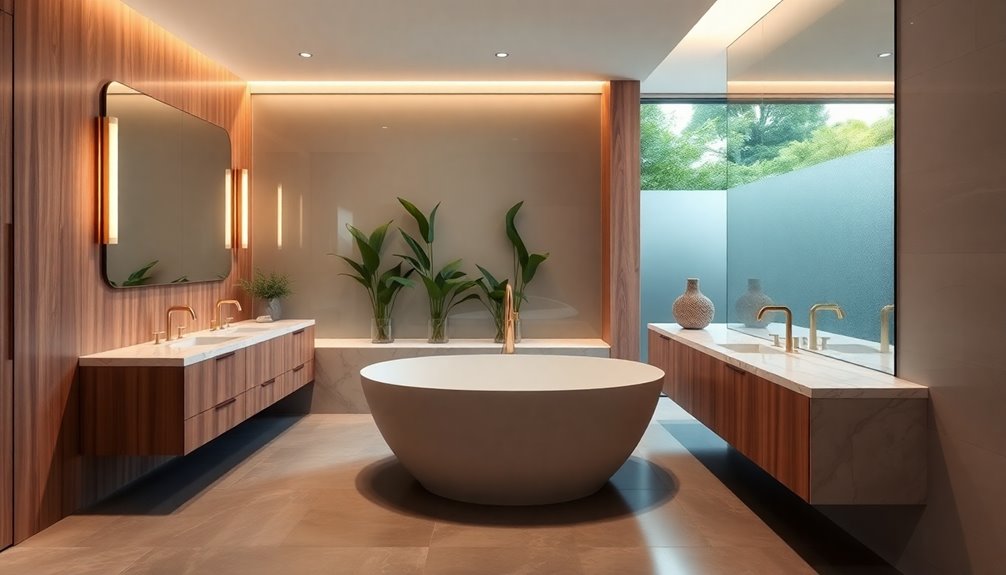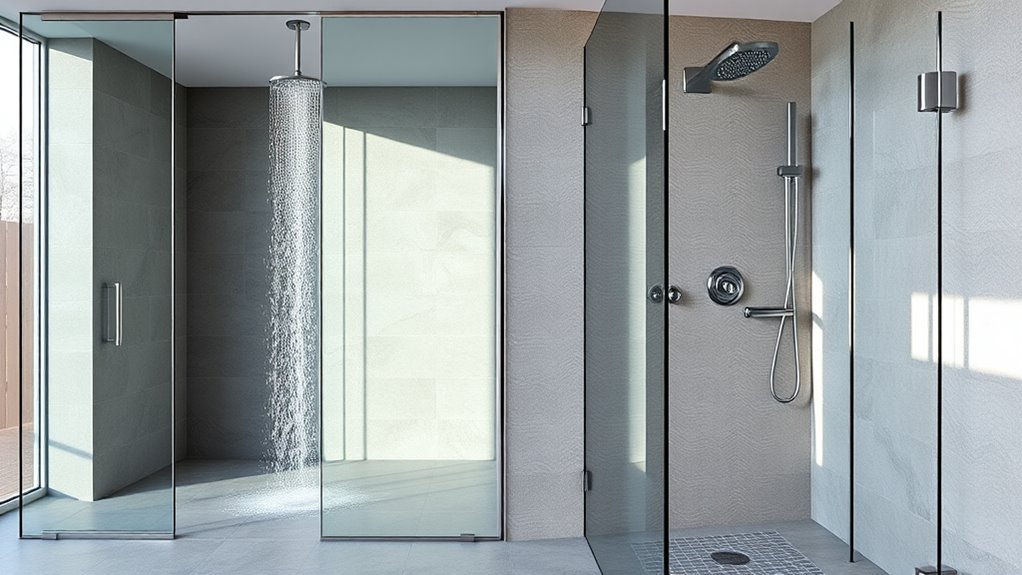

Wet rooms create a sleek, open look that makes small bathrooms feel more spacious and are easier to access, especially if you have mobility concerns. However, they require careful waterproofing and good ventilation to prevent issues like mold. Traditional showers are simpler to maintain and contain water easily, but they can feel enclosed and might take up more space with trays or tubs. If you’re weighing these options, understanding their benefits and challenges can help you make a smart choice.
Key Takeaways
- Wet rooms maximize space and provide a sleek, open-plan design, making small bathrooms appear larger.
- Traditional showers are easier to maintain and clean due to enclosed designs that contain water splash.
- Wet rooms offer better accessibility with level floors, ideal for mobility challenges, whereas traditional showers may require step-over entry.
- Proper waterproofing and ventilation are essential in wet rooms to prevent dampness and damage, while traditional showers are less demanding in this regard.
- Wet rooms present a modern aesthetic and open feel, while traditional showers offer practical, low-maintenance enclosure options.
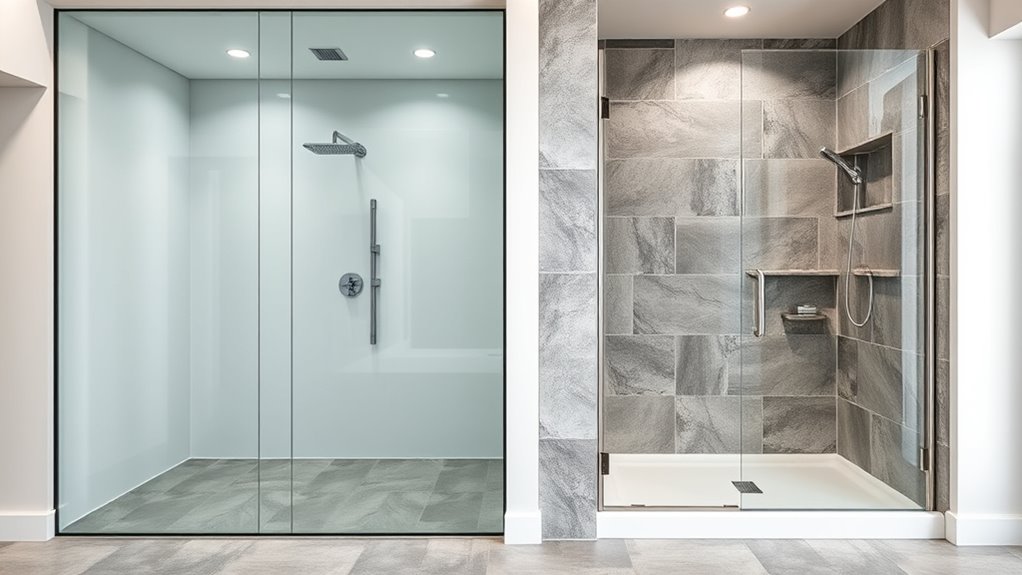
When choosing between a wet room and a traditional shower, you need to contemplate how each option fits your space, style, and lifestyle. Wet rooms offer a sleek, open-plan design that can make small bathrooms feel more spacious, but they also require careful planning to maximize accessibility features. If you or someone in your household has mobility challenges, a wet room can provide easier access with a level floor and walk-in entry, eliminating the need to step over a bathtub or shower tray. However, you should also consider maintenance requirements; wet rooms tend to accumulate more water and moisture, so they need excellent waterproofing and proper ventilation to prevent mold and damage over time. Regular upkeep, such as checking seals and drains, becomes essential to keep the space in good condition and avoid costly repairs. Additionally, proper waterproofing and drainage are critical for preventing leaks and long-term damage in wet rooms.
Wet rooms offer a sleek, open design with easy access but require diligent waterproofing and ventilation.
Traditional showers, on the other hand, usually come with a shower tray or tub, which can help contain water and reduce splashing. This makes them easier to clean and maintain, as the enclosed design limits water spread to surrounding areas. If you prefer a low-maintenance option, a traditional shower might suit you better, especially since the enclosure often protects the floor from excessive moisture. Accessibility features in traditional showers can vary; some models include grab bars or low-threshold entry, but they might still require a bit more effort to access comfortably. For those with mobility issues, a walk-in shower with no raised lip is an option, but it may not be as seamless as a wet room.
In terms of maintenance, wet rooms demand more frequent attention to waterproofing, drainage, and ventilation systems. If neglected, these elements can lead to leaks or dampness, which might cause long-term damage. Traditional showers generally require less ongoing maintenance, as their design naturally contains water better and often involves fewer waterproofing concerns. Still, you’ll need to clean the shower enclosure and drain regularly to prevent soap scum and buildup. Choosing the right shower enclosure can also influence maintenance needs and ease of cleaning.
Ultimately, your choice hinges on your priorities. If you value a modern, open aesthetic and don’t mind extra upkeep, a wet room could be the perfect fit. But if you prefer something simpler to clean and maintain, a traditional shower offers a practical, reliable solution. Both have their advantages and disadvantages, so weigh your space, accessibility needs, and willingness to perform maintenance before making your decision.
Frequently Asked Questions
How Much Does a Wet Room Installation Typically Cost?
A wet room installation typically costs between $8,000 and $15,000, depending on various cost factors. Installation expenses vary based on room size, plumbing modifications, and materials used. If you choose high-end tiles or fixtures, expect to pay more. To stay within your budget, get detailed quotes from professionals and consider the scope of work involved. Proper planning guarantees you get a functional, attractive wet room without overspending.
Are Wet Rooms Suitable for Small Bathrooms?
Yes, wet rooms are suitable for small bathrooms. They optimize space by eliminating the need for a separate shower cubicle, creating a seamless, open feel. Plus, they offer design flexibility, allowing you to customize layouts and finishes to suit your style. With clever planning, a wet room can make even a compact bathroom feel spacious and modern, making it a practical choice for smaller spaces.
What Maintenance Is Required for Wet Rooms?
While wet rooms demand regular maintenance, they’re straightforward to keep in top shape. You need to check waterproofing requirements periodically to prevent leaks and water damage. Cleaning routines involve removing soap scum and grime from the floor and drains, ensuring good drainage and hygiene. Sealing joints and grouting also require occasional attention. With consistent upkeep, your wet room will stay functional and looking great, offering a sleek, modern shower experience.
Do Wet Rooms Increase Home Value?
Yes, wet rooms can increase your home’s value by offering a luxury upgrade and enhancing space optimization. Modern buyers often appreciate the sleek, open design, making your property more attractive. Installing a wet room shows you’ve invested in stylish, functional features, which can boost resale potential. Plus, the sense of spaciousness they provide appeals to those seeking a contemporary, accessible bathroom, ultimately adding to your home’s overall appeal.
Can Wet Rooms Be Customized for Accessibility?
Absolutely, wet rooms can be tailored for accessibility—because who doesn’t want a bathroom that doubles as a Swiss Army knife? With the right accessibility features like grab bars, non-slip surfaces, and adjustable seats, you get unmatched design flexibility. You’re not stuck with one size fits all; instead, you craft a space that’s safe, functional, and as stylish as you desire. Who said practicality can’t be personalized?
Conclusion
Choosing between a wet room and a traditional shower is like selecting the perfect dance partner—each has its rhythm and charm. Wet rooms flow seamlessly, creating an open, spa-like feel, while traditional showers offer cozy familiarity. Consider your space, style, and needs, and you’ll find your perfect rhythm. Whichever you choose, make it a space where comfort and beauty dance in harmony, transforming your daily routine into a soothing, effortless performance.