TL;DR

Get home appliances delivered free with Prime
- Fast, free delivery on millions of items
- Prime Video, Amazon Music and more included
- Member-only deals all year
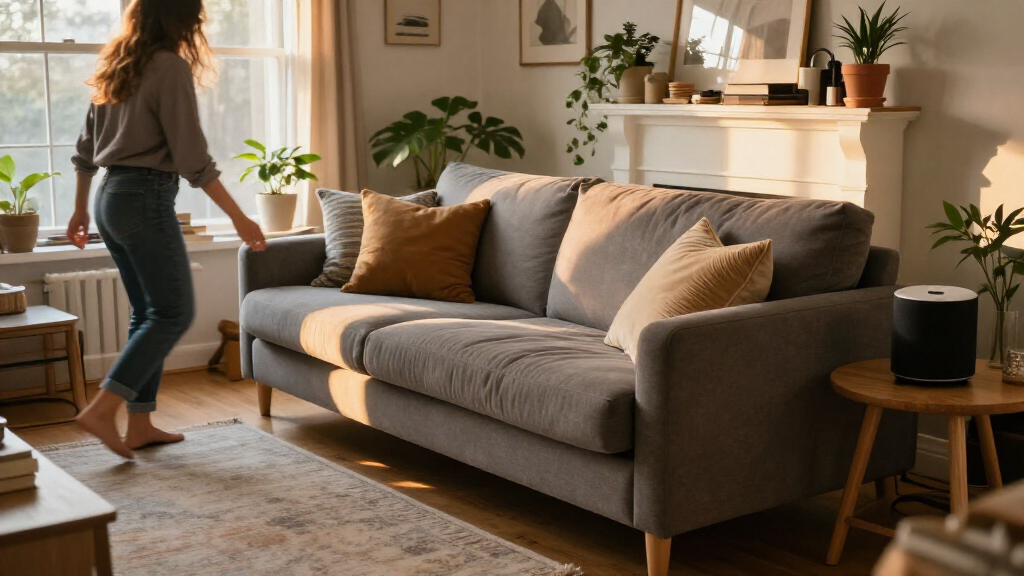
Apartment Therapy published a report based on interviews with four interior designers, who challenged four common living-room decorating assumptions. They said rooms do not need to be pale, furniture need not sit against the walls, TVs do not always belong above fireplaces, and living spaces need not look pristine.
Apartment Therapy has published a report in which four interior designers push back on common living-room decorating advice, including keeping rooms light and airy, placing sofas against walls, mounting televisions above fireplaces and maintaining a picture-perfect space. The designers argue that these rules can get in the way of a room’s comfort and function, though their recommendations are design opinions rather than universal requirements.
The report, written by Kelsey Mulvey, is based on interviews with four designers. Athiana Makar of Canada’s Studio Clae questions the assumption that a living room should be bright and visually expansive. She recommends considering darker colors, rich woods, natural materials and layered lighting when they better suit the room and the people using it.
Jacqueline Gonçalves, who runs Los Angeles-based MOKSA Studio, challenges two other conventions. She says putting every piece of furniture against the perimeter can leave awkward gaps and make a seating area feel disconnected. A sofa positioned away from the wall, with seating and tables grouped closer together, may support conversation. Gonçalves also advises against automatically hanging the TV above a fireplace, where it may sit too high or dominate the room when switched off.
The fourth point concerns the expectation that a living room should always look ready for a photograph. Meghan Meehan of Hudson East Design says comfort and everyday use should count alongside appearance. The report suggests that collected, layered rooms—and signs of normal use—can be more welcoming than a showroom-like arrangement.
Comfort Over Decorating Rules
The advice matters because living rooms are often used for several purposes, from watching television to hosting guests and spending time with family. A layout chosen only to make the room appear larger or more polished may not suit those activities. The designers’ common point is to treat function, comfort and personal preference as part of the decorating decision, rather than following a rule simply because it is common online.
That does not mean any single alternative works in every home. A darker palette may not suit someone who wants a bright room, and floating a sofa depends on available space and circulation. The report offers designers’ perspectives, not measured evidence that one arrangement is best for all rooms. Readers can use the suggestions as options to test against their room’s dimensions, light and daily needs.
Products Worth Considering

LEVOIT Vital 200S-P Smart Air Purifier for Large Rooms

Philips Hue Festavia Globe Outdoor String Lights, 8 Bulbs, 22 ft

Philips Hue Festavia 65-Foot Smart String Lights, 250 Color-Changing LEDs
As an affiliate, we earn on qualifying purchases.
Four Rules Under Review
Apartment Therapy frames the report around the amount of decorating advice people encounter on social media and the difficulty of furnishing a room that gets frequent use. Mulvey says she asked four designer contacts to identify the worst living-room advice they had heard and what they would do instead. The resulting article focuses on four familiar conventions, rather than presenting a new product, survey or formal design standard.
The recommendations vary by designer and by issue. Makar’s comments address atmosphere and color; Gonçalves discusses furniture placement and TV positioning; Meehan focuses on how a room is used and how much visible disorder people should tolerate. The source material does not provide a survey of designers or homeowners, so the views should be understood as interview-based advice, not a consensus across the profession.
“Thoughtfully grouping seating and tables closer together encourages conversation and can make a room feel both more intimate and spacious.”
— Jacqueline Gonçalves, founder of MOKSA Studio
Advice Depends on Each Room
The report does not establish that any of the four conventions is always a mistake. It provides no room measurements, before-and-after comparisons or broader research testing the designers’ recommendations. Whether a sofa can float comfortably, a darker palette feels inviting or a TV can be placed elsewhere depends on room size, layout, lighting and household preferences.
The source also does not specify a single alternative that would work in every home. A TV above a fireplace may be the only practical location in some rooms, while a wall-hugging sofa can preserve useful floor space in others. The designers’ comments are best read as prompts to question default choices, not as a requirement to rearrange or redecorate.
How Readers Can Apply the Advice
The next step is up to homeowners and renters: compare each suggestion with how the room is actually used before making changes. Readers can test a seating arrangement, consider whether the existing light and colors feel comfortable, and review TV placement without assuming that a designer’s preference must fit their home. No follow-up study or additional announcement is identified in the supplied material.
For larger changes, practical constraints still matter. Furniture needs to leave usable pathways, and any new setup should suit the room’s dimensions and the household’s routines. The report’s central takeaway is modest: there is no single look that every living room needs to achieve, and advice should be weighed against the space and the people who use it.
Key Questions
What four living-room decorating rules did the designers challenge?
The report questions the ideas that every living room should be light and airy, that sofas should hug the walls, that TVs should always sit above fireplaces, and that the room should look picture-perfect.
Does the report say dark colors are better for every living room?
No. Athiana Makar says darker colors and layered materials can create warmth and intimacy, but the article presents this as an option, not a rule for every home.
Why might someone move a sofa away from the wall?
Jacqueline Gonçalves says floating a sofa and grouping furniture closer together can help create a more connected seating area and encourage conversation. The best placement depends on the room’s layout.
What is the concern with mounting a TV above a fireplace?
Gonçalves says the screen may end up too high and can stand out as a large dark object when it is off. She suggests considering other locations or concealing the screen where practical.
Are these recommendations based on a formal study?
The supplied report describes interviews with four designers. It does not cite a formal study or present the advice as a universal design standard.
Source: apartmenttherapy.com