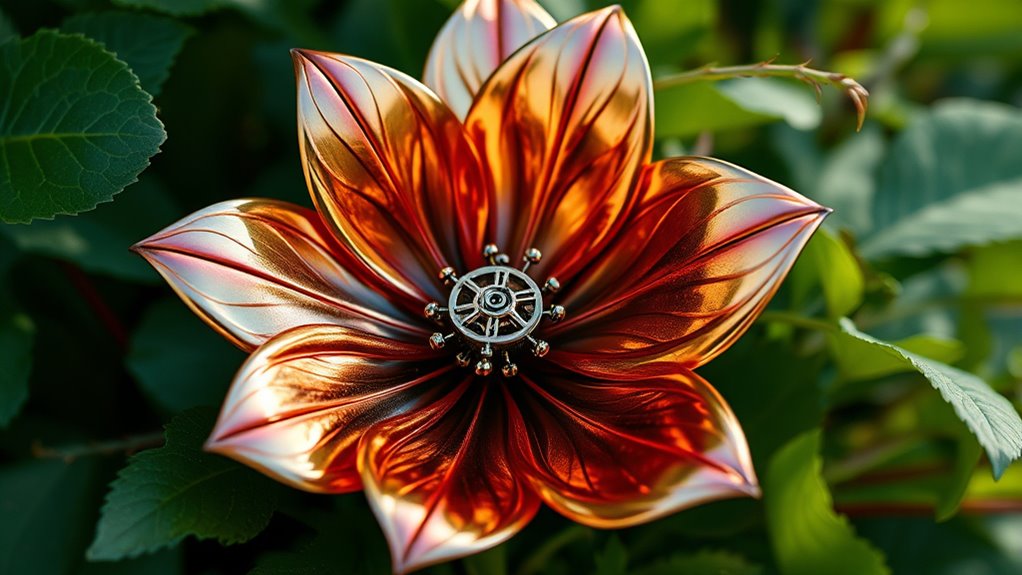

Mechanical botanical designs combine natural principles with advanced technology to create sustainable, adaptable structures inspired by nature’s efficiency. These innovations mimic systems like plant sun absorption or root nutrient seeking, making structures more resilient, energy-efficient, and eco-friendly. They often feature organic shapes and fractal patterns, emphasizing harmony between human-made and natural elements. Exploring this approach reveals how future environments can evolve alongside nature, and there’s much more to discover about these exciting innovations.
Key Takeaways
- Mechanical botanical designs mimic natural plant structures and processes to create sustainable, efficient, and adaptive technological systems.
- They integrate organic shapes and fractal patterns to optimize airflow, lighting, and resource use while maintaining aesthetic appeal.
- Biomimicry in this context fosters resilient structures that grow, repair, and adapt like living organisms, reducing environmental impact.
- Combining nature and technology encourages eco-friendly innovations that support ecological balance and human needs simultaneously.
- Advancements in this field challenge traditional engineering, promoting seamless integration of natural principles into intelligent, sustainable machinery.

Imagine a world where nature and technology blend seamlessly, creating living structures that grow and adapt like plants but are built from mechanical parts. This vision is becoming a reality through biomimicry innovation, a cutting-edge approach that draws inspiration from the natural world to develop sustainable design solutions. When you harness biomimicry, you’re not just copying nature—you’re understanding its principles and applying them to create machinery and structures that are efficient, resilient, and eco-friendly. This method allows you to design systems that mimic the way plants absorb sunlight, how roots seek nutrients, or how flowers open and close, leading to innovations that are both functional and harmonious with the environment.
By embracing sustainable design through biomimicry, you can drastically reduce the environmental impact of your creations. Mechanical structures that emulate natural growth patterns tend to require fewer resources, generate less waste, and operate more efficiently. Think of robotic trees that can adapt to changing weather conditions, optimizing their functions without external input. These structures not only serve practical purposes but also integrate seamlessly into their surroundings, reducing visual and ecological disruption. As you develop these innovations, you’re actively contributing to a shift away from traditional, resource-intensive construction toward solutions that prioritize longevity and environmental health.
Emulate natural growth to create resource-efficient, eco-friendly structures that seamlessly integrate with their environment.
The beauty of biomimicry innovation lies in its ability to blend form and function. Mechanical botanical designs often feature organic shapes that are both aesthetically pleasing and highly functional. For example, you might create a building façade inspired by the fractal patterns found in fern leaves, which maximize surface area while minimizing material use. Such designs enable better airflow, natural lighting, and energy efficiency—all hallmarks of sustainable design. When you implement these ideas, you’re making structures that can grow, repair, and adapt over time, much like living organisms. This approach fosters a future where human-made environments are no longer separate from nature but part of its ongoing evolution.
In essence, you’re pioneering a new era where technology mimics life itself, creating mechanical botanical systems that thrive sustainably. Biomimicry innovation challenges you to think beyond conventional engineering, encouraging solutions that are intelligent, adaptable, and environmentally conscious. Through this lens, you’re not just building structures—you’re cultivating ecosystems that support both human needs and the planet’s health. As this field continues to evolve, it promises a future where the lines between nature and machine blur, resulting in a world where innovation nurtures sustainability at every turn. Additionally, advancements in color accuracy are essential for creating visually compelling designs that truly mimic natural beauty.
Frequently Asked Questions
How Do Mechanical Botanicals Impact Traditional Gardening Practices?
Mechanical botanicals impact traditional gardening practices by integrating technology, which can streamline maintenance and improve plant health. You might find yourself using automated systems for watering or monitoring, making gardening more efficient. While these innovations help preserve biodiversity by supporting various species, they also encourage you to balance technology with natural practices, ensuring that the essence of traditional gardening remains intact. This integration creates a sustainable, modern approach to cultivating plants.
What Materials Are Commonly Used in Creating Mechanical Botanical Sculptures?
You’ll find that creating mechanical botanical sculptures often involves using synthetic fibers and metal alloys. Synthetic fibers provide flexibility and durability, mimicking natural plant textures, while metal alloys like brass or aluminum give structure and a sleek, modern look. These materials are chosen for their strength, lightweight properties, and ease of shaping, allowing you to craft intricate, long-lasting sculptures that blend organic aesthetics with technological innovation.
Are Mechanical Botanicals Environmentally Sustainable?
Mechanical botanicals can be environmentally sustainable if you choose eco-friendly materials and rely on renewable energy sources for their operation. By using biodegradable or recycled materials, you minimize environmental impact. Additionally, powering these sculptures with solar or wind energy reduces carbon emissions. When you prioritize these practices, you create innovative, beautiful pieces that celebrate nature and technology while supporting sustainability efforts.
How Do Mechanical Botanicals Adapt to Different Climate Conditions?
Think of mechanical botanicals as chameleons in the plant world, effortlessly blending into diverse environments. They’re designed for climate adaptability and weather resilience by incorporating sensors and adaptive materials that respond to temperature, humidity, and light changes. This smart technology allows them to adjust their functions, ensuring they thrive whether it’s a scorching summer or a rainy day. You can trust these innovations to stand strong through nature’s unpredictable moods.
What Are the Maintenance Requirements for Mechanical Botanical Installations?
You need to regularly check and maintain your mechanical botanical installation by inspecting the automated watering system to make certain it functions properly. Calibrate the system periodically to prevent over- or under-watering. Keep the mechanical parts clean and lubricated to avoid breakdowns. Replace worn components as needed, and monitor climate conditions to adjust settings accordingly. Consistent maintenance keeps your mechanical botanical thriving and operating efficiently.
Conclusion
In this marvelous marriage of machinery and Mother Nature, you see how technology transforms tradition into a thriving, thriving tapestry. By blending biological beauty with bold, brilliant builds, you discover unique, unparalleled possibilities. Embrace this innovative intersection, where nature nurtures and newness navigates. Mechanical botanical marvels motivate you to merge the modern with the natural, making a magnificent, meaningful mark on the world. Let your curiosity cultivate creations that constantly challenge and charm.