
Combining analog illustration with digital effects lets you unleash creative freedom and produce authentic artwork. You start with traditional mediums like pencils or watercolor to build a solid, textured base that feels personal. Then, you can add digital effects to refine details, experiment with colors, and enhance your piece without losing its handcrafted feel. This approach boosts your versatility and innovation. Keep exploring, and you’ll discover how seamlessly blending both can elevate your artistic expression.
Key Takeaways
- Use traditional media to create a textured, authentic base before scanning or photographing for digital enhancement.
- Apply digital effects selectively to emphasize focus, mood, or details without compromising the handcrafted feel.
- Leverage digital tools to refine colors, add lighting effects, or incorporate textures that complement the traditional illustration.
- Experiment with blending modes, layers, and filters in digital software to seamlessly merge analog and digital elements.
- Maintain a balance between tactile traditional techniques and digital modifications to produce dynamic, innovative artwork.
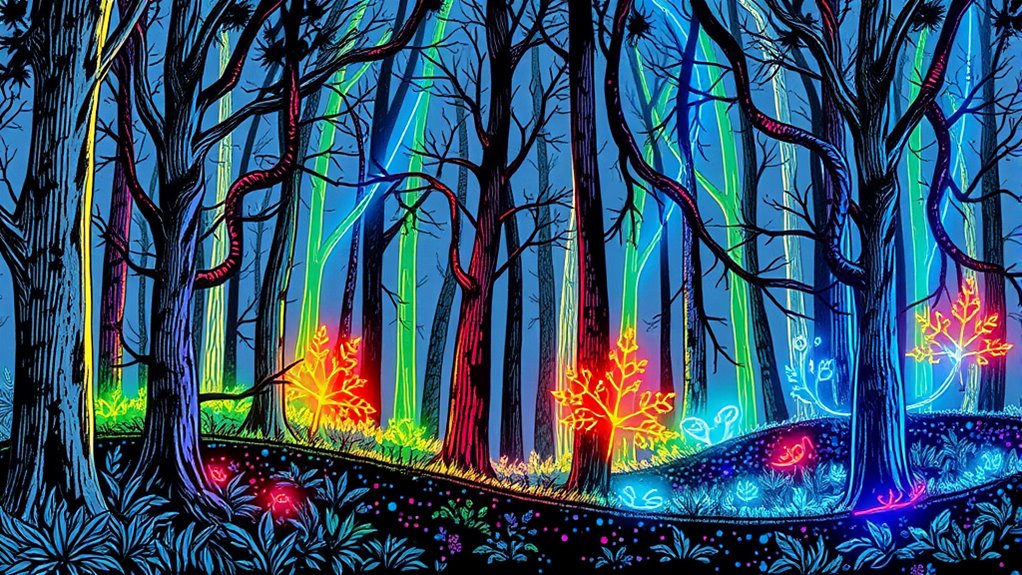
In today’s creative landscape, blending traditional analog illustration with digital effects opens up new possibilities for artists. It’s a process that allows you to harness the strengths of traditional techniques while leveraging the versatility of digital integration. By combining the tactile quality of hand-drawn art with the precision and flexibility of digital tools, you can create artwork that’s both authentic and innovative. This approach encourages experimentation, giving you the freedom to develop unique styles that stand out and resonate deeply with viewers.
Blending traditional and digital techniques unlocks creative freedom and authentic, innovative artwork.
When you start with traditional techniques, you lay a solid foundation. Whether you’re using pencils, inks, watercolor, or gouache, these methods foster a personal connection to your work. You get to experience the physical act of drawing, which often results in a distinct energy and texture that’s hard to replicate digitally. Once your illustration is complete, you can scan or photograph it to bring it into the digital domain. This step is vital for digital integration, as it preserves the original qualities of your traditional work while opening it up to endless enhancements.
Digital tools give you the ability to add effects, refine details, and manipulate your artwork without damaging the original piece. For example, you might use photo editing software to adjust color balance or add subtle textures that mimic traditional media like watercolor washes or ink splatters. Layering digital effects over your traditional base allows you to experiment freely, trying out different color schemes, lighting, and compositional tweaks without the need for multiple physical versions. This seamless integration makes it easier to produce polished, professional-looking pieces while maintaining the authenticity of your original techniques.
Moreover, digital integration doesn’t replace traditional techniques; it complements them. You can choose to add digital effects selectively, enhancing specific areas of your illustration to draw focus or create mood. This approach guarantees your work retains the handcrafted feel while benefiting from digital precision. Additionally, digital platforms support your workflow by enabling easy sharing, printing, and even animation, expanding your creative possibilities far beyond what’s possible with only traditional means.
Ultimately, blending traditional techniques with digital effects empowers you as an artist. It allows you to explore new styles, streamline your process, and produce artwork that’s rich in texture yet versatile in presentation. As you develop your skills, you’ll find that the synergy between analog and digital methods leads to innovative results, pushing the boundaries of your creativity. This fusion not only enhances your technical proficiency but also deepens your connection to your art, making each piece uniquely yours.
Frequently Asked Questions
What Are the Best Tools for Integrating Analog and Digital Artwork?
You should use tools like Adobe Photoshop and Corel Painter to integrate analog and digital artwork. These programs excel at color matching and texture simulation, helping you blend traditional sketches with digital effects seamlessly. Wacom tablets offer precise control for digital editing, allowing you to add subtle textures and refine details. By combining these tools, you can achieve a cohesive look that highlights the unique qualities of both analog and digital techniques.
How Do I Maintain the Authenticity of Traditional Artwork Digitally?
You preserve the authenticity of traditional artwork digitally by carefully maintaining color preservation and texture authenticity. Imagine your artwork’s tactile strokes and nuanced hues standing firm amidst a digital landscape. Use high-resolution scans, avoid over-editing, and apply subtle digital filters to keep the original feel intact. Emphasize preserving the unique textures and color nuances, so your digital version reflects the raw, genuine essence of your handmade work.
Can Digital Effects Completely Replace Traditional Illustration Techniques?
Digital effects can’t fully replace traditional illustration techniques because they often lack the tactile feel and artistic authenticity of hand-made art. While digital tools offer versatility, they tend to lean towards a different aesthetic. You should consider blending digital and traditional methods to preserve the integrity of your work. This hybrid approach lets you enjoy digital flexibility while maintaining the unique qualities of traditional illustration, enriching your artistic authenticity.
What Skills Are Essential for Artists Blending Analog and Digital Methods?
You need strong color theory knowledge and solid composition skills to blend analog and digital methods effectively. Understanding how colors interact helps you create cohesive artwork, while good composition ensures your pieces are balanced and engaging. You should also develop technical proficiency with digital tools, alongside traditional techniques, so you can seamlessly incorporate effects and textures. Adaptability and a creative mindset are essential to successfully merge both worlds into compelling art.
How Do I Choose the Right Balance Between Analog and Digital Elements?
You can find the perfect balance by focusing on texture harmony and color consistency. Start by emphasizing the tactile quality of your analog work, then enhance it with digital touches that complement without overpowering. Use digital tools to refine colors and bring cohesion, ensuring neither element dominates. Trust your intuition, experiment with different ratios, and step back often to see how the elements blend naturally, creating a seamless artistic fusion.
Conclusion
Think of your artwork as a garden: analog sketches are your roots, grounding you in tradition, while digital effects are the vibrant blossoms that catch the eye. When you blend these elements, you create a lush landscape full of depth and life. Embrace the harmony, nurture your skills, and watch your creativity bloom beyond boundaries. In this fusion, you cultivate a masterpiece that’s both timeless and fresh, a true reflection of your artistic journey.