Biomimicry in design encourages you to learn from nature’s proven solutions to create smarter, more sustainable products and structures. By observing how plants, animals, and ecosystems operate efficiently and with minimal environmental impact, you can develop innovative ideas that align with ecological principles. This approach promotes resource conservation and resilience, inspiring you to think differently about technology and sustainability. Keep exploring to discover how nature’s wisdom can transform your design process.
Key Takeaways
- Biomimicry involves mimicking natural structures and processes to create innovative, sustainable designs.
- Nature’s solutions optimize efficiency, resilience, and resource use, guiding eco-friendly product development.
- Learning from ecosystems promotes designs that harmonize with the environment and reduce ecological impact.
- Biomimicry inspires solutions like self-cleaning surfaces and energy-efficient buildings based on natural models.
- Emphasizing principles from nature fosters a mindset of sustainability, innovation, and ecological respect.
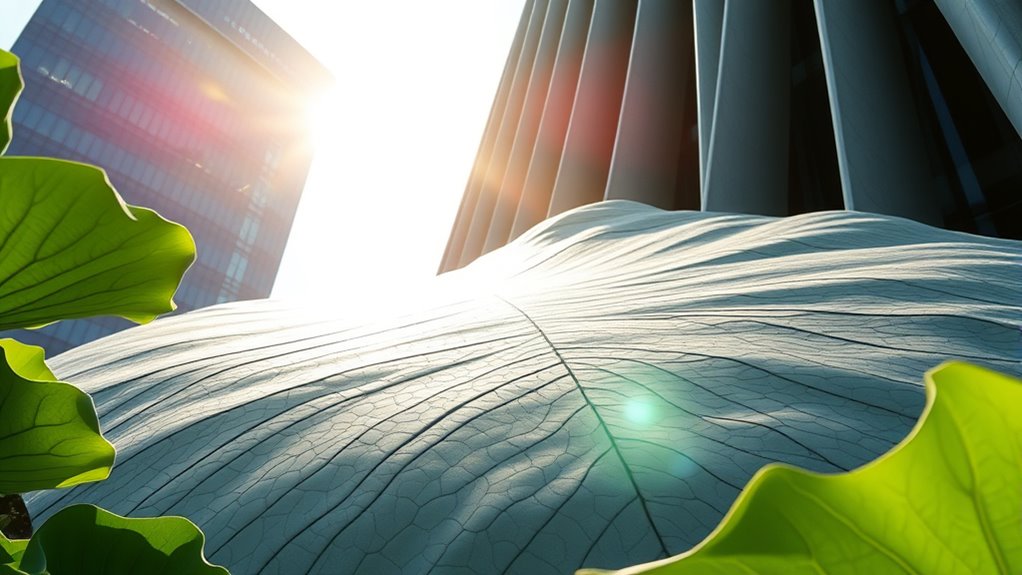
Biomimicry in design involves taking inspiration from nature’s time-tested solutions to create innovative and sustainable products. When you look to the natural world for ideas, you tap into a vast reservoir of sustainable innovation that has evolved over millions of years. Nature’s designs are optimized for efficiency, resilience, and minimal environmental impact, making them perfect models for human ingenuity. By observing how plants, animals, and ecosystems solve complex problems, you can develop products and systems that are not only functional but also environmentally friendly. This approach helps you move away from traditional, resource-intensive manufacturing toward designs that harmonize with ecological processes.
Harness nature’s solutions to create innovative, sustainable, and efficient designs that harmonize with ecological processes.
Natural inspiration fuels your creativity by providing real-world solutions that have been refined through evolution. For instance, you might study the structure of a lotus leaf to develop self-cleaning surfaces or analyze the way termite mounds regulate temperature to design energy-efficient buildings. These examples show how nature’s solutions can be adapted to human needs, resulting in smarter, more sustainable innovations. When you incorporate biomimicry into your design process, you’re not just copying nature; you’re learning from its principles to solve contemporary challenges. This mindset encourages you to reflect on the entire lifecycle of a product, from raw material extraction to disposal, ensuring that your creations are aligned with ecological balance.
Additionally, studying natural systems can reveal efficient resource utilization, guiding you to develop products that use fewer materials and energy. One of the key benefits of using natural inspiration is that it often leads to simpler, more elegant solutions. Nature’s designs tend to be minimal yet highly effective, reducing waste and resource consumption. This efficiency is essential for sustainable innovation, especially as global resources become scarcer. By mimicking natural processes, you can develop products that perform better while using fewer materials. For example, studying the way fish move through water has inspired more efficient propulsion systems for boats and underwater vehicles. Such innovations showcase how biomimicry drives technological progress while respecting environmental limits.
Moreover, embracing biomimicry encourages you to think holistically, considering the interconnectedness of living systems. It pushes you to design with the environment in mind, reducing negative impacts and fostering regenerative solutions. This perspective aligns with the growing demand for sustainable products that prioritize long-term ecological health. When you leverage natural inspiration, you contribute to a future where technology and nature coexist symbiotically. In summary, biomimicry in design isn’t just about creating smarter products; it’s about cultivating a mindset that values sustainability, efficiency, and respect for the natural world.

Self-Cleaning Materials and Surfaces: A Nanotechnology Approach
As an affiliate, we earn on qualifying purchases.
As an affiliate, we earn on qualifying purchases.
Frequently Asked Questions
How Does Biomimicry Influence Sustainable Urban Development?
Biomimicry influences sustainable urban development by enhancing urban resilience and promoting ecological integration. You can design buildings and infrastructure inspired by nature’s efficient systems, making cities more adaptable to climate change and disasters. By mimicking natural processes, you create spaces that harmonize with ecosystems, reducing environmental impact. This approach fosters resilient, sustainable communities where urban growth coexists seamlessly with the environment, ensuring long-term sustainability and improved quality of life.
What Are the Biggest Challenges in Applying Biomimicry to Architecture?
You face challenges in applying biomimicry to architecture, like balancing innovative replication with practicality. Only about 15% of biomimetic designs reach full-scale implementation, highlighting hurdles. Ethical dilemmas also arise when mimicking nature, such as respecting ecosystems and biodiversity. These issues demand careful consideration to guarantee sustainable, responsible innovation, making it essential for architects to navigate technical feasibility alongside ethical responsibilities for successful biomimetic integration.
How Can Small Businesses Incorporate Biomimicry Principles Effectively?
You can incorporate biomimicry principles into your small business by focusing on innovative branding and marketing strategies that highlight your eco-friendly approach. Use nature-inspired visuals and messaging to attract conscious consumers. Implement sustainable practices inspired by natural systems, like energy efficiency or biodegradable materials. Share your story through storytelling, emphasizing your commitment to learning from nature, which can differentiate your brand and resonate with customers seeking environmentally responsible options.
Are There Any Legal or Ethical Considerations in Biomimetic Design?
Yes, you must consider legal and ethical issues in biomimetic design. Think of it as walking a tightrope, balancing innovation with responsibility. Protect your ideas through intellectual property rights, but also guarantee ethical sourcing of natural inspiration to avoid exploitation. Respect nature’s integrity, and be transparent about your process. By doing so, you safeguard both your work and the environment, creating sustainable designs that honor both innovation and ethics.
How Does Biomimicry Impact the Cost and Timeline of Product Development?
Biomimicry can increase your product development costs and timelines initially due to research and testing. However, it often leads to cost savings in manufacturing and enhanced innovation acceleration over time. By learning from nature’s efficient solutions, you can design more sustainable and effective products, reducing long-term expenses. Embracing biomimicry might require upfront investment, but it ultimately streamlines processes and fosters breakthroughs that benefit your project’s overall timeline and budget.

Biomimicry and Sustainable Building Performance (Routledge Research Collections for Construction in Developing Countries)
As an affiliate, we earn on qualifying purchases.
As an affiliate, we earn on qualifying purchases.
Conclusion
As you explore biomimicry, you realize that nature’s solutions often mirror your own innovations, blurring the line between human and natural ingenuity. Coincidentally, by learning from nature, you find that your creations become more sustainable and effective, almost as if they were meant to be. This harmony reminds you that true inspiration often comes from the world around you, guiding you to design with purpose and respect—because sometimes, nature’s secrets are already within your reach.
biomimicry inspired water propulsion system
As an affiliate, we earn on qualifying purchases.
As an affiliate, we earn on qualifying purchases.

1.5 Times Human Ear Anatomy Model with Base – Professional PVC Outer Middle Inner Ear Structure Simulation Model for Teaching Demonstration
Made of washable eco-friendly PVC material, this model has the clear line structure to show the positional relationship…
As an affiliate, we earn on qualifying purchases.
As an affiliate, we earn on qualifying purchases.