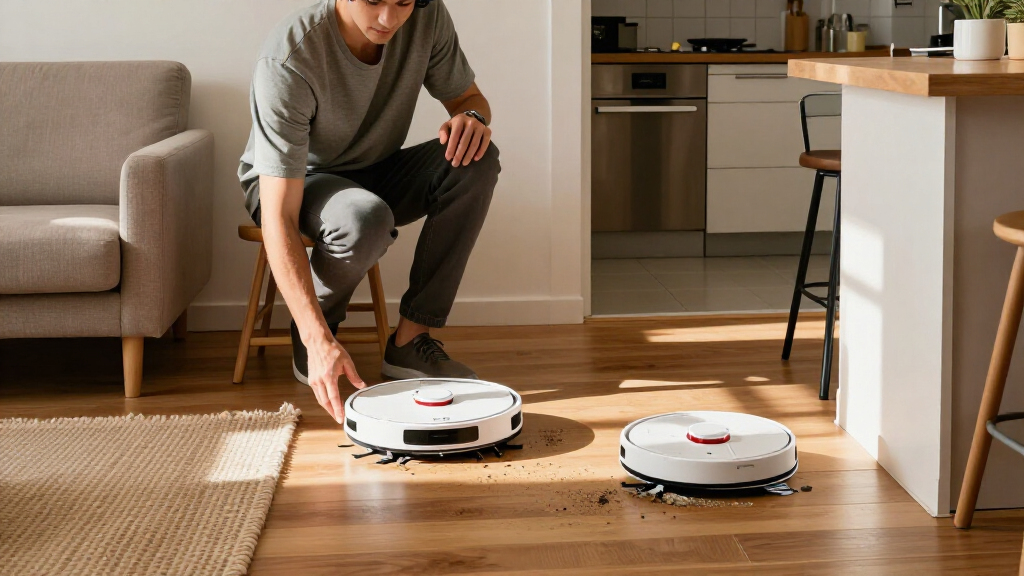
For most small homes, I’d start with the Roborock Q7 L5 for its vacuum-and-mop versatility, while the eufy 11S Max is a simpler choice for buyers who want a low-profile vacuum without a bulky dock. If less hands-on emptying matters more than keeping the setup compact, the iRobot Roomba 105 Combo and its AutoEmpty dock offer a different kind of convenience. The main tradeoff is between a small, straightforward machine and a feature-rich model that needs more space and upkeep. I compare all 15 picks by how well their features suit compact rooms, furniture, and storage limits. Read on for the full breakdown and help matching a model to your home.

Get home appliances delivered free — and shop member deals
- Fast, free delivery on millions of items
- Access to Prime Big Deal Days deals on October 6–7
- Prime Video, Amazon Music and more included
Complete the kit


Key Takeaways
Compactness is more than robot size: a self-emptying base can take up more room than the vacuum itself, so dock placement matters in an apartment or small house.
Navigation separates convenience from basic cleaning: models with more deliberate route planning are better suited to rooms with tight furniture layouts than simpler options that rely on less precise movement.
Mop features suit hard floors, not every home: combo models such as the Roborock Q7 L5 and Tikom G8000 Max add floor-care flexibility, but buyers with mostly carpet may get little from the added hardware.
Self-emptying trades storage for less frequent bin care: the Roomba 105 Combo, Tikom L8000 Plus, and Shark models with self-emptying bases suit buyers who value reduced routine handling and can spare space for a dock.
Simple models can be the better small-home fit: options such as the eufy 11S Max and ILIFE V2 avoid some of the setup and dock demands of feature-heavy models, though they offer fewer convenience features.
| ILIFE A30s Robot Vacuum, White |  | Best for Mapped Vacuuming | Navigation: LDS LiDAR with SLAM | Maximum suction: 10,000 Pa in Spot Mode | Battery life: Up to 150 minutes | VIEW LATEST PRICE | See Our Full Breakdown |
| ILIFE V5s Max Robot Vacuum with 4000Pa Suction and Gyro Navigation |  | Best Slim Pick for Basic Cleaning | Navigation: Gyroscope | Maximum suction: 4,000 Pa in Spot Mode | Battery life: Up to 100 minutes | VIEW LATEST PRICE | See Our Full Breakdown |
| Roborock Q7 L5 Robot Vacuum and Mop Combo |  | Best for Multi-Floor Mapping and Mopping | Navigation: LiDAR | Suction power: 8,000 Pa | Water tank capacity: 270 ml | VIEW LATEST PRICE | See Our Full Breakdown |
| ILIFE V2 Robot Vacuum Cleaner, White |  | Best for No-Wi-Fi Simplicity | Runtime: Up to 120 minutes | Dimensions: 12.2 × 12.2 × 2.99 inches | Dust capacity: 300 ml | VIEW LATEST PRICE | See Our Full Breakdown |
| Tikom G8000 Max Robot Vacuum and Mop Combo |  | Best Slim Vacuum-and-Mop Combo | Suction power: 5,000 Pa | Dustbin capacity: 450 ml | Water tank capacity: 300 ml | VIEW LATEST PRICE | See Our Full Breakdown |
| iRobot Roomba 105 Combo Robot Vacuum and Mop with AutoEmpty Dock |  | Best for Low-Maintenance Vacuuming and Mopping | Navigation: ClearView LiDAR | Cleaning modes: Vacuum only, mop only, or vacuum and mop | Self-emptying capacity: Up to 75 days of debris | VIEW LATEST PRICE | See Our Full Breakdown |
| Fey Robot Vacuum Cleaner with Tangle-Free Suction and Self-Charging |  | Best Slim, Simple Pick for Hard Floors | Model: HKS-803 | Suction: 2900 Pa | Dimensions: 12.2 × 12.2 × 2.95 in | VIEW LATEST PRICE | See Our Full Breakdown |
| eufy 11S Max Robot Vacuum Cleaner | 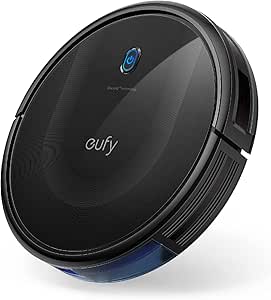 | Best for Quiet, App-Free Cleaning | Profile height: 2.85 inches | Runtime: Up to 100 minutes on hardwood floors | Dustbin capacity: 600 ml | VIEW LATEST PRICE | See Our Full Breakdown |
| Lefant M210 Pro Robot Vacuum, White |  | Best Compact App-Controlled Pick | Dimensions: 11 in diameter × 2.99 in height | Cleaning modes: 6 | Suction levels: 3 | VIEW LATEST PRICE | See Our Full Breakdown |
| Tikom L8000 Plus Robot Vacuum and Mop with Self-Emptying Base |  | Best for Multi-Floor Homes with Heavy Cleaning Needs | Maximum suction: 6000 Pa | Navigation: LiDAR | Maximum saved floor maps: 5 | VIEW LATEST PRICE | See Our Full Breakdown |
| 3-in-1 Robot Vacuum and Mop with 5000Pa Suction, App and Alexa Control |  | Best for Pet Hair on Wood Floors | Suction: 5000 Pa | Functions: Sweeping, vacuuming, and mopping | Battery capacity: 2500 mAh | VIEW LATEST PRICE | See Our Full Breakdown |
| Robot Vacuum and Mop Combo, 4000 Pa |  | Best Compact Budget-Feature Fit | Suction power: 4000 Pa | Runtime: Up to 120 minutes | Controls: App and remote | VIEW LATEST PRICE | See Our Full Breakdown |
| ROPVACNIC Robot Vacuum and Mop Combo, 5200 Pa |  | Best for Adjustable Cleaning | Suction power: 5200 Pa | Battery life: Up to 120 minutes | Battery type: Lithium-ion | VIEW LATEST PRICE | See Our Full Breakdown |
| Shark Navigator Robot Vacuum with 30-Day Self-Emptying Base, White, AV2110S |  | Best for Low-Maintenance Pet Homes | Navigation: LiDAR SmartPath | Self-empty base capacity: Up to 30 days | Dust collection: Bagless | VIEW LATEST PRICE | See Our Full Breakdown |
| Shark AV2501S AI Ultra Robot Vacuum with Self-Empty Base |  | Best Premium Mapping and Filtration | Model: AV2501S | Navigation: Matrix Clean with 360° LiDAR mapping | Base capacity: Up to 30 days of dirt and debris | VIEW LATEST PRICE | See Our Full Breakdown |
| robot vacuums for small home | Controls | Cleaning modes |
|---|---|---|
| ILIFE A30s Robot Vacuum | App, remote, and voice | — |
| ILIFE V5s Max Robot Vacuum wit | — | Smart, Edge, and Spot |
| Roborock Q7 L5 Robot Vacuum an | — | — |
| ILIFE V2 Robot Vacuum Cleaner | Remote control and one-touch button | Auto, Spot, and Edge |
| Tikom G8000 Max Robot Vacuum a | App, remote, voice, and button | Spot, Edge, Zig-zag, and Manual |
| iRobot Roomba 105 Combo Robot | — | Vacuum only, mop only, or vacuum and mop |
| Fey Robot Vacuum Cleaner with | Remote control | Auto, random, edge, and spot |
| eufy 11S Max Robot Vacuum Clea | Remote control and onboard buttons | — |
| Lefant M210 Pro Robot Vacuum | App and voice control; compatible with Amazon Echo and Google Home | 6 |
| Tikom L8000 Plus Robot Vacuum | App and voice control | — |
| 3-in-1 Robot Vacuum and Mop wi | App and Alexa | Automatic, edge, and spot |
| Robot Vacuum and Mop Combo | App and remote | Vacuum and mop |
| ROPVACNIC Robot Vacuum and Mop | — | — |
| Shark Navigator Robot Vacuum w | App control | — |
| Shark AV2501S AI Ultra Robot V | App and voice control | — |
More Details on Our Top Picks
ILIFE A30s Robot Vacuum, White
The ILIFE A30s is the strongest fit here for a small home where planned routes matter more than mopping. Its LiDAR mapping and no-go zones can help organize cleaning around furniture and keep the robot away from chosen areas, while the 500 ml dustbin means less frequent emptying than the V5s Max’s 300 ml bin. Its suction reaches 10,000 Pa in Spot Mode, but that figure applies to focused cleaning rather than every routine run. The dual anti-tangle brushes also suit homes with shedding pets. Unlike the Roborock Q7 L5 and Tikom G8000 Max, the A30s does not mop, so it is a vacuum-first choice, not a floor-care combo. It also needs 2.4 GHz Wi-Fi for connected controls.
Pros:- LiDAR mapping supports planned cleaning routes and no-go zones
- 500 ml dustbin is larger than the V5s Max’s 300 ml capacity
- Dual anti-tangle brushes are suited to pet hair
- App, voice, and remote controls offer several ways to start cleaning
Cons:- Does not mop, unlike the Roborock Q7 L5 and Tikom G8000 Max
- 10,000 Pa suction is specified for Spot Mode, not as a general cleaning level
- Wi-Fi compatibility is limited to 2.4 GHz
Best for: Small-home owners who want mapped vacuum routes, no-go zones, and a larger dustbin, especially in homes with pet hair.
Not ideal for: Buyers who want one robot to vacuum and mop, or whose home Wi-Fi is limited to 5 GHz.
- Navigation:LDS LiDAR with SLAM
- Maximum suction:10,000 Pa in Spot Mode
- Battery life:Up to 150 minutes
- Dustbin capacity:500 ml
- Brushes:Dual anti-tangle brushes
- Controls:App, remote, and voice
- Wi-Fi:2.4 GHz
- Mopping:Not supported
Our verdict“Choose the A30s if mapped vacuuming and pet-hair handling matter more than adding a mop.”
ILIFE V5s Max Robot Vacuum with 4000Pa Suction and Gyro Navigation
At 2.99 inches tall, the ILIFE V5s Max is a practical choice for a small home with low-clearance furniture and a preference for simple, scheduled vacuuming. Gyro navigation gives it more orderly routes than a purely random approach, and it returns to its dock when cleaning is done. But it has no mapping function, so it cannot offer the room-level planning and no-go zones available on the ILIFE A30s or Roborock Q7 L5. Its 4,000 Pa maximum applies in Spot Mode, and the 300 ml dust capacity is modest, making frequent debris pickup more hands-on. It handles hard floors and low-pile carpet, but it does not mop. This is the simpler, quieter alternative to the A30s, with less navigation control and a smaller bin.
Pros:- 2.99-inch height can fit under many low-clearance furnishings
- Gyro navigation supports systematic routes
- Automatic return to the charging dock
- App, voice, and remote controls plus Smart, Edge, and Spot modes
Cons:- No mapping function, unlike the ILIFE A30s and Roborock Q7 L5
- 300 ml dust capacity requires more frequent emptying than the A30s
- No mopping and limited suitability for low-pile carpets
Best for: Apartment dwellers with low furniture, mostly hard floors, and a need for a slim vacuum with remote and voice controls.
Not ideal for: Buyers who want room mapping, no-go zones, mopping, or a larger dustbin for frequent pet-hair cleanup.
- Navigation:Gyroscope
- Maximum suction:4,000 Pa in Spot Mode
- Battery life:Up to 100 minutes
- Dust capacity:300 ml
- Height:2.99 inches
- Noise level:65 dB
- Cleaning modes:Smart, Edge, and Spot
- Wi-Fi:2.4 GHz
Our verdict“Pick the V5s Max for slim, straightforward vacuuming, but choose the A30s if mapping is a priority.”
Roborock Q7 L5 Robot Vacuum and Mop Combo
The Roborock Q7 L5 is the most capable choice in this group for a small home that needs mapped vacuuming across more than one floor and occasional mopping. LiDAR navigation, multi-floor maps, and app-based no-go zones give it more control than the gyro-guided ILIFE V5s Max, while its 8,000 Pa suction and anti-tangle brushes target debris and hair. Vacuuming and mopping at once can simplify routine hard-floor care, but the 270 ml water tank does not make it a substitute for a dedicated mop. The tank and dustbin are integrated into one part, which can make switching between tasks less convenient. Compared with the vacuum-only ILIFE A30s, this model adds floor wiping and more mapping flexibility, but its 2.4 GHz Wi-Fi restriction remains a connectivity limit.
Pros:- LiDAR navigation supports multi-floor mapping and app-based no-go zones
- Vacuums and mops in the same cleaning session
- 8,000 Pa suction and anti-tangle brushes suit debris and hair
- Washable filter reduces the need to replace the filter after routine cleaning
Cons:- Dustbin and water tank are integrated into one part
- 2.4 GHz Wi-Fi only
- A 270 ml water tank is better suited to routine wiping than larger mopping jobs
Best for: Small-home residents with multiple mapped floors, mixed floor surfaces, and a regular need for light mopping alongside vacuuming.
Not ideal for: Buyers who want separate, simple-to-handle water and dust containers or need 5 GHz Wi-Fi support.
- Navigation:LiDAR
- Suction power:8,000 Pa
- Water tank capacity:270 ml
- Battery life:Up to 150 minutes
- Mapping:Multi-floor
- Filter:Washable
- Noise level:60 dB
- Wi-Fi:2.4 GHz
Our verdict“Choose the Q7 L5 if multi-floor maps and combined vacuuming and mopping are worth the more involved container setup.”
ILIFE V2 Robot Vacuum Cleaner, White
The ILIFE V2 suits a small home where basic, scheduled vacuuming matters more than app features. Its remote and one-touch controls need no Wi-Fi, so setup stays simple compared with the connected ILIFE A30s and Tikom G8000 Max. A tangle-free suction port is a useful design choice for pet hair, while the 2.99-inch profile can reach beneath some furniture. It offers auto, spot, and edge modes and returns to its dock when its battery runs low. The tradeoff is a single power level and no mapping, so it cannot target rooms with the precision of the A30s or Roborock Q7 L5. Its 300 ml dust capacity is also smaller than the A30s’s 500 ml bin, and carpet use is best kept to low-pile surfaces.
Pros:- Remote and one-touch operation work without Wi-Fi
- Tangle-free suction port is designed for pet hair
- 2.99-inch profile can reach under some furniture
- Scheduled cleaning and automatic return to the dock
Cons:- Single power level offers less cleaning adjustment than the V5s Max
- 300 ml dust capacity is smaller than the ILIFE A30s’s 500 ml bin
- Recommended for low-pile carpet rather than broader carpet coverage
Best for: People in compact homes who want scheduled, low-pile-floor cleaning without connecting a robot to Wi-Fi.
Not ideal for: Buyers who need mapped routes, adjustable suction, larger dust capacity, or dependable cleaning on thicker carpet.
- Runtime:Up to 120 minutes
- Dimensions:12.2 × 12.2 × 2.99 inches
- Dust capacity:300 ml
- Cleaning modes:Auto, Spot, and Edge
- Controls:Remote control and one-touch button
- Wi-Fi:Not required
- Charging:Automatically returns to dock when battery is low
- Filter:Sponge
Our verdict“Choose the V2 for uncomplicated, Wi-Fi-free cleaning on hard floors and low-pile carpet.”
Tikom G8000 Max Robot Vacuum and Mop Combo
The Tikom G8000 Max makes sense for a small home that needs a slim robot to vacuum and mop in one pass, without stepping up to the Roborock Q7 L5’s multi-floor mapping. Its 2.99-inch profile can help it reach under some furniture, and the 450 ml dustbin is larger than the V5s Max’s 300 ml capacity. The 300 ml water tank and 5,000 Pa suction support routine cleaning on hard floors and short- to medium-pile carpet. Four modes and app, remote, voice, and button controls give owners flexibility, while anti-collision and anti-fall sensors help around furniture and stairs. The compromises are limited carpet guidance and a runtime figure specified only for quiet mode. Unlike the Roborock, the product information does not list LiDAR mapping or multi-floor maps.
Pros:- Vacuums and mops in one pass
- 2.99-inch height can fit under some furniture
- 450 ml dustbin holds more than the ILIFE V5s Max’s 300 ml bin
- App, remote, voice, and button controls with four cleaning modes
Cons:- Runtime of up to 150 minutes is specified for quiet mode only
- Carpet guidance covers short- and medium-pile surfaces, not all carpet types
- No LiDAR or multi-floor mapping is listed, unlike the Roborock Q7 L5
Best for: Small-home owners who want a slim vacuum-and-mop robot, multiple control options, and enough bin capacity for routine cleaning.
Not ideal for: Buyers who need mapped room-by-room cleaning, a stated runtime outside quiet mode, or performance guidance for high-pile carpet.
- Suction power:5,000 Pa
- Dustbin capacity:450 ml
- Water tank capacity:300 ml
- Maximum runtime:Up to 150 minutes in quiet mode
- Height:2.99 inches
- Cleaning modes:Spot, Edge, Zig-zag, and Manual
- Controls:App, remote, voice, and button
- Floor types:Hard floors, tiles, short- and medium-pile carpets, and rugs
Our verdict“Pick the G8000 Max for slim, combined vacuuming and mopping, and favor the Q7 L5 if mapped multi-floor cleaning matters more.”
iRobot Roomba 105 Combo Robot Vacuum and Mop with AutoEmpty Dock
For a small home where floor space is limited but cleaning chores still pile up, the Roomba 105 Combo pairs vacuuming and mopping with an AutoEmpty Dock that holds up to 75 days of debris. Its LiDAR mapping supports room-based schedules, while carpet detection helps keep rugs dry during mopping. That makes it a more hands-off choice than the eufy 11S Max, which has no app or Wi-Fi control and does not mop. The tradeoff is a dock that takes up room, so measure the spot where it will live before choosing it for a very tight layout. Setup also requires 2.4 GHz Wi-Fi, and cleaning-solution choices are limited to those approved by iRobot. I’d choose it when reducing both bin emptying and separate hard-floor cleanup matters more than keeping the footprint simple.
Pros:- AutoEmpty Dock holds up to 75 days of debris, cutting down on routine bin emptying.
- Offers vacuum-only, mop-only, and combined cleaning modes.
- LiDAR mapping and room scheduling help target cleaning in a compact floor plan.
- Carpet detection helps prevent rugs from getting wet during mopping.
Cons:- The AutoEmpty Dock needs dedicated floor space that may be scarce in a small home.
- Setup and operation require a 2.4 GHz Wi-Fi network.
- Compatible cleaning solutions are limited to options approved by iRobot.
Best for: Small-home residents with a mix of rugs and hard floors who want scheduled mopping and less frequent dustbin emptying.
Not ideal for: People with very little space for a dock, or households that need 5 GHz-only Wi-Fi or broad cleaning-solution choices.
- Navigation:ClearView LiDAR
- Cleaning modes:Vacuum only, mop only, or vacuum and mop
- Self-emptying capacity:Up to 75 days of debris
- Carpet handling:Detects and avoids carpet while mopping
- Allergen filtration:Traps 99% of allergens as small as 0.7 microns
- Wi-Fi:2.4 GHz
- Supported surfaces:Carpet and hard floor
Our verdict“Choose the Roomba 105 Combo if you want one mapped robot to handle rugs, hard floors, and less frequent debris disposal, and can spare room for its dock.”
Fey Robot Vacuum Cleaner with Tangle-Free Suction and Self-Charging
The Fey HKS-803 takes a pared-back approach that suits small homes with mostly hard flooring: its 2.95-inch profile can reach beneath some low furniture, and its brush-free suction design is intended to reduce hair tangles. Four cleaning modes and self-charging add basic coverage without requiring an app. Compared with the Lefant M210 Pro, Fey gives up app, voice, and scheduled control, but offers a similarly compact form and a remote-based setup. Its 200 ml dust capacity is the more significant compromise in a small home with pets or frequent shedding, since the bin may need regular attention. Runtime figures are also inconsistent: the specs list 150 minutes, while the description gives different estimates by power level. I’d pick it for straightforward hard-floor upkeep, not as a feature-rich whole-home system.
Pros:- Slim 2.95-inch profile can fit beneath some low-clearance furniture.
- Brush-free suction design is intended to reduce hair tangles.
- Four modes cover automatic, random, edge, and spot cleaning.
- Self-charging and obstacle and drop sensors support basic unattended operation.
Cons:- The 200 ml dustbin is small and can mean frequent emptying.
- Runtime claims conflict between the listed specification and product description.
- Remote control is the only listed control method, with no app or voice support.
Best for: Budget-conscious residents with mostly hard floors who want a slim robot, simple remote controls, and a brush-free design for pet hair.
Not ideal for: Pet households with heavy shedding, larger floor plans, or buyers who want app scheduling and dependable, clearly specified runtime.
- Model:HKS-803
- Suction:2900 Pa
- Dimensions:12.2 × 12.2 × 2.95 in
- Cleaning modes:Auto, random, edge, and spot
- Filter:HEPA
- Dust capacity:200 ml
- Noise level:56 dB
- Controls:Remote control
Our verdict“Pick the Fey for simple, slim hard-floor cleaning, but skip it if you need a large bin, app control, or clear runtime expectations.”
eufy 11S Max Robot Vacuum Cleaner
The eufy 11S Max keeps robot cleaning uncomplicated: a 2.85-inch profile, quiet operation, and up to 100 minutes of runtime on hardwood make it a good match for compact homes where the robot needs to slip under furniture and run without much fuss. Its 600 ml dustbin is notably larger than the Fey HKS-803’s 200 ml bin, so it needs less frequent emptying between runs. BoostIQ adjusts suction across surfaces, and the robot self-recharges, but control is limited to a remote and onboard buttons. Unlike the app-connected Lefant M210 Pro, it cannot schedule or direct cleaning from a phone. That omission is a real tradeoff for anyone who wants room-by-room control; for buyers who prefer a simple, quiet routine and do not need connectivity, the restrained setup is the appeal.
Pros:- 2.85-inch profile can reach beneath more low furniture than taller robots.
- Quiet 55 dB operation is less disruptive in small, shared living spaces.
- 600 ml dustbin holds more than the Fey HKS-803’s 200 ml capacity.
- BoostIQ adjusts suction across supported floor types.
Cons:- No Wi-Fi or app connectivity; controls are limited to the remote and onboard buttons.
- Does not offer mopping or app-based room selection.
- The listed runtime is up to 100 minutes on hardwood, which may limit coverage in larger layouts.
Best for: Residents in small homes with hard floors or medium-pile carpet who value a quiet, slim robot and a larger dustbin over app features.
Not ideal for: Buyers who want smartphone scheduling, voice control, or room-specific cleaning commands.
- Profile height:2.85 inches
- Runtime:Up to 100 minutes on hardwood floors
- Dustbin capacity:600 ml
- Noise level:55 dB
- Cleaning path width:12.8 inches
- Supported surfaces:Hard floors, tile, and medium-pile carpets
- Connectivity:No Wi-Fi or app connectivity
- Controls:Remote control and onboard buttons
Our verdict“Choose the eufy 11S Max for quiet, low-profile vacuuming with a roomy bin if app and voice control are not priorities.”
Lefant M210 Pro Robot Vacuum, White
At 11 inches in diameter and just under 3 inches tall, the Lefant M210 Pro is shaped for small homes with narrow routes and furniture to clean beneath. It adds six modes, three suction levels, scheduling, and app and voice control, giving it a more adjustable routine than the eufy 11S Max, which relies on a remote and onboard buttons. Its 500 ml bin is also much larger than the Fey HKS-803’s 200 ml capacity, a useful difference for pet hair and day-to-day debris. The brushless suction port is designed to handle hair, though the product data does not specify a suction figure, so I would not choose it based on a power comparison. It supports hard floors and low-pile carpet, but only 2.4 GHz Wi-Fi. I’d favor it when compact dimensions and connected control matter more than a self-emptying base.
Pros:- Compact 11-inch diameter and 2.99-inch height suit tight routes and low furniture.
- Six cleaning modes and three suction levels allow more control over routine cleaning.
- App scheduling and compatible voice control offer more flexibility than the eufy 11S Max.
- 500 ml dustbin is substantially larger than the Fey HKS-803’s 200 ml bin.
Cons:- Supports only 2.4 GHz Wi-Fi.
- Designed for hard floors and low-pile carpet rather than thicker carpet.
- No self-emptying base is listed, so the onboard bin still needs manual emptying.
Best for: Small-home owners who want a compact robot with phone scheduling and voice control for hard floors and low-pile carpet.
Not ideal for: Households with 5 GHz-only Wi-Fi, thick carpeting, or a need for a self-emptying dock.
- Dimensions:11 in diameter × 2.99 in height
- Cleaning modes:6
- Suction levels:3
- Runtime:Up to 120 minutes
- Dustbin capacity:500 ml
- Supported surfaces:Hard floor and low-pile carpet
- Connectivity:2.4 GHz Wi-Fi and Bluetooth
- Controls:App and voice control; compatible with Amazon Echo and Google Home
Our verdict“Choose the Lefant M210 Pro if you want compact dimensions and app scheduling without moving up to a larger dock-based system.”
Tikom L8000 Plus Robot Vacuum and Mop with Self-Emptying Base
The Tikom L8000 Plus brings a lot of automation to a small home: LiDAR maps up to five floors, app controls support room selection and no-go zones, and the 3-liter dustbag reduces how often debris needs attention. With up to 6000 Pa suction and carpet-responsive power, it is better suited to mixed flooring and heavier cleanup than the simpler eufy 11S Max, which has a smaller feature set and no app connection. The tradeoff is its self-emptying base, which takes up space that a compact home may not have. Its 150-minute maximum runtime applies in gentle suction mode, not necessarily during demanding cleaning, and the mop holder should be removed or carpet zones excluded to avoid wet rugs. I’d choose it for a mapped, multi-level home where reduced maintenance outweighs the base’s footprint.
Pros:- LiDAR navigation can save maps for up to five floors.
- Three-liter dustbag reduces the frequency of debris disposal.
- App and voice controls support schedules, room selection, and no-go zones.
- Automatically increases suction on carpets and recharges before resuming cleaning.
Cons:- Self-emptying base occupies more space than a basic charging dock.
- The mop holder must be removed or carpet zones excluded to avoid wetting rugs.
- Up to 150 minutes of runtime is specified for gentle suction mode.
Best for: Residents in compact multi-level homes who need saved maps, app-directed room cleaning, and a large-capacity self-emptying base.
Not ideal for: Studio dwellers with little room for a base, or anyone who wants to mop without managing carpet zones or removing the mop holder.
- Maximum suction:6000 Pa
- Navigation:LiDAR
- Maximum saved floor maps:5
- Dustbag capacity:3 liters
- Battery life:Up to 150 minutes in gentle suction mode
- Supported surfaces:Hard floors and carpets
- Connectivity:2.4 GHz and 5 GHz Wi-Fi
- Controls:App and voice control
Our verdict“Choose the L8000 Plus for mapped, multi-floor cleaning and less frequent emptying if you have room for its base and can manage carpet protection while mopping.”
3-in-1 Robot Vacuum and Mop with 5000Pa Suction, App and Alexa Control
This is a useful pick for a small home with wood floors where pet hair and light mopping both matter. Its tangle-free suction port avoids a common brush-wrap nuisance, while sweeping, vacuuming, and mopping in one machine can reduce the need to switch tools. App scheduling and Alexa control make it easier to run short cleaning sessions around a compact layout. Compared with the ROPVACNIC Robot Vacuum and Mop Combo, it offers fewer stated suction levels and less detail on adjustable mopping, but its 5000Pa suction is higher on paper. The tradeoff is a runtime of up to 120 minutes and a surface recommendation that lists wood, so I would not make it my first choice for carpet-heavy homes or buyers needing clear performance guidance across mixed floors.
Pros:- Combines sweeping, vacuuming, and mopping in one unit
- Tangle-free suction port is designed to reduce pet-hair tangles
- App scheduling and Alexa control support hands-off routines
- Automatically recharges when battery power runs low
Cons:- Runtime is limited to up to 120 minutes per charge
- Wood is the only listed surface recommendation
- The product details do not specify adjustable water flow or suction levels
Best for: Pet owners in smaller wood-floor homes who want scheduled vacuuming and occasional mopping from one app-controlled robot.
Not ideal for: Homes dominated by carpet or shoppers who need documented compatibility across several floor types; the listed surface recommendation is wood.
- Suction:5000 Pa
- Functions:Sweeping, vacuuming, and mopping
- Battery capacity:2500 mAh
- Runtime:Up to 120 minutes
- Coverage per charge:Up to 1,440 square feet
- Controls:App and Alexa
- Cleaning modes:Automatic, edge, and spot
- Surface recommendation:Wood
Our verdict“Choose this for a compact wood-floor home with pets if combined cleaning and tangle reduction matter more than broad floor-surface guidance.”
Robot Vacuum and Mop Combo, 4000 Pa
At 11 × 11 inches, this combo has a footprint that suits tight rooms and narrow routes between furniture. It vacuums and mops, and its listed compatibility spans hard floors plus low- and medium-pile carpet, giving it broader stated floor coverage than the wood-focused 3-in-1 model. App and remote controls also give households a choice between scheduling from a phone and making a direct adjustment. The product data lists a HEPA filter, though it does not explain filtration performance or mopping details. Unlike the Shark Navigator AV2110S, it has no self-emptying base or mapped row-cleaning system, so it calls for more frequent hands-on upkeep. I see it as a simple small-space option, not a feature-rich choice for buyers seeking detailed navigation or low-maintenance debris handling.
Pros:- Compact listed dimensions of 11 × 11 × 2 inches
- Combines vacuuming and mopping
- App and remote controls offer flexible operation
- Listed for hard floors, tile, hardwood, laminate, and low- to medium-pile carpet
Cons:- No self-emptying base is listed, so bin maintenance remains hands-on
- Mopping performance details are not provided
- Navigation and room-mapping capabilities are not specified
Best for: Apartment dwellers who want a compact vacuum-and-mop robot with app or remote control and documented compatibility with several floor types.
Not ideal for: Buyers who want a self-emptying dock, mapped cleaning routes, or detailed information about mopping performance.
- Suction power:4000 Pa
- Runtime:Up to 120 minutes
- Controls:App and remote
- Cleaning modes:Vacuum and mop
- Filter:HEPA
- Power source:USB rechargeable
- Dimensions:11 × 11 × 2 inches
- Surface compatibility:Hard floor, low-pile and medium-pile carpet, tile, hardwood, laminate
Our verdict“Pick this for a smaller home where compact dimensions and broad listed floor compatibility matter more than mapping or automated emptying.”
ROPVACNIC Robot Vacuum and Mop Combo, 5200 Pa
The ROPVACNIC stands out for letting owners tune both sides of a vacuum-and-mop routine: it has three suction levels and adjustable water flow. In a small home, that flexibility can help match stronger pickup to a carpeted patch and gentler mopping to hard floors without choosing a more elaborate docked system. Its brush-free design and dual side brushes are intended to collect pet hair while reducing tangles. Compared with the 4000 Pa Robot Vacuum and Mop Combo, it adds voice control, obstacle detection, and automatic recharging, but its listed surface range is narrower: hard floors and low-pile carpets only. That limitation matters for homes with thicker rugs. The app, remote, touchpad, and voice options are useful, though the number of control routes may be more than a buyer wanting simple, minimal setup needs.
Pros:- Adjustable water flow and three suction levels allow cleaning to be tailored
- Brush-free design is intended to reduce pet-hair tangles
- Supports app, remote, touchpad, and voice control
- Obstacle detection and automatic recharging are included
Cons:- Listed surface compatibility is limited to hard floors and low-pile carpets
- Up to 120 minutes of battery life may not suit larger layouts
- The available product details do not specify mapping or room-selection features
Best for: Small mixed-floor homes with hard flooring and low-pile rugs where owners want to adjust suction and water flow for different cleaning jobs.
Not ideal for: Households with medium- or high-pile carpet, or buyers who prefer a basic robot with fewer controls and settings.
- Suction power:5200 Pa
- Battery life:Up to 120 minutes
- Battery type:Lithium-ion
- Surface compatibility:Hardwood floors and low-pile carpets
- Control methods:App, remote, touchpad, and voice
- Voice assistant compatibility:Amazon Echo and Google Home
- Suction levels:3
- Filter:Multi-layer high-efficiency filtration
Our verdict“Choose the ROPVACNIC if you want adjustable vacuuming and mopping for hard floors and low-pile rugs, and skip it for thicker carpet.”
Shark Navigator Robot Vacuum with 30-Day Self-Emptying Base, White, AV2110S
For a small home where frequent bin emptying is the main annoyance, the Shark Navigator’s bagless base holds up to 30 days of debris, cutting down routine contact with collected dust and hair. LiDAR SmartPath maps the home and cleans in orderly rows, a more structured approach than the available details for the ROPVACNIC combo. The self-cleaning, anti-hair-wrap brushroll also gives it a clear role for pet households, while recharge-and-resume can help cover rooms that need more than one battery session. The tradeoff is that this is a vacuum rather than a mop combo, and its listed dust capacity is just 0.21 quarts; the dock handles accumulated debris, but the robot itself still has a small capacity. Scheduling and targeted cleaning also depend on app setup, which may not suit buyers who want physical controls.
Pros:- Bagless self-emptying base holds up to 30 days of debris
- LiDAR SmartPath maps the home and cleans in orderly rows
- Self-cleaning brushroll is designed to reduce hair wrap
- Recharge-and-resume supports longer cleaning sessions
Cons:- Does not include a mopping function
- Listed robot dust capacity is 0.21 quarts
- Scheduling and targeted cleaning require app setup
Best for: Pet owners in a small carpet-and-hard-floor home who want mapped cleaning and fewer manual bin-emptying chores.
Not ideal for: Shoppers who need mopping, dislike app-based setup, or want a clearly stated large onboard dust capacity.
- Navigation:LiDAR SmartPath
- Self-empty base capacity:Up to 30 days
- Dust collection:Bagless
- Brushroll:Self-cleaning with anti-hair wrap
- Battery life:Up to 120 minutes
- Surface recommendation:Carpet and hard floors
- Dust capacity:0.21 quarts
- Controls:App control
Our verdict“Choose this Shark if mapped vacuuming and less frequent emptying matter more than having a mop function or app-free controls.”
Shark AV2501S AI Ultra Robot Vacuum with Self-Empty Base
The AV2501S is the strongest fit here for buyers who want systematic cleaning plus added attention to fine dust. Its 360° LiDAR mapping and Matrix Clean navigation organize coverage across carpets and hard floors, while the HEPA-equipped self-empty base is listed to hold up to 30 days of debris. Compared with the Shark Navigator AV2110S, this model adds HEPA filtration and Matrix Clean navigation; both offer self-emptying and a self-cleaning brushroll, so the premium distinction is most relevant to homes prioritizing mapped coverage and filtration. App and voice controls support scheduling and targeted cleaning, but there is only one listed speed, and the listed dust capacity is 0.09 liters. It also vacuums rather than mops, making it less versatile than the ROPVACNIC for homes that want wet cleaning in the same device.
Pros:- Matrix Clean and 360° LiDAR mapping provide organized coverage
- Self-empty base is listed to hold up to 30 days of debris
- HEPA filtration is included in the self-empty base
- App and voice controls support scheduling and targeted cleaning
Cons:- Does not include a mopping function
- Only one speed is listed
- Listed dust capacity is 0.09 liters
Best for: Small homes with carpets and hard floors where buyers prioritize mapped coverage, hands-off emptying, and HEPA filtration.
Not ideal for: Shoppers who want mopping, multiple speed settings, or a larger listed onboard dust capacity.
- Model:AV2501S
- Navigation:Matrix Clean with 360° LiDAR mapping
- Base capacity:Up to 30 days of dirt and debris
- Filtration:HEPA
- Runtime:Up to 120 minutes
- Surface recommendation:Carpets and hard floors
- Dust capacity:0.09 liters
- Controls:App and voice control
- Compatible devices:Amazon Alexa and Google Home
Our verdict“Pick the AV2501S for mapped, low-maintenance vacuuming with HEPA filtration; choose a combo model instead if mopping is a priority.”
How We Picked
I ranked these 15 robot vacuums by how well their features serve small-home routines, not by the longest spec list. The main criteria were how the navigation approach could help a robot clean compact rooms, whether the design and dock seem practical where floor space is limited, and how useful the vacuum, mop, or self-emptying features are for common small-home floor plans. I also weighed ease of setup, routine maintenance, and the tradeoff between convenience and added hardware.
The ranking favors models that offer a convincing balance of space-conscious use, useful cleaning features, and manageable upkeep. A self-emptying dock can earn a higher place for a buyer who can accommodate it, but it does not automatically outrank a simpler, smaller setup. Combo units rank best when mopping adds real value; basic models remain relevant for buyers who want straightforward vacuuming. Product names and feature descriptions alone do not establish real-world cleaning results, so I frame recommendations around fit and stated features rather than claiming firsthand testing.
Factors to Consider When Choosing Best Robot Vacuums For Small Homes
Small homes change the buying question: the best robot is not always the one with the most features. I’d first work out where it will dock, what floor types it needs to handle, and how much routine involvement I’m willing to accept. These factors can prevent a feature-rich purchase from becoming an awkward fit.
Measure the Docking Spot, Not Just the Robot
A compact robot can still need a surprisingly inconvenient home base. Measure the available floor area and the clearance around it, then check the manufacturer’s dock dimensions and placement guidance before choosing a self-emptying model. A dock tucked into a narrow corner may be hard for the robot to approach or for you to service. In a studio or tight entryway, a standard charging base may be easier to live with than a larger self-emptying station. A common mistake is measuring only the robot’s diameter and forgetting the space needed to remove a bin or replace a bag. Treat the dock as furniture you’ll see and access every week.
Match Navigation to Your Floor Plan
Small rooms often have more obstacles per square foot: dining chairs, cables, rugs, and closely spaced furniture can interrupt a cleaning route. Think about whether your layout is mostly open or broken into narrow areas before prioritizing mapping and route-planning features. A simpler navigation system may be adequate in a single open room, while a multi-room home with crowded pathways can benefit from more deliberate coverage. Check whether the model supports app-based room or zone controls if you want to limit cleaning to one area. Do not assume that a small footprint alone means a robot can handle every low-clearance gap. Measure the clearance under beds and sofas against the robot’s height.
Choose Vacuum-and-Mop Features for Your Actual Floors
A mop attachment is most useful when hard flooring makes up a meaningful share of the home and you want light, regular upkeep. It may add little for a carpet-heavy layout, and a combo unit can require extra attention to its water tank or mop pad. Check how the manufacturer describes the mopping function rather than treating every combo label as equivalent to a dedicated floor washer. If rugs sit among hard floors, think about whether you can remove the mop pad or set cleaning zones to prevent unwanted damp contact. Buyers sometimes pay for a feature they rarely use because it sounds more versatile. Pick the floor-care routine you’ll actually maintain.
Balance Bin Capacity Against Hands-On Maintenance
A small home may generate less debris than a large one, which can make a standard dustbin perfectly manageable. Pets, long hair, and frequent cooking can change that calculation by filling bins and tangling brush rolls faster. Self-emptying bases reduce how often you handle collected dirt, but they add bulk and require their own consumables and maintenance. Look for clear details on bin access, brush cleaning, and filter care before treating automated emptying as a maintenance-free solution. A tangle-resistant design can matter more to a pet owner than a larger list of app features. Choose the kind of upkeep you prefer, not simply the one that sounds most automated.
Decide Which Controls You’ll Really Use
App scheduling and room controls can be useful when you want a robot to clean while you are away or to focus on a high-traffic patch. They can also add setup steps and depend on a stable connection and compatible devices. If you prefer a single-button routine, a more basic model may be easier to share with family or guests. Check which features work through the robot’s buttons, remote, or app rather than assuming every control method is included. Voice control is a convenience, not a substitute for reliable scheduling or a suitable cleaning route. Prioritize the controls that fit your routine, especially if the robot will be used by more than one person.
Pay for Convenience Only When It Solves a Real Problem
Higher-feature models make the most sense when their extras remove a recurring annoyance, such as frequent bin emptying or the need to maintain both vacuuming and light mopping. If you have a small, mostly open home and do not mind emptying a bin, a simpler robot may meet your needs with less hardware to place and maintain. Compare the total setup, including the dock, consumables, and any mop-care routine, rather than focusing only on suction figures. A high suction number by itself does not explain how well a robot will reach around furniture or cover tight spaces. Think about the cost of your time and storage space alongside the feature list. The right upgrade is the one you’ll use often enough to justify its added complexity.
Frequently Asked Questions
Is a self-emptying robot vacuum worth the space in a small home?
It can be worth it if you want to empty the robot less often, especially with pets or frequent cleaning. The tradeoff is a larger base that needs a convenient, accessible spot. Measure the dock and leave room to service it before choosing a model with a self-emptying station. If your home has limited clear floor area and the robot’s bin is easy to reach, a basic charging dock may be the more comfortable fit. Reduced bin handling is useful, but it does not remove filter, brush, or dock maintenance.
Should I choose a robot vacuum and mop combo for a small apartment?
Choose a combo if you have enough hard flooring to make light mopping part of your regular routine. For mostly carpeted homes, the mop hardware may add upkeep without solving a frequent cleaning need. Mixed floors call for extra care: check whether the mop can be removed and whether the controls let you avoid rugs or carpeted rooms. Also plan for washing and drying the pad, since a mop feature still needs hands-on care. A vacuum-only model can be a better fit when simplicity matters more than multi-surface flexibility.
Do I need advanced navigation if my home has only a few rooms?
Not always. In a mostly open layout, a basic robot may cover enough ground without the extra setup associated with advanced controls. Tight furniture, several doorways, or rooms divided by rugs can make more deliberate navigation more useful, even in a small footprint. Consider whether you want room-by-room scheduling or targeted cleaning, rather than judging by the number of rooms alone. If the robot will need to clean around a dense arrangement of chair legs and cables, route planning may matter more than total floor area.
How can I tell whether a robot will fit under my furniture?
Measure the vertical clearance beneath the furniture at several points, since legs, crossbars, or uneven floors can reduce the usable gap. Compare the tightest measurement with the robot’s listed height and allow a little extra room so it does not scrape or get stuck. Pay special attention to sofas and beds, which can look open but have low frames. Also consider whether the robot can turn around and exit once it has entered. If clearance is uncertain, a low-profile design may be a better choice than a taller unit with features you do not need.
Which features matter most if I have pets but very little storage space?
Start with brush and hair maintenance, bin access, and the room needed for the charging base. A tangle-conscious design can reduce the time spent clearing hair, while a self-emptying base may cut down on frequent bin handling but take up more floor space. Pet owners should also think about how often loose fur accumulates and whether the robot can run on a practical schedule. If storage is tight, a compact charging setup may be preferable even if it means emptying the bin yourself. Check replacement filter and brush availability as part of the ongoing care plan.
Conclusion
For the best all-around balance, I’d choose the Roborock Q7 L5 if you want a vacuum-and-mop option and can use its added features. The eufy 11S Max is my value-minded pick for a simpler, low-profile setup, while the iRobot Roomba 105 Combo is a better fit for beginners who want a familiar, automated routine with an AutoEmpty dock and have room for the base. For a premium, reduced-emptying setup, compare the Shark AV2501S AI Ultra and Tikom L8000 Plus against your available dock space and preferred controls. If you want straightforward cleaning with fewer extras, consider the ILIFE V2; if hair maintenance is your main concern, the Fey model’s tangle-free suction is a feature worth examining. My final choice would come down to one question: do you value a compact setup, mop flexibility, or less frequent bin handling most?
Cold & flu season Picks
humidifiers
As an affiliate, we earn on qualifying purchases.