
Smart home thermostats range from bare-bones app-controlled units to self-programming models that learn your schedule and trim heating bills on their own. After comparing 13 current options, the Google Nest Learning Thermostat (4th Gen) stands out as the best overall pick thanks to its genuine learning automation, remote temperature sensor, and polished app experience. The ecobee Comfort and Security Bundle is the strongest alternative for whole-home comfort with its SmartSensor accessories, while the Amazon Smart Thermostat is the easiest entry point for Alexa households on a budget. The main tradeoff you will face is upfront cost versus automation depth: budget models handle schedules and remote control well, while premium models pay for themselves through learning algorithms and room-by-room temperature balancing. C-wire requirements are the other sticking point, since several capable models simply won’t work in older homes without extra wiring. Read on for the full breakdown.

Get home appliances delivered free — and shop member deals
- Fast, free delivery on millions of items
- Access to Prime Big Deal Days deals on October 6–7
- Prime Video, Amazon Music and more included
Complete the kit


Key Takeaways
- Automation depth is the biggest differentiator in this lineup: only the Nest Learning Thermostat and amazon.com/dp/B0B1X7G9J2?tag=americaopinions-20&ascsubtag=dc-1079026″ target=”_blank” rel=”nofollow sponsored noopener”>ecobee Premium actually learn habits and respond to occupancy, while most others rely on manually set schedules.
- C-wire requirements split the field in half — the Sensi models, Amazon Smart Thermostat, and Nest Thermostat work without one, which makes them the default choice for older homes lacking a common wire.
- The Amazon Smart Thermostat and Sensi Lite deliver the core smart experience (app control, schedules, voice assistant) at a fraction of the cost, showing that smart features no longer demand a premium price.
- Bundle value matters: the ecobee Comfort and Security Bundle and Nest Learning 4th Gen include remote sensors, and those sensors are what enable true room-by-room comfort rather than single-point temperature control.
- Duplicate entries exist for a reason — the Nest Thermostat appears in Charcoal and Snow, and Honeywell‘s RTH9585WF and RTH9600WF are near-twins, so choosing between them comes down to aesthetics and minor software differences rather than capability.
- Ecosystem lock-in is real: the Aqara W200 is the only Apple Home-first option with Adaptive Temperature support, while Alexa and Google households have far wider selection.
| Honeywell Home RTH9585WF Wi-Fi Smart Color Thermostat |  | Best for Customizable Controls | Display: Customizable color touchscreen | Programming: 7-day programmable | Connectivity: Wi-Fi | VIEW LATEST PRICE | See Our Full Breakdown |
| Honeywell Home T5 Smart Wi-Fi Thermostat |  | Best for Geofencing and Scheduling | Scheduling: 7-day flexible scheduling | Connectivity: Wi-Fi | Control: Smartphone and tablet | VIEW LATEST PRICE | See Our Full Breakdown |
| Sensi Smart Thermostat Wi-Fi DIY Alexa Energy Star Certified ST55 |  | Best for DIY Installation | Installation: DIY with built-in level and app instructions | Connectivity: Wi-Fi | Controls: Traditional buttons | VIEW LATEST PRICE | See Our Full Breakdown |
| ecobee Comfort and Security Bundle, Smart Thermostat Premium & SmartSensor |  | Best Premium Comfort and Security Bundle | Included items: Smart Thermostat Premium, SmartSensor, Power Extender Kit, and Trim Kit | Compatibility: Listed as compatible with 95% of systems | Sensor coverage: 120° arc, up to 16 feet | VIEW LATEST PRICE | See Our Full Breakdown |
| Amazon Smart Thermostat |  | Best for Alexa Households | Works with: Alexa and Ring | C-wire: Required | Programmable: Yes | VIEW LATEST PRICE | See Our Full Breakdown |
| Google Nest Thermostat – Smart Thermostat for Home – Programmable Wi-Fi Thermostat – Charcoal |  | Best for Google Homes | Connectivity: Wi-Fi 802.11 b/g/n 2.4 GHz, 802.11 a/n 5 GHz; Bluetooth Low Energy | C-Wire: Works without C-wire in most homes | Smart Home: Google Assistant, Matter-certified voice assistants | VIEW LATEST PRICE | See Our Full Breakdown |
| ecobee Smart Thermostat Essential – WiFi Thermostat, Energy Star Certified |  | Best Energy Savings | Compatibility: Most 24 VAC HVAC systems: gas, oil, electric, dual fuel, heat pumps | Connectivity: WiFi | C-Wire: Not needed with included Power Extender Kit | VIEW LATEST PRICE | See Our Full Breakdown |
| Honeywell Home RTH9600WF Smart Color Thermostat ENERGY STAR Wi-Fi Programmable Touchscreen Alexa Ready – C-Wire Required |  | Best Display | Display: High-definition color touchscreen, customizable | Connectivity: Wi-Fi | Voice Assistants: Alexa, Google Assistant, Microsoft Cortana | VIEW LATEST PRICE | See Our Full Breakdown |
| SITERWELL Smart Thermostat Programmable WiFi Home Thermostat |  | Best Budget Pick | Screen: 3.5-inch HD touchscreen | Compatibility: Most standard 24VAC HVAC systems, single- and multi-stage heating & cooling | Control: WiFi, smartphone app, Alexa, Google Assistant | VIEW LATEST PRICE | See Our Full Breakdown |
| Sensi Lite Smart Thermostat, WiFi, Alexa, DIY, Energy Star Certified, ST25 | 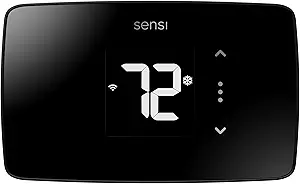 | Best for Beginners | Controller Type: Amazon Alexa, Google Assistant, Hand Control, SmartThings | Power Source: Battery (2 AAA included) or C-wire | Voltage: 24 volts | VIEW LATEST PRICE | See Our Full Breakdown |
| Aqara Smart Thermostat W200 with Apple Adaptive Temperature |  | Best for Apple HomeKit Ecosystems | Controller Type: Apple HomeKit | Features: Adaptive Temperature, Clean Energy Guidance, Multi-Platform Support, Smart Panel | Compatibility: Most HVAC systems, Zigbee, Thread, Wi-Fi | VIEW LATEST PRICE | See Our Full Breakdown |
| Google Nest Thermostat – Smart Wi-Fi Programmable Thermostat for Home – Snow |  | Best Value Smart Thermostat | Connectivity: Wi-Fi | Compatibility: Most HVAC systems (check online compatibility tool) | Control: Remote via app, voice control with Google Assistant or Alexa | VIEW LATEST PRICE | See Our Full Breakdown |
| Google Nest Learning Thermostat (4th Gen, 2024) with Nest Temperature Sensor – Polished Gold |  | Best Premium Pick | Model Year: 2024 (4th Gen) | Display: 60% larger than previous generation | Compatibility: Most 24V systems including gas, electric, oil, heat pump, radiant | VIEW LATEST PRICE | See Our Full Breakdown |
| smart home thermostat | Compatibility | Connectivity |
|---|---|---|
| Honeywell Home RTH9585WF Wi-Fi | — | Wi-Fi |
| Honeywell Home T5 Smart Wi-Fi | Most heat/cool oil furnace systems | Wi-Fi |
| Sensi Smart Thermostat Wi-Fi D | Most HVAC systems | Wi-Fi |
| ecobee Comfort and Security Bu | Listed as compatible with 95% of systems | — |
| Amazon Smart Thermostat | — | — |
| Google Nest Thermostat | — | Wi-Fi 802.11 b/g/n 2.4 GHz, 802.11 a/n 5 GHz; Bluetooth Low Energy |
| ecobee Smart Thermostat Essent | Most 24 VAC HVAC systems: gas, oil, electric, dual fuel, heat pumps | WiFi |
| Honeywell Home RTH9600WF Smart | Most heat/cool oil furnace systems, heat pumps with electric backup | Wi-Fi |
| SITERWELL Smart Thermostat Pro | Most standard 24VAC HVAC systems, single- and multi-stage heating & cooling | — |
| Sensi Lite Smart Thermostat | — | — |
| Aqara Smart Thermostat W200 wi | Most HVAC systems, Zigbee, Thread, Wi-Fi | — |
| Google Nest Thermostat | Most HVAC systems (check online compatibility tool) | Wi-Fi |
| Google Nest Learning Thermosta | Most 24V systems including gas, electric, oil, heat pump, radiant | Wi-Fi, Matter compatible |
More Details on Our Top Picks
Honeywell Home RTH9585WF Wi-Fi Smart Color Thermostat
The RTH9585WF suits buyers who want a programmable thermostat with a more personalized control panel: its color touchscreen can be customized, and its 7-day schedule lets households set different temperatures across the week. App and voice control add convenience when someone wants to adjust settings away from home. Compared with the button-operated Sensi ST55, this Honeywell gives more visual control at the thermostat itself, while the Sensi is the simpler fit for buyers who prefer traditional buttons and DIY guidance. The tradeoff is installation flexibility: this model requires a C-wire and does not support 120–240V electric baseboard heat or electric heat pumps. I’d choose it for compatible forced-air or hydronic systems when an informative touchscreen matters more than broad system coverage.
Pros:- Customizable color touchscreen makes thermostat settings easier to see and personalize
- 7-day programming supports different routines across the week
- Wi-Fi, app, and voice-assistant control allow remote adjustments
- Energy reports and utility rebate support add tools for managing usage
Cons:- Requires a C-wire for installation
- Does not support 120–240V electric baseboard heat or electric heat pumps
- Its system compatibility is narrower than models described as working with most HVAC systems
Best for: Households with compatible forced-air or hydronic heating that want a customizable touchscreen and weekly schedules
Not ideal for: Homes with electric baseboard heat, electric heat pumps, or no available C-wire
- Display:Customizable color touchscreen
- Programming:7-day programmable
- Connectivity:Wi-Fi
- Voice control:Alexa and Google Home
- Compatible systems:Forced air, hot water, steam, and heat pumps with electric backup
- C-wire:Required
- Color:Gray
- Not compatible with:120–240V electric baseboard heat and electric heat pumps
Our verdict“Choose the RTH9585WF if your system is compatible and you want a customizable touchscreen with flexible weekly scheduling.”
Honeywell Home T5 Smart Wi-Fi Thermostat
The Honeywell Home T5 is a practical match for households that want schedules and location-based adjustments without making a touchscreen the main attraction. Its geofencing can adjust the temperature based on whether household members are home, while Wi-Fi control lets them make changes from a phone or tablet. Compared with the Amazon Smart Thermostat, the T5 is less tied to Alexa and Ring routines, giving it a more flexible smart-home fit. Its ENERGY STAR certification and 7-day scheduling also make it a sensible option for people who prefer planned temperature changes. The main installation catch is power: it needs a C-wire power adapter. Compatibility is described broadly for most heat/cool oil furnace systems, but heating-only oil systems need a C-wire, so buyers should check their setup before choosing it.
Pros:- Geofencing can adjust temperature around household arrival and departure
- 7-day flexible scheduling supports different weekday and weekend routines
- Wi-Fi enables smartphone and tablet control away from home
- ENERGY STAR certified
Cons:- Requires a C-wire power adapter
- Heating-only oil furnace systems require a C-wire
- Its stated system coverage is less broad than thermostats described for most HVAC systems
Best for: Households with a compatible heat-and-cool oil furnace that want geofencing and a weekly schedule
Not ideal for: Owners of heating-only oil furnace systems without a C-wire or buyers seeking a thermostat untethered from adapter requirements
- Scheduling:7-day flexible scheduling
- Connectivity:Wi-Fi
- Control:Smartphone and tablet
- Energy certification:ENERGY STAR certified
- Compatibility:Most heat/cool oil furnace systems
- Power:C-wire power adapter required
- Location feature:Geofencing
Our verdict“Pick the T5 if you have a compatible heat-and-cool system and want geofencing alongside flexible weekly schedules.”
Sensi Smart Thermostat Wi-Fi DIY Alexa Energy Star Certified ST55
The Sensi ST55 makes the strongest case for buyers who want a familiar thermostat layout and a guided DIY setup. Its built-in level and app instructions help with positioning and wiring, and a common wire is not required for most compatible installations. Unlike the touchscreen-focused Honeywell RTH9585WF, the Sensi uses traditional buttons, which keeps the interface straightforward but gives it a less modern feel at the wall. Wi-Fi access, flexible schedules, usage reports, and maintenance alerts add useful remote and system-management tools. The listed energy-savings figure is approximately 23%, but actual results depend on the home and how schedules are used. I’d shortlist it for hands-on homeowners who value privacy protections and clear setup support; buyers should still confirm HVAC compatibility and whether their system needs a C-wire.
Pros:- Built-in level and app instructions support DIY installation
- Common wire is not required in most compatible setups
- Usage reports and system monitoring provide ongoing maintenance cues
- States that it will not sell personal information
Cons:- A C-wire is required in some installations
- Button controls lack the visual interface of touchscreen alternatives
- Compatibility still depends on the specific HVAC system
Best for: Homeowners comfortable with a DIY thermostat replacement who prefer buttons, app guidance, and maintenance reminders
Not ideal for: Buyers who want a touchscreen interface or have an HVAC setup outside the model’s compatibility
- Installation:DIY with built-in level and app instructions
- Connectivity:Wi-Fi
- Controls:Traditional buttons
- Compatibility:Most HVAC systems
- Common wire:Not required in most cases; required in some setups
- Energy savings claim:Approximately 23%
- Features:Flexible scheduling, remote access, usage reports, and maintenance alerts
- Privacy:States that personal information will not be sold
Our verdict“Choose the Sensi ST55 if you want a button-based smart thermostat with guided DIY installation and useful system reminders.”
ecobee Comfort and Security Bundle, Smart Thermostat Premium & SmartSensor
The ecobee Comfort and Security Bundle is the most feature-rich pick here for buyers who want room-level comfort and home monitoring in one setup. Its included SmartSensor can help the thermostat respond to conditions in another room, addressing a limitation of single-location temperature readings. Air-quality monitoring and motion detection extend its role beyond temperature control, while the included Power Extender Kit and trim kit support installation across more setups. Compared with the more focused Amazon Smart Thermostat, this bundle offers a broader set of comfort and security functions, but it also asks buyers to manage more features. Some security capabilities require a subscription, and system compatibility still matters. I’d favor it for households that will use the sensor and monitoring tools; skip the bundle if you only need app-based scheduling.
Pros:- Included SmartSensor supports room-specific temperature control
- Combines thermostat functions with motion detection and air-quality monitoring
- Power Extender Kit and trim kit are included
- Listed as compatible with 95% of systems
Cons:- Certain smart-security features require a subscription
- Some functions depend on compatible systems
- The added monitoring and security features may be unnecessary for buyers seeking a simple thermostat
Best for: Households seeking room-specific temperature control plus air-quality and home-security features in one system
Not ideal for: Buyers who only need basic remote scheduling or do not want subscription-dependent security features
- Included items:Smart Thermostat Premium, SmartSensor, Power Extender Kit, and Trim Kit
- Compatibility:Listed as compatible with 95% of systems
- Sensor coverage:120° arc, up to 16 feet
- Air-quality monitoring:Yes
- Motion detection:Yes
- Smart-security subscription:Required for certain features
- Energy savings claim:Up to 26% on heating and cooling costs
Our verdict“Choose this ecobee bundle if you will use room sensing and security features alongside smart temperature control.”
Amazon Smart Thermostat
The Amazon Smart Thermostat is the clearest fit for homes already organized around Alexa and Ring. It supports app control, schedules, and routines, so temperature changes can slot into the same ecosystem as other compatible devices. Compared with the broader-featured ecobee Comfort and Security Bundle, this Amazon model keeps its focus on everyday heating and cooling control rather than room sensing and air-quality monitoring. Guided app instructions make DIY installation more approachable, though the thermostat still requires a C-wire, and Wi-Fi is part of its remote-control setup. Its stated annual energy-savings figure is not a guaranteed outcome, so I’d weigh the ecosystem fit and scheduling features more heavily. Buyers using other smart-home platforms should check compatibility before committing.
Pros:- Works with Alexa and Ring devices
- Supports energy-saving schedules and routines
- Alexa app provides remote temperature control
- DIY installation guidance is provided through the app
Cons:- Requires a C-wire
- Remote control depends on Wi-Fi connectivity
- Offers less room-sensing and air-quality functionality than the ecobee bundle
Best for: Alexa and Ring households that want app-based control, schedules, and routines from one smart-home ecosystem
Not ideal for: Households centered on non-Alexa platforms or installations without a C-wire
- Works with:Alexa and Ring
- C-wire:Required
- Programmable:Yes
- Control:Remote control via Alexa app
- Installation:DIY with app guidance
- Energy features:Schedules and routines
- Energy savings claim:Up to $90 annually
Our verdict“Pick the Amazon Smart Thermostat if Alexa and Ring are already central to your home and your wiring includes a C-wire.”
Google Nest Thermostat – Smart Thermostat for Home – Programmable Wi-Fi Thermostat – Charcoal
Google’s budget-tier Nest is the natural pick for households already living in the Google Assistant or Matter ecosystem. Compared with the ecobee Smart Thermostat Essential, it trades room-specific sensors for a slimmer design and HVAC monitoring alerts that flag furnace or heat pump issues before they become expensive repairs. Unlike the Honeywell RTH9600WF, it works in most homes without a C-wire, which removes the biggest installation headache for older houses. The tradeoff is intelligence: this model doesn’t learn your schedule the way the Nest Learning Thermostat (4th Gen) does, so you’ll program it yourself or rely on its suggestions. There’s also no lock feature, a real drawback for landlords or parents of temperature-tinkering kids. Setup can frustrate non-technical users despite the polished hardware.
Pros:- Works without a C-wire in most homes
- HVAC monitoring alerts catch system issues early
- Matter-certified for broad voice assistant support
- ENERGY STAR certified with energy-saving scheduling
Cons:- No lock feature to prevent manual temperature changes
- Doesn’t learn schedules automatically like pricier Nest models
- Setup can be confusing for non-technical users
Best for: Google Assistant households wanting an energy-saving thermostat without running a C-wire
Not ideal for: Buyers wanting learning automation or a lock screen — the Nest Learning Thermostat covers both better
- Connectivity:Wi-Fi 802.11 b/g/n 2.4 GHz, 802.11 a/n 5 GHz; Bluetooth Low Energy
- C-Wire:Works without C-wire in most homes
- Smart Home:Google Assistant, Matter-certified voice assistants
- Key Features:Energy-saving scheduling, remote control, HVAC monitoring
- Certification:ENERGEE STAR certified
- Color:Charcoal
Our verdict“This pick makes the most sense for Google-centric smart homes that want solid energy features without paying for learning intelligence.”
ecobee Smart Thermostat Essential – WiFi Thermostat, Energy Star Certified
If cutting heating and cooling bills is the whole point of your purchase, the ecobee Smart Thermostat Essential leads this batch with claimed annual savings of up to 23%. Its schedule assistant quietly adapts to your routines, and the color touchscreen feels more polished than the Sensi Lite’s plain LCD. Where the Google Nest Thermostat stops at whole-home control, ecobee’s optional SmartSensors (sold separately) let it prioritize the actual rooms you occupy — though that’s the catch: matching the room-by-room performance of the ecobee Premium bundle means spending more after checkout. Installation is genuinely DIY-friendly, with a Power Extender Kit handling homes lacking a C-wire, a step up from the SITERWELL and Honeywell RTH9600WF, which both hard-require one. Verify your HVAC configuration online before buying, since coverage isn’t universal.
Pros:- Up to 23% annual savings on heating and cooling
- Power Extender Kit eliminates C-wire requirement
- Works with Apple HomeKit, Alexa, and Google Assistant
- Built-in humidity detection and schedule assistant
Cons:- SmartSensor 2-pack needed for room-level control is sold separately
- Requires an online compatibility check for some HVAC systems
- Not compatible with every HVAC configuration
Best for: Homeowners focused on maximizing annual energy savings with flexible DIY installation
Not ideal for: Buyers wanting room-specific control out of the box — sensors cost extra and are required for it
- Compatibility:Most 24 VAC HVAC systems: gas, oil, electric, dual fuel, heat pumps
- Connectivity:WiFi
- C-Wire:Not needed with included Power Extender Kit
- SmartSensor Support:Yes (SmartSensor 2 pack sold separately)
- Built-in Features:Indoor humidity detection, schedule assistant, time of use
- Installation:DIY-friendly
- Certification:ENERGY STAR certified
Our verdict“The strongest choice here for bill-cutters, as long as you accept that the best room-balancing features live behind an extra sensor purchase.”
Honeywell Home RTH9600WF Smart Color Thermostat ENERGY STAR Wi-Fi Programmable Touchscreen Alexa Ready – C-Wire Required
The Honeywell Home RTH9600WF earns its spot on screen quality alone: a high-definition color touchscreen that can be customized to match your wall or decor, something neither the Sensi Lite’s basic LCD nor the Google Nest Thermostat’s minimal display matches. Its Smart Response technology learns how long your home takes to heat and cool, then starts early so the temperature is right at the time you programmed — a different, more hands-on intelligence than the Nest’s suggestion-based approach. The stiff requirement is the C-wire: unlike the ecobee Essential, there’s no Power Extender Kit in the box, so homes without one face an electrician visit. It also won’t work with 120-240V electric baseboard heat, which rules out plenty of apartments and additions.
Pros:- High-definition customizable color touchscreen
- Smart Response learns your home’s heating and cooling timing
- Works with Alexa, Google Assistant, and Cortana
- Smart alerts plus programmable scheduling for energy savings
Cons:- C-wire required with no extender kit included
- Incompatible with 120-240V electric baseboard heating
- May need professional installation if C-wire is absent
Best for: Homeowners who value a premium customizable display and already have a C-wire installed
Not ideal for: Renters and baseboard-heat users — no C-wire workaround and no high-voltage support
- Display:High-definition color touchscreen, customizable
- Connectivity:Wi-Fi
- Voice Assistants:Alexa, Google Assistant, Microsoft Cortana
- C-Wire:Required
- Compatibility:Most heat/cool oil furnace systems, heat pumps with electric backup
- Smart Features:Smart Response learning, smart alerts, flexible programming
- Certification:ENERGY STAR certified
Our verdict“Choose this for the best-looking interface in the lineup, provided your wiring and heating system cooperate.”
SITERWELL Smart Thermostat Programmable WiFi Home Thermostat
The SITERWELL Smart Thermostat is the value play of this group, delivering the core smart-thermostat experience — app control, Alexa and Google voice commands, a 3.5-inch HD touchscreen — at a price well below the Google Nest or Honeywell RTH9600WF. Its compatibility reach is surprisingly broad, handling single- and multi-stage heating and cooling on standard 24VAC systems, and the included wiring labels make DIY installation approachable for first-timers. The three-year warranty also beats what most name brands offer at this tier. The compromises are real, though: like the Honeywell, it hard-requires a C-wire with no extender option, unlike the ecobee Essential. And with no physical buttons at all, a frozen screen or a touchscreen-averse household member leaves you with no fallback control. It skips ENERGY STAR certification and the ecosystem polish of bigger names.
Pros:- Wide compatibility with single- and multi-stage 24VAC systems
- Large 3.5-inch HD touchscreen for the price
- Easy DIY installation with clearly labeled wiring
- Three-year warranty with UL-certified build quality
Cons:- C-wire required with no Power Extender alternative
- No physical buttons if the touchscreen fails or isn’t preferred
- Lacks ENERGY STAR certification and richer ecosystem features
Best for: Budget-conscious DIYers with a C-wire who want app and voice control without brand-name pricing
Not ideal for: Homes without a C-wire or buyers wanting deep ecosystem integration and energy certification
- Screen:3.5-inch HD touchscreen
- Compatibility:Most standard 24VAC HVAC systems, single- and multi-stage heating & cooling
- Control:WiFi, smartphone app, Alexa, Google Assistant
- Power Supply:Requires C-wire
- Certification:UL-certified materials
- Warranty:3 years
Our verdict“A sensible low-cost entry point for wired-and-ready homes that don’t need the ecosystem depth of Nest or ecobee.”
Sensi Lite Smart Thermostat, WiFi, Alexa, DIY, Energy Star Certified, ST25
For a first smart thermostat, the Sensi Lite ST25 removes nearly every barrier that scares off newcomers: a built-in level, step-by-step in-app instructions, and a battery-or-C-wire power design that fits older homes the SITERWELL and Honeywell RTH9600WF can’t touch without extra wiring. Compared with its sibling, the Sensi Smart ST55, the Lite pares things down to essentials — no fancy display, just clean scheduling, remote control, and ENERGY STAR-certified savings of roughly 23% on HVAC energy. It also supports SmartThings alongside Alexa and Google Assistant, giving it broader hub appeal than most entry-level models. The plain LCD looks dated next to the Honeywell’s color screen, AAA batteries will eventually need replacing, and it’s limited to 24V systems. For straightforward furnaces, heat pumps, and boilers, though, it’s hard to make installation simpler.
Pros:- Easiest DIY install in the lineup with built-in level and guided steps
- Runs on batteries or C-wire for older homes
- ENERGY STAR certified with roughly 23% HVAC energy savings
- Works with Alexa, Google Assistant, and SmartThings
Cons:- Basic LCD display feels dated next to color-screen rivals
- Limited to 24V systems
- AAA batteries require eventual replacement
Best for: First-time smart thermostat buyers, especially in older homes without a guaranteed C-wire
Not ideal for: Display-focused buyers or high-voltage heating systems — the LCD is basic and it’s 24V only
- Controller Type:Amazon Alexa, Google Assistant, Hand Control, SmartThings
- Power Source:Battery (2 AAA included) or C-wire
- Voltage:24 volts
- Display:LCD
- Control Methods:App, touch, voice
- Specific Uses:Air conditioner, boiler, furnace, heat pump
- Installation:DIY with built-in level and step-by-step instructions
- Certification:ENERGY STAR certified
Our verdict“The least intimidating way to add app and voice control to a standard HVAC system, ideal if installation simplicity outranks screen flash.”
Aqara Smart Thermostat W200 with Apple Adaptive Temperature
This option stands out for deep Apple Home integration, which is something no other thermostat in this lineup does as thoroughly. Its Adaptive Temperature feature adjusts heating and cooling based on room activity and clean energy signals from your utility, going a step beyond the schedule learning of the Google Nest Learning Thermostat. Compared with the standard Google Nest Thermostat, the W200 doubles as a Zigbee hub, Thread border router, and Matter controller, so it can anchor an entire smart home rather than just manage climate. The tradeoff is real, though: adaptive features only work with an Apple TV or HomePod on the network, the C-Wire Adapter is sold separately, and some energy guidance features are U.S.-only. This pick makes the most sense for committed Apple households that want climate control at the center of a broader setup.
Pros:- Adaptive Temperature adjusts automatically based on activity and clean energy signals
- Built-in Zigbee, Thread border router, and Matter controller replace a separate hub
- mmWave presence detection enables smarter occupancy-based automation
- Large 4-inch full-color touchscreen with a modern design
Cons:- Adaptive features require an Apple TV or HomePod as a home hub
- C-Wire Adapter sold separately, adding cost for many HVAC setups
- Certain energy guidance features limited to the U.S.
Best for: Apple HomeKit households that already own a HomePod or Apple TV and want a thermostat that doubles as a smart home hub
Not ideal for: Android-first or Alexa-only households — the adaptive features are locked to the Apple ecosystem and require a separate Apple hub
- Controller Type:Apple HomeKit
- Features:Adaptive Temperature, Clean Energy Guidance, Multi-Platform Support, Smart Panel
- Compatibility:Most HVAC systems, Zigbee, Thread, Wi-Fi
- Display:4-inch full-color touchscreen
- Hub:Built-in Zigbee, Matter controller, Thread border router
- Presence Detection:mmWave radar
Our verdict“Buy this if you live in an Apple Home household and want one device that controls both your climate and your broader smart home; skip it if you don’t own an Apple hub.”
Google Nest Thermostat – Smart Wi-Fi Programmable Thermostat for Home – Snow
Where the Nest Learning Thermostat (4th Gen) earns its premium tag through automatic schedule learning, this standard Google Nest Thermostat takes a simpler path: you program a schedule yourself, and it quietly helps you trim waste with HVAC monitoring and savings suggestions. Compared with budget rivals like the Amazon Smart Thermostat or Sensi ST55, it offers a cleaner app experience, stronger energy insights, and broader voice support across both Google Assistant and Alexa. The tradeoff is that you give up learning automation and room-specific sensors, some systems need a C wire or accessory to install, and there’s no lock feature to stop others from fiddling with settings. This model is better suited to hands-on buyers who want dependable smart control without paying for intelligence they may not need.
Pros:- ENERGY STAR certified with real savings suggestions in the app
- Remote control and voice support for both Google Assistant and Alexa
- HVAC monitoring alerts you to potential system issues
- Straightforward DIY installation on most compatible systems
Cons:- Some HVAC systems require a C wire or extra accessory
- No lock feature to restrict on-device changes
- No learning mode or remote room sensors, unlike the pricier Nest Learning model
Best for: Budget-conscious DIYers comfortable setting their own schedules who want solid app control and energy insights
Not ideal for: Buyers who want set-and-forget automation or whole-home room balancing — this model learns nothing and supports no remote temperature sensors
- Connectivity:Wi-Fi
- Compatibility:Most HVAC systems (check online compatibility tool)
- Control:Remote via app, voice control with Google Assistant or Alexa
- Certification:ENERGY STAR
- Smart Features:HVAC monitoring, savings suggestions, programmable schedules
- Color:Snow
Our verdict“This is the pick if you want the core Nest app experience and energy savings at the lowest commitment, as long as you’re willing to program your own schedule.”
Google Nest Learning Thermostat (4th Gen, 2024) with Nest Temperature Sensor – Polished Gold
This is the ceiling of the lineup. Unlike the standard Google Nest Thermostat, this 4th-generation model learns your routine and programs itself within days, and the bundled second-generation Nest Temperature Sensor lets it prioritize comfort in a specific room — a capability shared only by the ecobee Smart Thermostat Premium bundle elsewhere in this guide. The display is 60% larger than before and reads clearly across a room, while Matter compatibility and support for Alexa, Siri, and Google Assistant make it unusually platform-agnostic for a premium device. The tradeoffs: it sits at the top of the price range, some HVAC setups still demand a compatibility check before installation, and its smarter features lean on internet connectivity — if Wi-Fi drops, so does the intelligence. Compared with the Aqara W200, it trades hub functionality for genuinely effortless automation.
Pros:- Self-learning schedule eliminates manual programming entirely
- Included Nest Temperature Sensor (2nd gen) enables room-specific comfort
- 60% larger display that’s easy to read from across the room
- Matter compatible with voice control via Alexa, Siri, and Google Assistant
Cons:- Premium pricing well above value picks like the standard Nest or Sensi
- Smart features depend on internet connectivity
- Installation may require a compatibility check on some systems
Best for: Homeowners who want fully automatic, hands-off climate control with room-specific comfort and don’t mind paying for it
Not ideal for: Budget buyers or renters with uncertain HVAC compatibility — the premium is hard to justify when the standard Nest or Sensi covers the basics
- Model Year:2024 (4th Gen)
- Display:60% larger than previous generation
- Compatibility:Most 24V systems including gas, electric, oil, heat pump, radiant
- Connectivity:Wi-Fi, Matter compatible
- Voice Assistants:Alexa, Siri, Google Assistant
- Included Accessories:Nest Temperature Sensor (2nd gen)
- Color:Polished Gold
Our verdict“If you want a thermostat that genuinely manages itself and balances comfort between rooms, this is the one to buy — provided the price fits your budget.”
How We Picked
My ranking logic starts with what a smart thermostat actually does differently from a programmable one: remote control, learning or adaptive scheduling, occupancy sensing, and integration with the rest of a smart home. Models that go beyond app control — learning your routine, balancing multiple rooms with sensors, or responding to presence — ranked above those that simply mirror a thermostat on your phone. I then weighed installation realities, since a brilliant thermostat you cannot install is worthless; C-wire-free operation and guided DIY setup gave several budget models a real advantage.
From there, I scored each option on ecosystem compatibility (Alexa, Google Home, Apple Home, and Matter support), usability of the interface — both the on-device display and the companion app — and energy-saving credibility backed by Energy Star certification where available. Build quality and long-term software support factored in too, because a thermostat is something you live with for a decade, not a gadget you replace yearly. Finally, I assigned each product a distinct role so the lineup works as a decision guide rather than a catalog: best overall, best value, best for beginners, best premium, and best for specific ecosystems.
| smart home thermostat | Connectivity |
|---|---|
| Honeywell Home RTH9585WF Wi-Fi | Wi-Fi |
| Honeywell Home T5 Smart Wi-Fi | Wi-Fi |
| Sensi Smart Thermostat Wi-Fi D | Wi-Fi |
| ecobee Comfort and Security Bu | — |
| Amazon Smart Thermostat | — |
| Google Nest Thermostat | Wi-Fi 802.11 b/g/n 2.4 GHz, 802.11 a/n 5 GHz; Bluetooth Low Energy |
| ecobee Smart Thermostat Essent | WiFi |
| Honeywell Home RTH9600WF Smart | Wi-Fi |
| SITERWELL Smart Thermostat Pro | — |
| Sensi Lite Smart Thermostat | — |
| Aqara Smart Thermostat W200 wi | — |
| Google Nest Thermostat | Wi-Fi |
| Google Nest Learning Thermosta | Wi-Fi, Matter compatible |
Factors to Consider When Choosing Smart Home Thermostats
Before settling on a specific model, it helps to understand the factors that separate a satisfying purchase from a frustrating one. These are the questions I would ask before buying any smart thermostat.Wiring Compatibility: The Dealbreaker Most Buyers Miss
The single most common smart thermostat mistake is ordering a model that cannot physically connect to your HVAC system. Many homes, especially those built before the mid-2000s, lack a C-wire (common wire), which provides the constant power that most color touchscreen models require. If your home has one, every option in this roundup is on the table; if it does not, you are limited to models like the Sensi ST55 and Lite, Amazon Smart Thermostat, or Google Nest Thermostat, which can run without it. A workaround exists — a C-wire power adapter or the extra wire included with some ecobee units — but installing one adds complexity that beginner DIYers often underestimate. Check your existing thermostat’s wiring and your HVAC system type (conventional, heat pump, or multi-stage) before anything else. A five-minute look behind your current thermostat can save you a return shipment and an afternoon of frustration.
Learning Automation vs. Manual Scheduling
There is a meaningful difference between a thermostat you program and one that programs itself. Traditional scheduling — available on everything from the Amazon Smart Thermostat to the Honeywell color models — means you set temperature targets for mornings, work hours, evenings, and nights, and the device repeats them weekly. Learning models like the Nest Learning Thermostat and adaptive options like the Aqara W200 with Apple Adaptive Temperature observe when you are home, when you leave, and what temperatures you prefer, then build the schedule for you. Learning automation is not magic — it takes a week or two to settle in, and households with erratic schedules may fight it. But for typical commuters and families, it quietly captures savings that manual schedules miss because human behavior drifts. If you are diligent about programming and sticking to a schedule, you can save nearly as much with a budget model; if you know you will never touch the schedule editor, pay for the learning capability.
Ecosystem Lock-In and Voice Assistant Choice
A thermostat becomes genuinely useful when it talks to the rest of your smart home, but each model plays favorites. Alexa households have the widest selection — nearly everything here works with it, and the Amazon Smart Thermostat integrates most deeply. Google Home users get the tightest experience with either Nest model, including presence detection through your phone’s location. Apple Home users are the most constrained: the Aqara W200 is the strongest dedicated option with native Adaptive Temperature support, while Matter certification broadens the field somewhat. Before buying, confirm the model supports the assistant speakers you already own, not just the app you like. Also check whether the thermostat supports Matter or works with platforms like SmartThings if you anticipate changing ecosystems — a decade is a long time to be locked into one voice assistant.
Remote Sensors and Zoned Comfort
Every thermostat in this roundup measures temperature at one point: wherever it hangs on the wall, usually a hallway. That works fine in open-plan homes, but in multi-story houses or homes with rooms that run hot or cold, single-point sensing produces rooms that never feel right. Remote sensors solve this by letting the thermostat average readings across multiple rooms or prioritize the room you are actually in at a given time. In this lineup, only the ecobee Comfort and Security Bundle and the Nest Learning Thermostat 4th Gen include sensors in the box, which is a large part of why they occupy the premium spots. You can sometimes add sensors to other models later, but availability and pricing vary. If uneven temperatures are your main complaint, sensor support should weigh more heavily in your decision than screen quality or app polish — it is the feature that actually changes how your home feels.
Energy Savings Claims and When They Pay Off
Manufacturers advertise meaningful heating and cooling savings from smart thermostats, and the claims are broadly credible for people who currently run manual schedules or none at all — Energy Star certification on many models here backs that up. But the savings depend entirely on behavior: a smart thermostat saves money by letting your home drift to efficient temperatures when nobody is home and recovering before you return. If you work from home, keep the house at one constant temperature, or override the schedule constantly, your savings will be minimal regardless of which model you buy. This is why I would not automatically buy the most expensive option expecting the biggest return — a budget model with geofencing can outperform a premium model you override daily. A reasonable rule: the less predictable your schedule, the more learning automation earns its price; the more predictable your routine, the less you need to spend.
Display, Mounting, and Aesthetic Considerations
A thermostat sits prominently on your wall, so appearance matters more than most buyers expect until they live with an ugly unit for a year. Color touchscreen models like the Honeywell RTH9585WF and RTH9600WF let you customize the face to match your decor, while the mirror-finish ecobee Premium doubles as a functional display for weather and indoor air quality readings. The puck-style Google Nest Thermostat looks sleek but shows limited information until you approach it, which some households find annoying in daily use. Also check the wall footprint: a new smart thermostat often does not cover the paint outline left by the bulky dumb unit it replaces, so budget for touch-up paint or a wall plate. Fingerprint resistance and glare matter too if the thermostat sits in direct sunlight or a high-traffic hallway.
Frequently Asked Questions
Do I really need a C-wire for a smart thermostat?
It depends on the model, not the category. Power-hungry thermostats with always-on color touchscreens — like the Honeywell RTH9585WF and RTH9600WF — require a C-wire to function reliably, while models such as the Sensi ST55, Sensi Lite, Amazon Smart Thermostat, and Google Nest Thermostat are engineered to run without one. Running without a C-wire can occasionally cause short-cycling or Wi-Fi dropouts in some HVAC configurations, so if your existing thermostat has a C-wire available, connect it regardless. If your home lacks one, options include a power-extender kit (ecobee includes one), a C-wire adapter that pulls power from the fan wire, or simply choosing one of the C-wire-free models in this lineup. The safest approach is to photograph your current thermostat’s wiring before ordering anything.
Is a learning thermostat worth the extra cost over a programmable smart model?
The honest answer depends on your habits more than the technology. A learning model like the Nest Learning Thermostat earns its premium when your schedule varies — different departure times, irregular weekends, travel — because it adapts automatically where a manual schedule would be wrong half the time. If your routine is highly predictable, a cheaper programmable model like the Amazon Smart Thermostat or Sensi will capture nearly identical savings with a set-and-forget weekly schedule. Learning models also tend to include better sensors and multi-room support, which adds comfort value beyond energy savings. As a rough guideline, buyers who would never manually program a schedule should treat learning automation as essential; disciplined schedulers can save the difference. The break-even on energy savings alone typically takes one to two heating seasons for most households upgrading from a non-programmable unit.
Which smart thermostat works best with Apple HomeKit?
The Aqara Smart Thermostat W200 is the clear Apple-first choice in this lineup, thanks to native support for Apple Adaptive Temperature, which uses your thermostat plus HomeKit sensors to balance rooms automatically. Beyond it, Matter certification has widened compatibility, but check each model’s current firmware support rather than relying on marketing claims — HomeKit support has been added and removed on some thermostats over the years. Google Nest models historically had no native HomeKit support, and while Matter changes that for newer hardware, the experience is more limited than with the Aqara. If you run an all-Apple household with HomePods and HomeKit sensors throughout, the W200 will feel the most integrated. Mixed-ecosystem households should prioritize Matter support so they are not trapped if they switch platforms later.
Can a smart thermostat control a heat pump or multi-stage HVAC system?
Most models here support heat pumps, but the details matter, particularly whether your heat pump uses auxiliary or emergency heat. Misconfigured aux heat can erase all your energy savings, since it kicks in resistive heating that is expensive to run — this is the most common heat pump installation error. Check each thermostat’s compatibility checker before buying, since some budget models support single-stage heat pumps but not multi-stage or dual-fuel systems. The ecobee and Nest models have the most thorough handling of complex HVAC setups, including heat pump balance features that decide when aux heat is worth using. If your system is anything beyond a basic furnace or standard heat pump, verify wire-for-wire compatibility with your exact terminal labels rather than assuming all smart thermostats are interchangeable.
Are two nearly identical models, like the Honeywell RTH9585WF and RTH9600WF, actually different?
In this case, the differences are minor and mostly cosmetic or retail-channel related rather than functional — both are 7-day programmable color touchscreen models with Alexa support and the same C-wire requirement. This pattern repeats elsewhere in the roundup with the Nest Thermostat appearing in Charcoal and Snow, where the only real difference is color. Manufacturers do this to serve different retailers or refresh packaging, and it means buyers can safely choose whichever variant costs less at purchase time or matches their decor. What you should compare instead are the meaningful tiers: these Honeywell color models sit a step above the basic T5 in screen quality and customization, and a step below the learning ecobee and Nest models in automation. When two options look identical, focus on the model number’s feature class rather than the suffix.
Conclusion
After comparing all 13 options, the right choice comes down to what kind of buyer you are. For best overall, the Google Nest Learning Thermostat (4th Gen) earns the top spot with genuine learning automation, an included remote sensor, and the most refined app experience — it is the model I would point most households toward. For best value, the Amazon Smart Thermostat delivers app control, scheduling, and Alexa integration at a price that makes trying a smart thermostat almost risk-free, with the Sensi Lite close behind for C-wire-free homes. For best premium, the ecobee Comfort and Security Bundle justifies its cost with room-by-room sensing and smart security features that no single-sensor model can match.
Beginners should start with the Sensi ST55 or Honeywell T5, both known for forgiving DIY installation and straightforward apps. Apple Home users have one clear path: the Aqara Smart Thermostat W200 with Adaptive Temperature. And if you want a beautiful wall display with customization, the Honeywell RTH9585WF or RTH9600WF color touchscreens fit the bill — provided your home has a C-wire. Whatever you choose, verify your wiring first, match the ecosystem you already live in, and let the automation depth match how much you actually want to manage your home’s climate.
Fall yard work Picks
leaf blowers
As an affiliate, we earn on qualifying purchases.