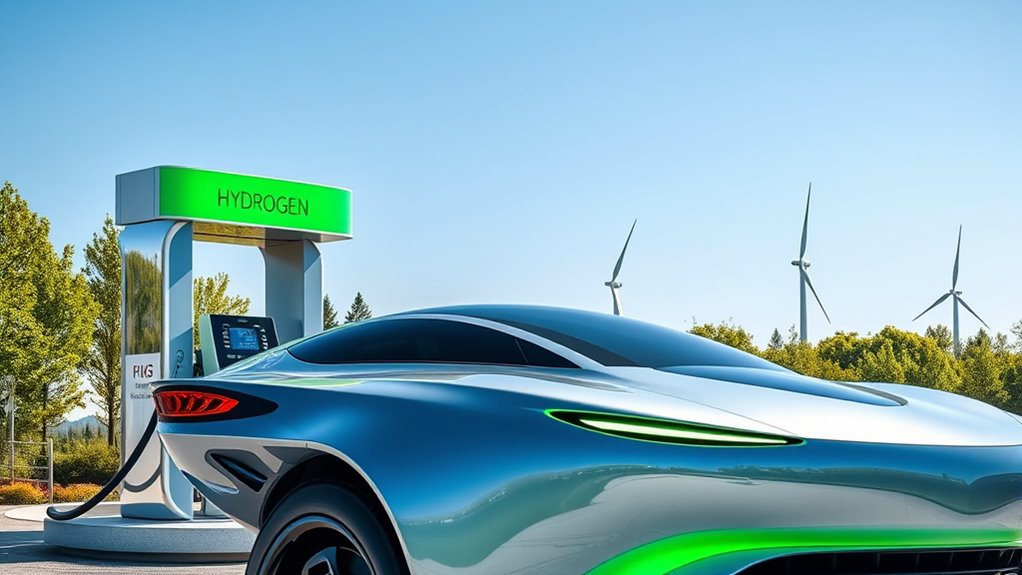

Hydrogen is becoming a key player in clean energy, offering a way to store and use renewable power efficiently. While green hydrogen is promising, technological costs and infrastructure needs still pose challenges. Improvements in production, storage, and safety protocols are underway, making widespread use more feasible. If you want to understand whether it’s truly ready to change the energy landscape and what hurdles remain, keep exploring how this exciting energy source is evolving.
Key Takeaways
- Green hydrogen’s production costs are decreasing due to technological advances, making it more economically viable.
- Infrastructure development for storage and distribution is expanding, supporting broader adoption.
- Improved electrolyzer efficiency enhances renewable energy integration and reduces green hydrogen costs.
- Policy support and international standards are fostering investor confidence and market growth.
- Despite progress, hydrogen still faces challenges in scalability, safety, and cost before widespread commercial use.
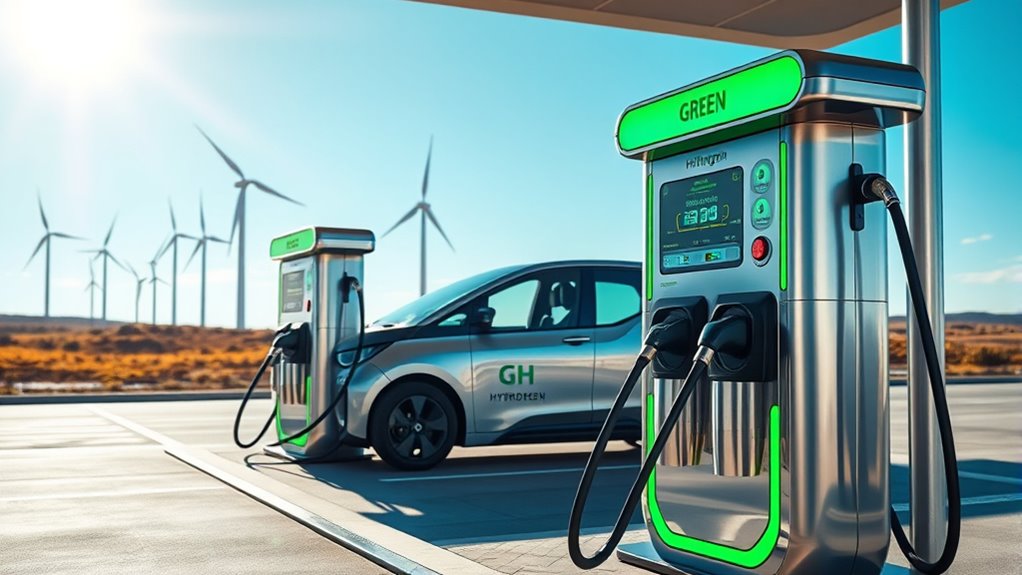
Is hydrogen really the clean energy solution everyone claims it to be? This question has sparked plenty of debates as the world pushes for sustainable alternatives to fossil fuels. Hydrogen, especially green hydrogen produced from renewable energy sources, promises a way to cut emissions and power industries without pollution. Yet, before you get caught up in the hype, it’s essential to understand the challenges and opportunities. One key aspect is how hydrogen fits into broader renewable integration strategies. While renewable energy sources like wind and solar have made leaps in recent years, their intermittent nature presents a hurdle. You need reliable storage solutions to balance supply and demand. Hydrogen offers a compelling answer here because it can act as a form of energy storage, allowing excess renewable power to be converted into hydrogen during sunny or windy periods. When demand peaks or renewable generation dips, that stored hydrogen can be used to generate electricity or power vehicles, smoothing out fluctuations. This flexibility makes hydrogen an attractive component of a resilient, renewable-based energy system.
However, the efficiency of this process depends heavily on advances in storage solutions. Electrolysis, which splits water into hydrogen and oxygen using electricity, is the backbone of green hydrogen production. But this process isn’t perfect; it’s energy-intensive and currently costs more than traditional fuels. The challenge lies in making electrolysis more efficient and affordable, which requires ongoing innovation in electrolyzer technology. Additionally, once hydrogen is produced, it must be stored safely and efficiently. Compressed gas tanks, liquefaction, and underground storage are options, but each comes with technical hurdles and safety considerations. Improving these storage solutions is essential to scaling hydrogen use, as it guarantees that excess renewable energy isn’t lost and can be mobilized when needed. Furthermore, integrating renewable energy with hydrogen production can also promote solar energy use, reducing reliance on fossil fuels and supporting sustainable development. Advances in storage technologies are crucial for overcoming current limitations and enabling more widespread use of hydrogen as an energy carrier. As the hydrogen economy grows, developing standardized safety protocols will be vital for public acceptance and infrastructure development. Moreover, fostering international cooperation on regulations and standards can accelerate the adoption of hydrogen technologies globally.
You also need to regard infrastructure development. Building pipelines, fueling stations, and storage facilities takes significant investment and planning. Without these, hydrogen remains less practical for widespread adoption. Governments and private companies are starting to recognize this need, investing in infrastructure that can support hydrogen’s growth. For you, this means that the green hydrogen market could become more accessible and cost-effective in the coming years. Still, it’s important to remain cautious and acknowledge that hydrogen isn’t a silver bullet. Its success hinges on integrating renewable energy sources efficiently, developing robust storage solutions, and building the necessary infrastructure. While hydrogen holds great promise to complement renewable energy systems, it’s not yet fully ready to replace traditional fuels or be the sole solution. Instead, it’s better seen as a fundamental piece of the puzzle in creating a cleaner, more sustainable energy future.
Top picks for "hydrogen hype green"
Open Amazon search results for this keyword.
As an affiliate, we earn on qualifying purchases.
Frequently Asked Questions
What Are the Main Challenges Facing Large-Scale Green Hydrogen Production?
You face several challenges in large-scale green hydrogen production. Production scalability remains a hurdle, as current methods struggle to meet demand efficiently. Technological innovation is essential to reduce costs and improve process efficiency. Additionally, establishing a robust infrastructure and securing renewable energy sources are critical. Overcoming these obstacles requires ongoing advancements and investments, but with focused efforts, green hydrogen can become a viable, sustainable energy solution on a large scale.
How Does Green Hydrogen Compare Cost-Wise to Fossil Fuels Currently?
Ever wonder if green hydrogen can compete with fossil fuels in costs? Right now, green hydrogen’s cost comparison to fossil fuels varies, often making it less market viable without subsidies or technological advances. While prices are dropping, fossil fuels still hold the edge in affordability for many applications. Do you believe that continued innovation and scale will eventually tip the balance toward green hydrogen becoming truly competitive?
What Infrastructure Is Needed to Support Widespread Hydrogen Use?
To support widespread hydrogen use, you’ll need a network of refueling stations and pipeline development. Refueling stations should be strategically placed in urban centers and along major transportation routes, making refueling accessible. Pipeline development is essential for transporting hydrogen safely and efficiently from production sites to distribution points. These infrastructures will guarantee hydrogen’s seamless integration into existing energy systems, making green fuel a practical and reliable option for your daily needs.
Are There Safety Concerns With Storing and Transporting Hydrogen?
You might worry about storage risks and transportation safety, but hydrogen can be handled securely with proper measures. Advanced storage techniques minimize leaks and explosions, while specialized containers and pipelines ensure safe transportation. While risks exist, strict regulations and technology advancements considerably reduce hazards. So, with proper precautions, hydrogen’s storage and transport can be safe, making it a viable green fuel option for the future.
Which Industries Are Most Likely to Adopt Green Hydrogen First?
You’ll likely see industries like transportation and heavy industry adopt green hydrogen first, driven by renewable integration and policy incentives. Transportation benefits from green hydrogen’s clean fuel potential, especially for trucks and ships, while heavy industry uses it to reduce carbon emissions in steel and chemical manufacturing. These sectors are motivated by government policies and subsidies, making green hydrogen a viable, sustainable alternative that’s ready to scale up with ongoing technological advances.
Conclusion
As you watch the hydrogen industry evolve, it’s clear green fuel is edging closer to mainstream use. Imagine a city where buses run solely on hydrogen, drastically cutting pollution and boosting sustainability. For example, in Hamburg, hydrogen-powered buses are already making a difference. While challenges remain, this shift hints at a cleaner, greener future. Keep an eye on these developments—hydrogen might soon become your everyday energy solution, transforming how we power our lives.