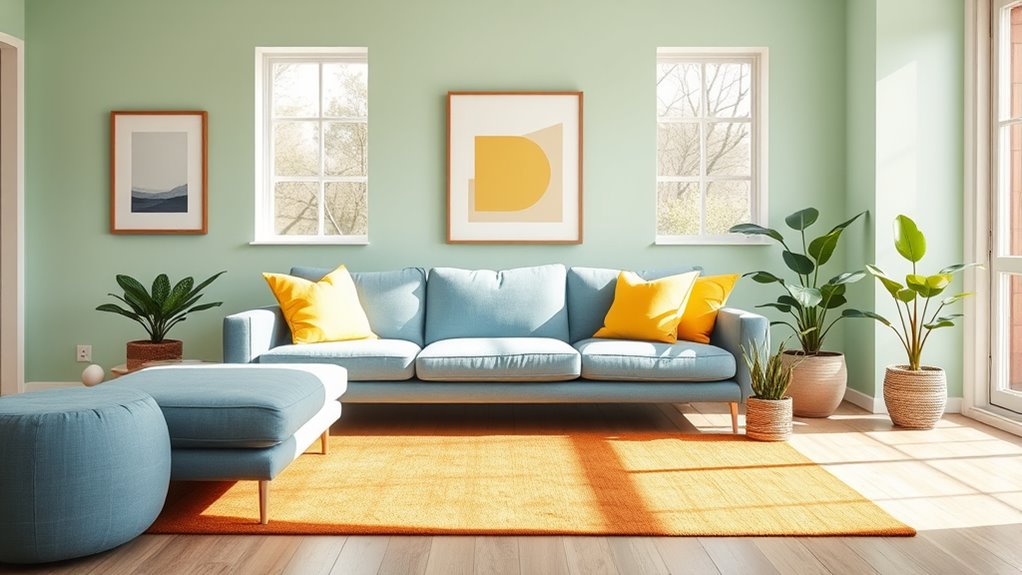

Understanding the psychology of color in home design helps you create spaces that influence mood and reflect your personality. Warm hues like red and orange energize and excite, while cool tones such as blue and green promote calmness and relaxation. Lighter shades make rooms feel larger, while darker colors create intimacy. By choosing colors intentionally, you can enhance well-being and set the perfect atmosphere. If you’re curious about applying these principles, there’s much more to explore that can transform your living space.
Listen free for 30 days with Audible
Thousands of audiobooks and originals — cancel anytime.
As an affiliate, we earn on qualifying purchases.
Key Takeaways
- Color choices influence mood, with warm hues energizing and cool tones promoting calmness in home spaces.
- Lighter shades make rooms appear larger and more open, enhancing feelings of spaciousness.
- Muted colors foster serenity, while vibrant hues boost vibrancy and positivity in home environments.
- Cultural and personal associations with colors shape emotional responses and design preferences.
- Incorporating color psychology principles helps craft spaces that support well-being and reflect personal style.
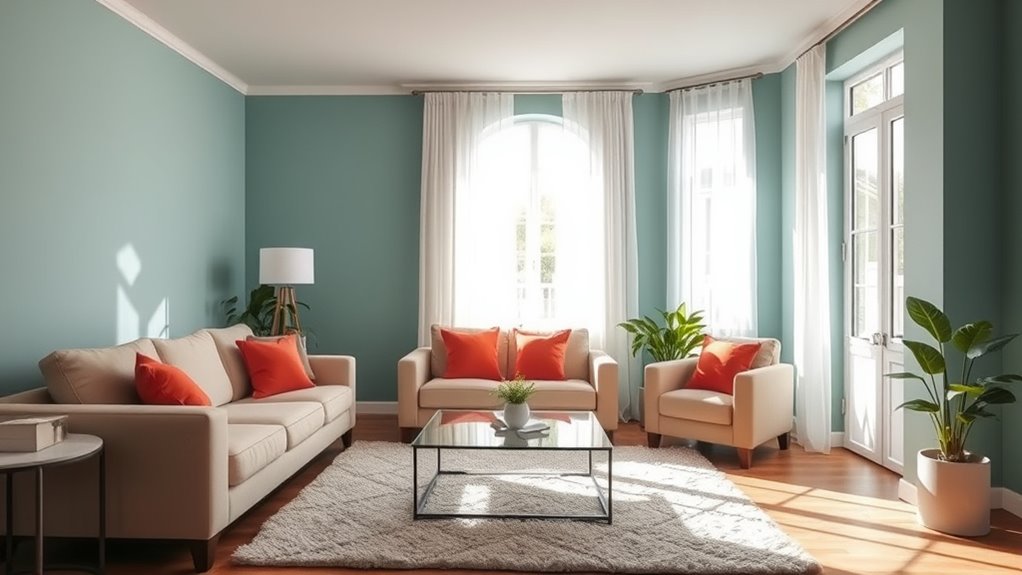
Understanding the psychology of color in home design can transform a space into a reflection of your mood and personality. When you choose colors thoughtfully, you’re not just decorating; you’re shaping how a space makes you feel and how others perceive it. Basic color theory plays a pivotal role here. Primary colors—red, yellow, and blue—are the foundation of the color spectrum and influence emotional responses differently.
Choosing colors thoughtfully transforms your home into a reflection of your mood and personality.
Red often energizes and excites, making it a great choice for spaces where you want motivation or activity. Yellow can evoke happiness and optimism, while blue tends to promote calmness and focus. Mixing primary colors creates secondary hues like green, orange, and purple, which can further influence the atmosphere of your home.
Color psychology dives deeper into how these hues evoke specific emotions. Warm colors, such as reds and oranges, generate energy and enthusiasm, making them ideal for lively areas like kitchens or entertainment rooms. Conversely, cool colors like blues and greens foster relaxation and tranquility, perfect for bedrooms or meditation spaces.
Bright, vibrant colors can uplift your mood and add a sense of vibrancy, whereas muted tones tend to promote serenity and quiet reflection. You should also consider how colors influence your perception of space—lighter shades can make a room feel larger and more open, while darker tones create intimacy and coziness. Additionally, understanding zodiac sign compatibility can help tailor your living space to reflect your personality traits and emotional needs.
Colors are powerful branding tools as well—they help establish a mood or message, whether in a commercial context or your personal living space. Personal preferences and cultural backgrounds shape how you interpret colors emotionally. For instance, red may symbolize passion or anger, depending on your cultural lens, while blue might evoke sadness or contentment based on individual experiences.
In practical terms, color impacts how you design your space. The right palette can make a room feel more spacious or intimate, depending on your goals. Combining colors through furniture and decor enhances or balances the overall ambiance. Lighting also plays a key role—it can change how colors appear and influence the mood of the room. Incorporating color psychology principles into your decor choices can further optimize the emotional impact of your environment. For example, lighting choices can dramatically alter the appearance and perceived warmth of a color, influencing the emotional tone. Additionally, exploring color schemes can help you create harmonious and balanced spaces that align with your personal style.
Furthermore, understanding the Kia Tuning options available can help you customize your vehicle’s appearance and performance to better reflect your personality and style, much like choosing colors for your home. When you align your color choices with your style and functional needs, you create a harmonious environment that supports your well-being. Ultimately, understanding color psychology allows you to craft a home that not only looks beautiful but also nurtures your emotional health, productivity, and sense of comfort.
As an affiliate, we earn on qualifying purchases.
Frequently Asked Questions
How Do Cultural Differences Influence Color Perception at Home?
You should recognize that cultural differences shape how you perceive and choose colors at home. For example, white might symbolize purity in your culture but mourning elsewhere.
Red can be lucky or dangerous depending on your background. Your regional preferences also influence your choices, like warm Mediterranean tones or Scandinavian neutrals.
These cultural meanings impact your emotional responses, how spacious your home feels, and your style, making your color choices deeply personal and culturally meaningful.
Can Color Choices Affect Household Energy Consumption?
Color choices can definitely impact your household energy consumption.
If you pick light colors for your exterior, they reflect solar heat, helping keep your home cooler and reducing cooling costs.
Conversely, dark shades absorb heat, which may raise indoor temperatures and increase the need for air conditioning.
Balancing your color selection with your climate can help you save energy and lower utility bills.
What Colors Are Best for Promoting Sleep and Relaxation?
To promote sleep and relaxation, you should choose calming colors like blue, green, or warm neutrals.
Blue tones, especially soft navy or ocean blue, help you fall asleep faster by boosting melatonin and lowering heart rate.
Green shades like sage or mint create a peaceful, natural vibe.
Warm neutrals and browns give your space a cozy, grounding feel.
These colors work together to create a tranquil environment perfect for restful sleep.
How Do Personal Experiences Shape Color Preferences in Interior Design?
Like a painter’s brush strokes on a canvas, your personal experiences shape your color preferences. You subconsciously associate certain hues with memories, emotions, or cultural symbols, guiding your choices in interior spaces.
These influences help create environments that feel familiar and meaningful. By tapping into your past, you craft a home that reflects your unique story, blending personal significance with aesthetic appeal seamlessly.
Are There Colors That Universally Improve Mood in Home Environments?
You’re wondering if certain colors can universally boost mood at home. Yes, shades like light pastels, peach, and soft blue are widely recognized for their calming and cheerful effects.
These colors tend to promote relaxation, happiness, and positivity across different cultures and personal tastes. By incorporating these hues into your space, you can create an environment that naturally uplifts your mood and encourages well-being.
As an affiliate, we earn on qualifying purchases.
Conclusion
By choosing the right colors, you become the artist of your home’s story, painting each room with emotions and energy. Think of color as the soundtrack to your daily life, setting moods and inspiring feelings. When you understand its power, your space transforms into a vibrant canvas that reflects your personality and heals your soul. So, pick your hues wisely — because in your home, every color whispers a part of your story.
As an affiliate, we earn on qualifying purchases.
light-enhancing LED lighting for rooms
As an affiliate, we earn on qualifying purchases.
As an affiliate, we earn on qualifying purchases.
Flea & tick season Picks
flea and tick prevention
As an affiliate, we earn on qualifying purchases.