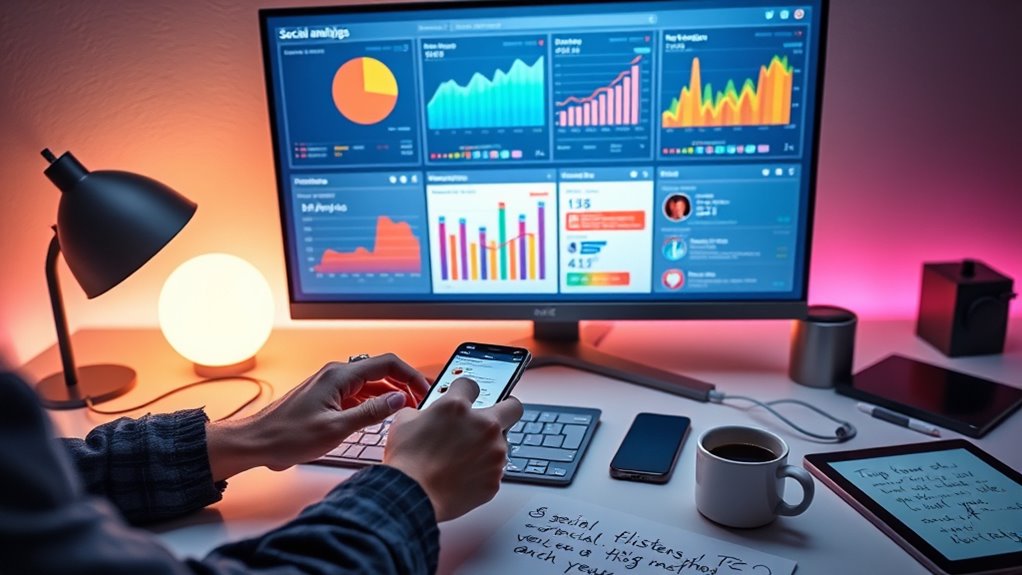

Social listening is essential because it turns online conversations into actionable insights that help shape your strategy. By monitoring brand sentiment, influencer impact, and emerging trends, you can respond quickly to negative feedback and capitalize on positive opinions. This real-time data allows you to stay relevant, manage your reputation proactively, and build stronger connections with your audience. Keep exploring how leveraging these insights can give you a competitive edge and refine your approach more effectively.
Key Takeaways
- Social listening provides real-time insights into audience sentiment, guiding strategic decisions and campaign adjustments.
- Data analysis reveals emerging trends and consumer preferences, enabling proactive innovation and differentiation.
- Monitoring influencer conversations helps identify credible partners and manage brand reputation effectively.
- Sentiment data allows brands to address negative feedback promptly and amplify positive messages for better engagement.
- Using social listening data ensures strategies are aligned with audience needs, increasing relevance and competitive advantage.

Have you ever wondered how brands stay so in tune with their audiences? It’s not magic; it’s social listening at work. By actively monitoring online conversations, brands gain real-time insights into how people feel about their products, services, and overall reputation. Central to this process is understanding brand sentiment—whether the buzz around your brand is positive, negative, or neutral. This sentiment analysis helps you gauge public perception and identify areas that need improvement or promotion. When you know how your audience truly feels, you can tailor your messaging, products, and campaigns more effectively. Social listening tools sift through vast amounts of data from social media, blogs, reviews, and forums, providing you with a clear picture of your brand’s health and the prevailing mood among your audience.
Social listening reveals your brand’s true sentiment and guides smarter marketing decisions.
Additionally, incorporating specific industry insights, such as popular flavors and consumer preferences in the gelato market, can help tailor your messaging and offerings to better meet customer expectations.
Another essential component of social listening is influencer analysis. Influencers hold significant sway over consumer opinions, and understanding their impact is fundamental. By analyzing influencer conversations and content related to your brand, you can determine who’s positively or negatively influencing perceptions. This allows you to build strategic partnerships or address potential issues before they escalate. influencer analysis also reveals which voices are most credible and resonant within your niche, helping you amplify your message through the right channels. Instead of blindly guessing where to focus your marketing efforts, social listening provides concrete data on influential voices and trending themes, enabling you to make smarter, more targeted decisions.
Using this data-driven approach, you can proactively manage your brand reputation rather than reacting to crises after they happen. For example, if a sudden spike in negative sentiment emerges around a product, you can respond swiftly to address concerns or clarify misunderstandings. Conversely, when sentiment is positive, you can double down on promoting those aspects that resonate most with your audience. The insights gained from social listening also help you identify emerging trends and consumer preferences early, giving you a competitive edge. This real-time feedback loop keeps your strategy dynamic and aligned with your audience’s needs and expectations.
Ultimately, social listening isn’t just about tracking mentions; it’s about understanding the story your audience is telling about your brand. When you leverage data like brand sentiment and influencer analysis, you transform raw online chatter into actionable insights. This empowers you to craft more relevant messaging, nurture authentic relationships, and stay ahead in a crowded marketplace. Without this focus on data, you risk falling behind, missing opportunities, or misreading your audience’s true feelings. So, if you want to build a resilient, responsive brand, social listening should be at the core of your strategy.

Listening Time
As an affiliate, we earn on qualifying purchases.
As an affiliate, we earn on qualifying purchases.
Frequently Asked Questions
How Can Social Listening Improve Customer Service?
You can improve customer service by using social listening to monitor brand sentiment in real-time. This allows you to quickly identify and address issues before they escalate into crises, demonstrating your commitment to customers. By actively responding to feedback and concerns, you build trust and loyalty, ensuring your team is proactive rather than reactive. Social listening helps you stay connected, manage crises effectively, and enhance overall customer experience.
What Are the Best Tools for Social Listening?
You should consider tools like Brandwatch, Talkwalker, or Meltwater for social listening. These platforms excel at sentiment analysis, helping you gauge public opinion, and influencer identification, allowing you to connect with key voices. They provide real-time data, so you can respond quickly and tailor your strategy effectively. With these tools, you’ll better understand your audience, enhance engagement, and make smarter, data-driven decisions.
How Do Companies Measure Social Listening ROI?
You measure social listening ROI by tracking key metrics like sentiment analysis and influencer identification. You analyze how positive or negative public sentiment shifts after campaigns, and identify which influencers boost your brand engagement. By comparing these insights with your marketing goals and sales data, you can quantify the impact of your social listening efforts. This helps you understand the value generated, guiding future strategies for better ROI.
Can Social Listening Predict Market Trends?
You can leverage social listening to predict market trends by uncovering emerging patterns and shifts in consumer insights before they hit mainstream awareness. Imagine catching the first whispers of a new trend, giving you an edge over competitors. By analyzing real-time data, you refine your trend prediction skills, turning raw conversations into actionable insights. This proactive approach enables you to stay ahead, adapting strategies swiftly to evolving market landscapes.
What Ethical Considerations Exist in Social Listening?
You should consider privacy concerns when using social listening tools, guaranteeing you respect user data and avoid intrusive practices. Be aware of data bias, which can skew insights and lead to unfair decisions. Always obtain proper consent and anonymize personal information to protect individuals’ privacy. By addressing these ethical issues, you maintain trust, comply with regulations, and ensure your strategy remains fair and responsible.

Textual Classification for Sentiment Detection. Brand Reputation Analysis on the Web using Natural Language Processing and Machine Learning
As an affiliate, we earn on qualifying purchases.
As an affiliate, we earn on qualifying purchases.
Conclusion
By harnessing social listening, you tap into real-time insights that can transform your strategy. Did you know that 80% of consumers expect brands to respond within 24 hours? This highlights how vital it is to stay tuned to what’s being said online. When you listen actively, you can build stronger relationships, anticipate needs, and stay ahead of the competition. Data truly fuels smarter decisions—so don’t overlook its power to shape your success.

Influence Marketing: How to Create, Manage, and Measure Brand Influencers in Social Media Marketing
As an affiliate, we earn on qualifying purchases.
As an affiliate, we earn on qualifying purchases.

My Social Media Content Planner 2023: Monitoring Multiple Platforms
As an affiliate, we earn on qualifying purchases.
As an affiliate, we earn on qualifying purchases.