
TL;DR

Get home appliances delivered free with Prime
- Fast, free delivery on millions of items
- Prime Video, Amazon Music and more included
- Member-only deals all year
Livingetc’s styling advice sets two lamps as a practical starting point for most living rooms, not a fixed rule. Larger or zoned spaces may call for three or more, with each lamp chosen and placed to support a different use or atmosphere.
Livingetc’s living-room lighting guide recommends starting with two lamps in most spaces, then adding more where a larger layout or separate activity zones need them. The stylist’s advice treats the number as a flexible starting point, with the aim of creating comfortable, separately controlled pools of light rather than filling a room with lamps for their own sake.
The guide says a smaller living room with a ceiling light may need only one table lamp and one floor lamp. A larger room, an open-plan area or a space divided between activities such as reading and watching television could benefit from three or more. The source does not prescribe a lamp count based on a room’s measurements.
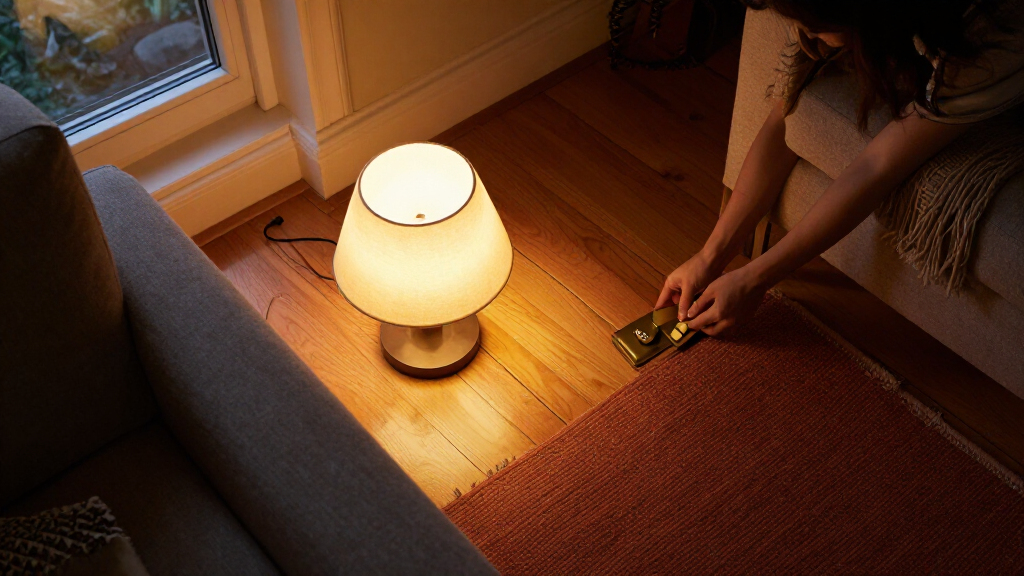
Placement should reflect how people use the room. A table lamp near a sofa can soften evening light, while a floor lamp beside an armchair can serve reading. A lamp on a console or sideboard can brighten a dim wall or draw attention to objects on display. The guide recommends distributing light around the room and varying its height, rather than concentrating it in the center.
It also advises choosing lamps for distinct functions and visual qualities. Shaded lamps can provide softer light, adjustable floor lamps can direct light toward a task, and sculptural designs can add character even when switched off. Before buying, readers are advised to check a lamp’s size, light reach, bulb requirements and dimmer compatibility.
Lighting Around Everyday Activities
The advice matters for readers who want a living room to work for more than one activity without relying on a bright overhead light. Separate light sources can give people options for reading, relaxing, watching a film or hosting guests, while placement can make different seating areas feel connected.
The guide shifts the decision from a strict count to a practical question: what does each corner need? That approach can help avoid buying lamps that duplicate one another’s function. It also makes the recommendations relevant to varied room sizes and layouts, though the source offers styling guidance rather than a formal lighting standard.
Products Worth Considering

Coway Airmega 250 Air Purifier for Large Rooms

LEVOIT Vital 200S-P Smart Air Purifier for Large Rooms

Levoit Core 400S-P Smart Air Purifier for Large Rooms
As an affiliate, we earn on qualifying purchases.
A Flexible Alternative to One Big Light
The source frames lamps as both functional lighting and part of a room’s design. Its recommendation is to have enough separate light sources to use the room comfortably with the main ceiling light switched off. A ceiling fixture may remain part of the scheme; the suggested lamps supplement it rather than necessarily replace it.
For layout, the guide favors lighting the places where people sit or work over arranging matching lamps purely for symmetry. It suggests that a table lamp and a floor lamp can have different shapes, and that lamps near seating in separate corners may help the room feel cohesive. The guidance draws on comments from Emma Deterding, founder and creative director of Kelling Designs and KDLoves, and Suzanne Duin, founder of lighting brand Maison Maison.
““Two is my comfortable starting point for most living rooms.””
— Livingetc stylist, in the report
No Fixed Count for Every Room
The source gives no measured formula tying lamp count to floor area, ceiling height or daylight. It also does not identify a single ideal bulb brightness, color temperature or lamp spacing. Its recommendations are stylistic and depend on a room’s layout, existing ceiling light and intended uses.
The report does not provide independent testing or evidence that two lamps will suit a particular home. Readers may need to adjust the arrangement based on the room and their preferences; the source does not specify how many lamps are needed in every configuration.
Plan Placement Before Buying
The guide’s next step for readers is to map the room’s activities and identify where separate light is useful before selecting fixtures. Those planning a renovation can account for outlets and switches early; people working with an existing setup can use plug-in table and floor lamps to create layered light.
Before purchase, compare each lamp’s scale and reach with its intended spot, and check bulb and dimmer compatibility. The source does not announce a follow-up study or a definitive standard, so the practical recommendation remains to begin with two lamps and add another only if the room’s zones or lighting needs call for it.
Key Questions
How many lamps should a living room have?
Livingetc’s stylist recommends two lamps as a starting point for most living rooms. The number can be lower or higher depending on the space and its uses.
Can a small living room use just two lamps?
Yes. The guide says that in a smaller room with a good ceiling light, one table lamp and one floor lamp may be enough.
When might a living room need three or more lamps?
A larger or open-plan room, or one with distinct areas such as a reading corner and a separate television area, may need three or more lamps, according to the report.
Where should living-room lamps go?
Place them where they support an activity or improve a darker area: for example, a table lamp near a sofa, a floor lamp beside a reading chair, or a lamp on a console or sideboard.
Do living-room lamps need to match?
No matching set is required by the guide. It suggests that combining different silhouettes and functions can create a more personal arrangement, as long as each lamp adds something useful or distinct.
Source: rss