To enhance outdoor-indoor flow through biophilic design, open up your space with large windows, skylights, and strategic plant placements that connect interior areas with outdoor views. Keep pathways clear and use natural elements like greenery to create seamless passages. Incorporate outdoor-inspired textures and colors to foster a calming atmosphere. By blending natural light and plant life, you’ll boost well-being and aesthetic harmony—exploring these ideas further can transform your home into a lush sanctuary.
Key Takeaways
- Use large windows, sliding doors, and open layouts to seamlessly connect indoor spaces with outdoor environments.
- Incorporate abundant greenery and potted plants near entryways and open areas for visual and tactile connection.
- Design transitional zones like patios, decks, or indoor gardens to blend outdoor and indoor living.
- Maximize natural light through skylights and unobstructed window views to enhance outdoor-indoor harmony.
- Integrate natural elements such as wood, stone, and plants to create a calming, biophilic atmosphere throughout the home.
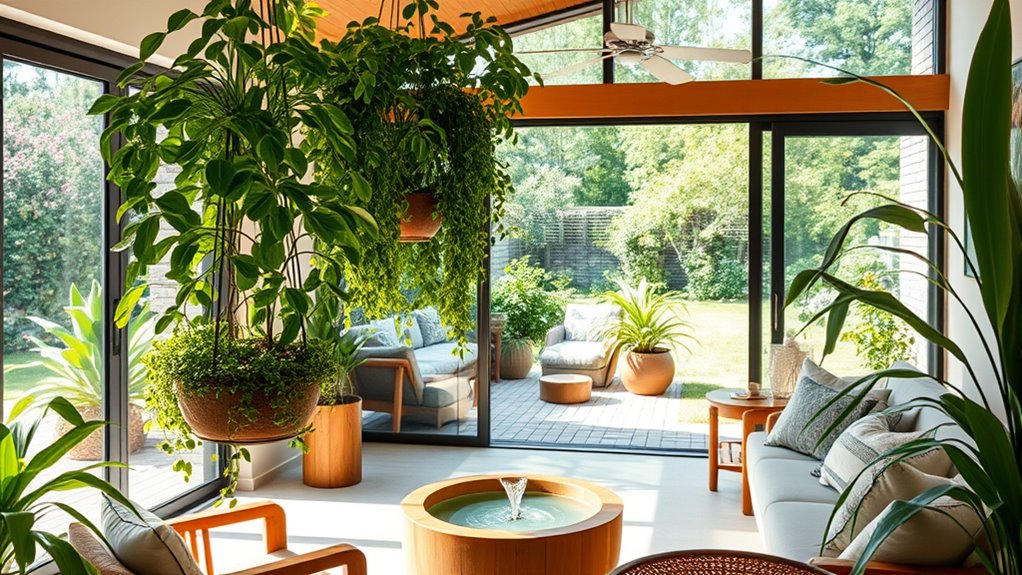
Bringing nature into your living space through biophilic design isn’t just a trend—it’s a proven way to boost your well-being and create a calming environment. One of the most effective methods to achieve this is by maximizing natural light and seamlessly integrating plants into your home. Natural light plays a vital role in connecting your interior spaces with the outside world. By opening up windows, installing skylights, or choosing sheer window treatments, you invite daylight to flood your rooms, making your space feel larger, brighter, and more inviting. The more natural light you bring in, the better you’ll feel—studies show it can improve mood, enhance productivity, and regulate your sleep cycles.
Plant integration further deepens this connection to nature. Incorporating a variety of plants not only adds visual interest but also improves air quality and humidity levels. You might opt for low-maintenance greenery like succulents or ferns that thrive indoors with minimal care. Position these plants near windows to ensure they receive ample light, or create dedicated plant zones that become focal points within your rooms. Hanging planters or wall-mounted garden pockets are excellent options for saving space while adding lush greenery to your walls. This approach creates a sense of continuity between your indoor environment and the outdoor landscape, blurring the boundaries and fostering a harmonious flow.
To enhance outdoor-indoor flow, consider placing large potted plants near entryways or in open spaces where they can be appreciated from multiple angles. When you combine abundant natural light with thoughtfully selected and positioned plants, you cultivate an environment that feels vibrant and alive. This synergy encourages a more relaxed, natural atmosphere, helping you feel grounded and connected to nature even when indoors.
In addition to visual benefits, plants can boost your mental health by reducing stress and increasing focus. Their presence invites a sensory experience—touching leaves, smelling fragrant herbs, hearing the subtle rustle of leaves—that grounds you in the present moment. Incorporating light management practices such as adjustable window treatments or skylights can further optimize the natural illumination and support your biophilic design goals. To maximize these effects, arrange your plants in a way that invites interaction and movement around them. Keep windows unobstructed to allow sunlight to reach your greenery, and invest in lighting that mimics natural daylight for days when sunlight is limited.
Ultimately, creating a seamless outdoor-indoor flow through natural light and plant integration transforms your home into a sanctuary—one that nurtures your body and mind while blurring the lines between interior and exterior.
Top picks for "outdoor indoor flow"
Open Amazon search results for this keyword.
As an affiliate, we earn on qualifying purchases.
Frequently Asked Questions
How Can I Incorporate Biophilic Design on a Limited Budget?
To incorporate biophilic design on a limited budget, start with DIY projects like creating plant hangers or repurposing containers for budget-friendly greenery. You can add indoor plants such as pothos or succulents, which are inexpensive and easy to maintain. Focus on maximizing natural light and using natural materials. These small, affordable steps bring nature indoors and enhance your space without breaking the bank.
What Are the Best Indoor Plants for Low-Light Spaces?
If you’re seeking indoor plant care tips for low-light spaces, you’re in luck. Some of the best low light plant varieties include snake plants, pothos, and ZZ plants, which thrive even with minimal sunlight. These resilient options require minimal upkeep and add a touch of nature to your home. By choosing these low-light favorites, you create a calming, lush environment that’s easy to maintain and visually soothing.
How Does Biophilic Design Impact Mental Health?
Biophilic design boosts your mental health by strengthening your connection to nature, which helps reduce stress and anxiety. When you incorporate natural elements like plants, natural light, and organic textures into your home, you create a calming environment that promotes relaxation. This connection to nature has been shown to improve mood, enhance focus, and increase overall well-being, making your space a sanctuary for mental clarity and emotional resilience.
Can Biophilic Elements Help Reduce Indoor Air Pollution?
Imagine you’re breathing fresher air thanks to biophilic design. Incorporating plants like snake plants or pothos enhances air purification by removing toxins, improving indoor air quality. These elements also promote natural ventilation, allowing fresh air to circulate and dilute indoor pollutants. By choosing the right greenery, you actively reduce indoor air pollution, creating a healthier, more inviting home environment that supports your well-being.
Are There Specific Color Palettes That Enhance Biophilic Living?
You’ll find that nature-inspired palettes, rooted in color psychology, truly enhance biophilic living. Think calming greens, earthy browns, soft blues, and gentle neutrals that evoke natural landscapes. These colors foster relaxation, connection, and well-being, seamlessly blending indoor and outdoor spaces. By choosing a palette inspired by nature, you create a harmonious environment that nurtures your mind and body while reinforcing your home’s connection to the natural world.
Conclusion
By blending indoor and outdoor spaces through biophilic design, you create a home that feels inviting, calming, and connected to nature. Imagine waking up every day surrounded by greenery and natural light—doesn’t that make your space more inspiring? Embrace the flow between your indoor and outdoor environments, and you’ll foster well-being and harmony right at home. Isn’t it time you brought nature closer and transformed your living space into a true sanctuary?