

To create effective DIY hair treatments at home, you can combine natural ingredients like honey, coconut oil, yogurt, and avocado to target specific hair needs. These treatments are cost-effective, customizable, and free from harsh chemicals, helping improve shine, moisture, and overall health. Regular use can strengthen your hair and reduce damage. Keep exploring different ingredient combinations and tips to achieve even healthier, shinier hair with natural remedies.
Key Takeaways
- Use natural ingredients like honey, coconut oil, yogurt, and avocado to create customizable hair masks tailored to your needs.
- Apply DIY treatments evenly, focusing on areas needing extra nourishment, and leave for 20-30 minutes before rinsing thoroughly.
- Regularly incorporate homemade masks (once or twice weekly) to improve hair health, shine, and reduce damage naturally.
- Experiment with ingredient combinations to address specific concerns such as dryness, dandruff, or dullness effectively.
- Homemade hair masks are cost-effective, chemical-free, and allow full transparency and control over ingredients used.
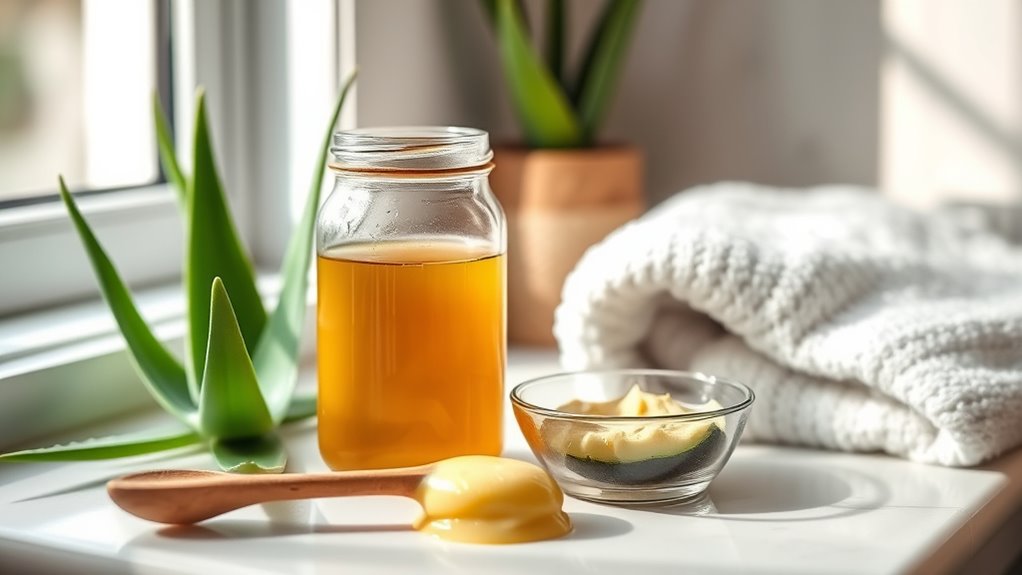
If you’re looking to improve your hair health without breaking the bank, DIY hair treatments are an excellent option. Using natural ingredients, you can create effective hair mask recipes that nourish your scalp and strengthen your strands. The best part is, these treatments are simple to make and tailored to your specific hair needs. Whether you want to add shine, combat dryness, or boost growth, there’s a DIY solution waiting for you.
Start by gathering versatile natural ingredients like honey, coconut oil, yogurt, and avocado. Honey is a humectant, meaning it helps retain moisture, making it perfect for dry or damaged hair. Coconut oil penetrates deeply, providing intense hydration and reducing protein loss. Yogurt contains lactic acid, which gently exfoliates the scalp and promotes a healthy environment for hair growth. Avocado is packed with healthy fats and vitamins that nourish and strengthen your hair from root to tip. Combining these ingredients in different ways allows you to customize your hair mask recipes for your specific concerns.
Gather natural ingredients like honey, coconut oil, yogurt, and avocado to create customized hair masks for healthy hair.
For example, a simple and effective hair mask recipe involves mixing mashed avocado with a tablespoon of honey and a few drops of coconut oil. Apply this mixture evenly to your hair, focusing on the ends, and leave it on for about 20-30 minutes before washing it out. This treatment boosts moisture, adds shine, and helps repair damage. If your scalp feels oily or prone to buildup, a yogurt-based mask can help. Mix plain yogurt with a teaspoon of honey and a few drops of lemon juice, then apply it to your scalp and hair. It gently cleanses, balances oil production, and leaves your hair soft and manageable.
Another popular recipe is a banana and honey mask, ideal for brittle or dull hair. Mash a ripe banana, add a tablespoon of honey, and blend until smooth. Apply it generously from roots to tips, leave it on for 30 minutes, then rinse thoroughly. This mask provides vitamins, smooths frizz, and enhances overall texture. Additionally, incorporating natural ingredients like these can help you avoid harsh chemicals often found in commercial products. The beauty of DIY hair treatments is that you can experiment with these natural ingredients, adjusting quantities and combinations to suit your hair’s unique needs.
Creating your own hair mask recipes not only saves money but also guarantees you’re avoiding harsh chemicals often found in commercial products. Regular use—once or twice a week—can improve your hair’s health over time. Plus, you get the satisfaction of knowing exactly what’s going onto your scalp and strands. With a little effort and some natural ingredients, you can achieve healthier, shinier hair right from your home.
Frequently Asked Questions
How Often Should I Perform DIY Hair Treatments?
You should perform DIY hair treatments every 1 to 2 weeks, depending on your hair type and needs. Follow the frequency guidelines to avoid overdoing it, which can lead to damage. Incorporate these treatments into your maintenance routines to keep your hair healthy, shiny, and well-nourished. Adjust the schedule if you notice your hair becoming dry or greasy, ensuring your routine remains effective and safe.
Can DIY Treatments Damage My Hair?
Think of your hair as a delicate garden; DIY treatments can be a gentle rain or a harsh storm. Yes, they can damage your hair if misused, leading to chemical burns or allergic reactions that burn like wildfire. Overdoing treatments, or using harsh ingredients, weakens your strands and risks long-term harm. Always patch-test and follow instructions carefully to keep your hair healthy and vibrant, avoiding the storm’s destructive path.
Which Ingredients Are Safest for Sensitive Scalps?
For sensitive scalps, you should choose gentle ingredients like natural oils such as coconut, argan, or jojoba, which moisturize without irritation. Also, opt for gentle extracts like chamomile or aloe vera, known for soothing properties. Always do a patch test before applying any treatment widely, and use minimal amounts to avoid overwhelming your scalp. These ingredients help nourish your hair safely while minimizing the risk of irritation.
Are DIY Treatments Effective for Scalp Issues?
You might think DIY treatments are magic wands, but they’re often just gentle whispers against bigger scalp issues. Natural remedies can soothe minor irritations, but for stubborn problems, store-bought solutions with proven ingredients usually pack a punch. While some DIYs work wonders, they often lack the potency of professional products. So, if your scalp’s battling serious issues, don’t rely solely on homemade cures—trust effective, targeted treatments for real results.
How Long Should I Leave Treatments in My Hair?
You should leave DIY hair treatments in your hair for the recommended application timing, which typically ranges from 15 to 30 minutes. Treatment duration depends on the ingredients used and your hair type, so always follow the instructions. If unsure, start with a shorter time to avoid overexposure. Rinsing thoroughly afterward guarantees you get the best results without risking damage or buildup.
Conclusion
Now that you know how simple and effective DIY hair treatments are, why not give them a try? With just a few natural ingredients, you can nourish and revive your hair right at home. Are you ready to ditch harsh chemicals and embrace these easy solutions? Remember, caring for your hair doesn’t have to be complicated or expensive. So go ahead — pamper yourself with these homemade treatments and enjoy healthier, happier hair every day.