

To embrace sustainable fashion, focus on choosing eco-friendly fabrics like organic cotton, hemp, and recycled textiles. Buying secondhand clothes from thrift stores, online shops, or vintage stores extends the life of garments and reduces demand for new production. Supporting brands that prioritize ethical sourcing and recycling efforts also makes a big difference. Making small, conscious choices can markedly lessen your environmental impact. Keep exploring to discover even more ways to shop responsibly and style sustainably.
Key Takeaways
- Choosing eco-friendly fabrics like organic cotton and hemp reduces chemical use and water consumption in clothing production.
- Recycling textiles and supporting brands with recycled fabrics promote a circular economy and lower environmental impact.
- Secondhand shopping extends garment lifespan, decreases demand for new production, and minimizes fashion industry waste.
- Ethical sourcing ensures fair wages and safe conditions, promoting transparency and responsible manufacturing practices.
- Small individual actions, such as selecting sustainable fabrics and buying secondhand, collectively drive systemic change in fashion sustainability.
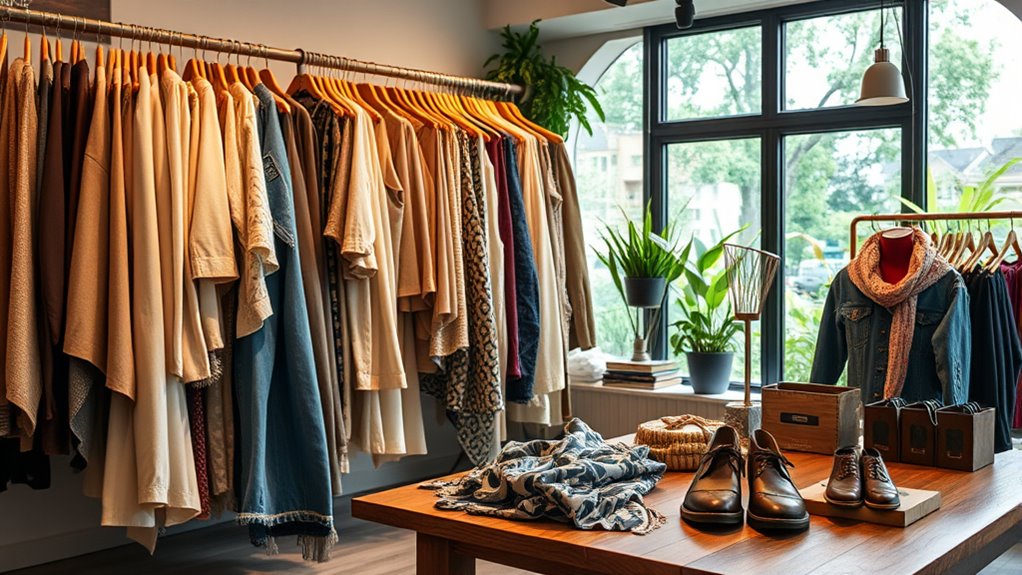
Have you ever considered how your clothing choices impact the planet? Every time you buy new garments, you contribute to a system that can harm the environment and exploit workers. But there are ways to shift towards more sustainable fashion that make a real difference. One of the most effective methods is embracing textile recycling. Instead of discarding old clothes, you can donate or recycle them, turning what would be waste into new fabric. Textile recycling reduces the demand for virgin materials, cuts down on landfill waste, and conserves resources like water and energy. By choosing brands that prioritize recycled fabrics, you support a circular economy where textiles are reused and repurposed, minimizing environmental impact.
Alongside textile recycling, ethical sourcing plays a fundamental role in sustainable fashion. It means selecting brands that guarantee fair wages, safe working conditions, and environmentally friendly practices in their supply chains. When you buy from companies committed to ethical sourcing, you help promote transparency and accountability. These brands often use eco-friendly fabrics, such as organic cotton or hemp, which require fewer chemicals and less water to produce. You might also find that they avoid harmful dyes and promote sustainable manufacturing processes. By making conscious choices, you’re not just purchasing clothing—you’re supporting a system that values people and the planet.
Secondhand shopping complements these efforts perfectly. When you buy secondhand, you extend the life of garments, reducing the need for new production and decreasing textile waste. Thrift stores, online marketplaces, and vintage shops are treasure troves for unique pieces that have already stood the test of time. This approach not only saves money but also lessens the environmental footprint of fashion. It’s a simple yet powerful way to participate in sustainable fashion without sacrificing style. Plus, by choosing secondhand, you help combat fast fashion’s throwaway culture, encouraging a more mindful approach to consumption.
In addition, understanding the impact of natural fibers and their benefits can guide you toward more eco-friendly choices. Ultimately, sustainable fashion is about making deliberate choices that prioritize the health of our planet and the well-being of those who produce our clothes. Incorporating textile recycling, supporting ethical sourcing, and shopping secondhand all play essential roles. Each small action adds up, creating a ripple effect that can lead to systemic change. So, next time you’re shopping, think about the lifecycle of your garments. By choosing eco-friendly fabrics, buying secondhand, and supporting brands that practice ethical sourcing, you become part of a movement that values sustainability over convenience. Your choices matter, and together, they can help reshape fashion into a more responsible industry.
Top picks for "sustainable fashion friendly"
Open Amazon search results for this keyword.
As an affiliate, we earn on qualifying purchases.
Frequently Asked Questions
How Do Eco-Friendly Fabrics Compare in Durability to Conventional Materials?
Eco-friendly fabrics often have comparable or even better fabric longevity than conventional materials, thanks to eco material resilience. You’ll find that many sustainable fabrics, like hemp or Tencel, withstand wear and tear well over time. While some eco fabrics may require gentle care, their durability assures your investment lasts longer, reducing waste. So, choosing eco-friendly options can give you stylish, resilient pieces that stand the test of time.
What Are the Best Tips for Authentic Secondhand Shopping?
You’d think authentic secondhand shopping is all luck, but it’s really about thrift store finds and vintage shopping tips. Start by setting a clear goal, inspect items carefully for wear, and don’t hesitate to negotiate prices. Trust your instincts, look for timeless pieces, and visit multiple stores. Patience and persistence turn secondhand shopping into a treasure hunt, ensuring you get quality finds that truly stand out.
Are There Certifications to Verify Sustainable Fabric Claims?
Yes, there are certifications to verify sustainable fabric claims. You should look for certification standards like GOTS, OEKO-TEX, or Fair Trade, which guarantee eco label legitimacy and that the fabrics meet strict environmental and social criteria. These labels help you confidently identify genuinely sustainable fabrics, avoiding greenwashing. Always check for official certification logos on products or tags, so you can make informed, eco-conscious shopping choices.
How Can Consumers Identify Truly Eco-Friendly Brands?
Did you know that 66% of consumers say transparency influences their purchase decisions? To spot truly eco-friendly brands, look for clear brand transparency and verified ethical certifications like Fair Trade or GOTS. These indicators show the brand’s commitment to sustainability. Always research their sourcing practices, and check for third-party audits—these steps help you confidently support brands that prioritize environmental and social responsibility.
What Are Upcoming Trends in Sustainable Fashion Technology?
You’ll see more innovative dyeing techniques that use less water and chemicals, making production greener. Biodegradable fibers will become more common, reducing textile waste and environmental impact. These advancements let you enjoy stylish, eco-friendly options without sacrificing quality or trendiness. As technology evolves, sustainable fashion will integrate smarter, eco-conscious processes, helping you make more responsible choices while staying fashionable and supporting environmental health.
Conclusion
So, next time you’re eyeing that trendy, new designer piece, just remember—your closet’s already bursting with eco-friendly options. Why buy new when you can rock a vintage find that’s been reborn? After all, saving the planet is just a matter of choosing secondhand over fast fashion. Who knew that being stylish and environmentally conscious could be so effortlessly chic? So go ahead, make a statement—one thrifted outfit at a time.