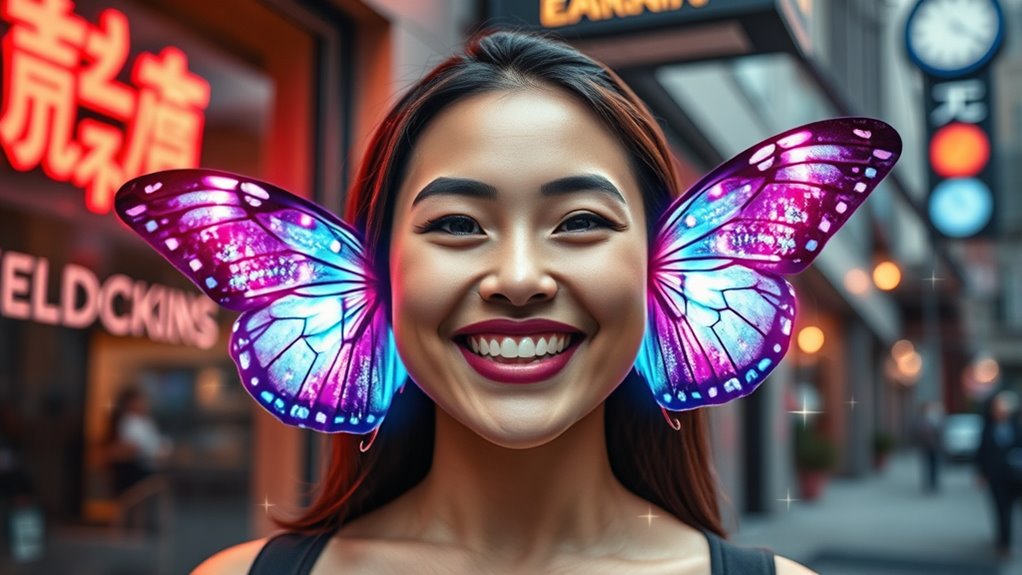

AR filters in branding let you merge digital elements seamlessly into the real world, creating memorable and interactive experiences for your audience. They encourage users to actively engage with your brand by trying on virtual products, participating in fun challenges, and sharing their experiences online. This shareability boosts organic exposure and helps build loyalty. As technology continues to evolve, you’ll discover even more innovative ways to connect with consumers through augmented reality. Keep exploring to uncover more insights.
Key Takeaways
- AR filters blend digital visuals with real-world environments, creating immersive brand experiences that engage consumers actively.
- They enable virtual try-ons and interactive challenges, making brand interactions more fun and memorable.
- Shareable AR filters increase organic reach through user-generated content, boosting brand visibility.
- Integrating AR filters enhances emotional connections and brand recall by fostering active participation.
- The evolving technology promises innovative ways for brands to stand out and deepen consumer relationships.
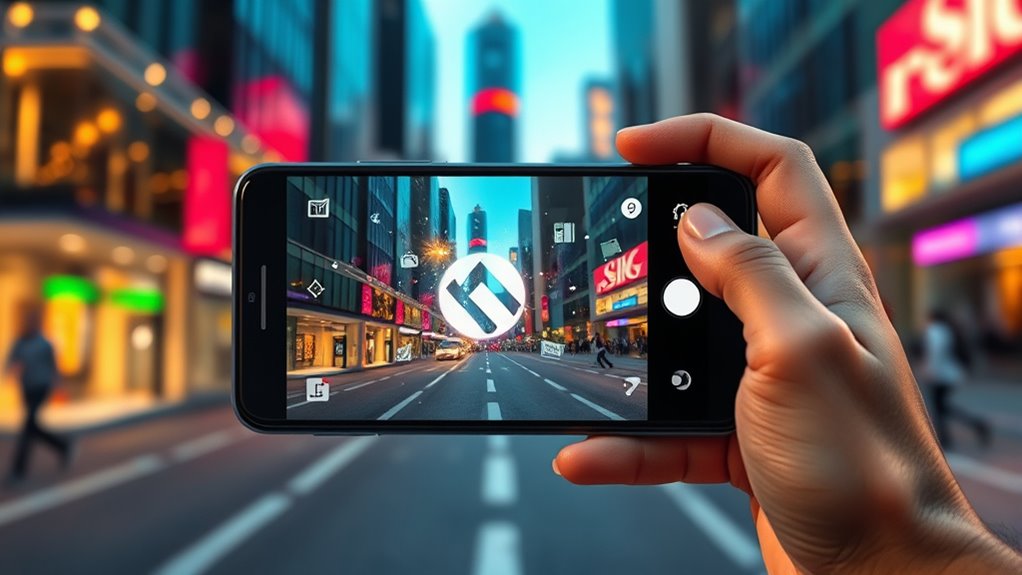
Have you ever wondered how brands are transforming their marketing with augmented reality? It’s a game-changer that makes your interaction with brands more immersive and memorable. Augmented reality, or AR, allows brands to blend digital elements with the real world, creating experiences that captivate your attention and foster a deeper connection. One of the most popular ways brands are leveraging AR today is through filters on social media platforms. These AR filters enable you to try on virtual accessories, see how products look in your environment, or even participate in fun, branded challenges—all from your phone or tablet. This technology isn’t just about entertainment; it’s a strategic tool to boost brand engagement.
AR filters make brand interactions fun, immersive, and shareable across social media platforms.
When you encounter an AR filter, you’re not just passively watching content; you actively participate. For example, a cosmetics brand might create a filter that lets you test different lipstick shades or makeup looks in real-time. This interactive experience encourages you to spend more time engaging with the brand, increasing the chances you’ll remember it later. Similarly, fashion brands might design filters that let you virtually try on clothes or accessories, making the shopping experience more personalized and fun. These filters turn passive viewers into active participants, which markedly enhances your emotional connection to the brand. It’s this level of engagement that makes AR filters so effective—they transform simple advertising into an experience you enjoy and share.
Moreover, AR filters help brands reach wider audiences through social sharing. When you use a branded filter and share your photos or videos, your friends and followers see it too. This organic exposure amplifies the brand’s message without additional advertising costs. Since AR filters are often designed to be entertaining or visually appealing, people are more likely to share them, spreading brand awareness naturally. This viral potential is a huge advantage for brands aiming to boost their visibility and foster positive associations. As you interact with these filters, you become a part of the brand story, helping to create a sense of community and loyalty. Additionally, leveraging AI content clustering can help brands develop more targeted and engaging filter experiences tailored to specific audiences.
In essence, AR filters are transforming how brands connect with you. They turn marketing from a one-way message into an interactive experience that builds genuine engagement. By merging the virtual with the real, these filters make your interactions with brands more memorable, fun, and shareable. They not only enhance your user experience but also help brands stand out in a crowded digital space. As this technology continues evolving, expect even more innovative ways for brands to captivate your attention and deepen your relationship with them—all through the power of augmented reality.
Frequently Asked Questions
How Do AR Filters Influence Consumer Purchasing Decisions?
AR filters influence your purchasing decisions by creating emotional engagement with the brand, making you feel more connected. When you interact with fun and personalized filters, you’re more likely to remember the brand later, boosting brand recall. This immersive experience encourages you to explore products further and develop positive associations, ultimately swaying your choices and increasing the likelihood of making a purchase.
What ARe the Costs Associated With Developing Custom AR Filters?
Developing custom AR filters can cost anywhere from $10,000 to $50,000 or more, depending on complexity. You need to take into account development costs and technological requirements, like advanced software and skilled designers. An interesting statistic shows brands see a 20% increase in engagement with tailored AR experiences. These costs cover concept creation, 3D modeling, coding, testing, and platform integration, making it essential to plan your budget carefully for successful implementation.
How Can Brands Measure the Success of AR Filter Campaigns?
You can measure the success of your AR filter campaigns by tracking user engagement metrics like time spent, shares, and interactions, which show how your audience connects with your brand. Additionally, monitor brand visibility through reach and impressions. Analyzing these data points helps you understand if your AR filters boost awareness and foster deeper engagement, ultimately indicating the effectiveness of your campaign.
ARe AR Filters Effective Across All Age Demographics?
AR filters are effective across all age demographics because they cater to age-specific preferences and enhance generational engagement. Younger audiences enjoy playful, interactive features, while older users appreciate creative and functional designs. You can tailor AR filters to resonate with each group, increasing brand relevance. By understanding these preferences, you guarantee your AR campaigns foster meaningful connections, making your brand memorable across diverse age ranges.
What Privacy Considerations Come With Using AR Filters in Branding?
You’re opening a digital Pandora’s box with AR filters, and privacy concerns are front and center. You must prioritize data privacy and get explicit user consent, or risk spiraling into a privacy nightmare. Think of it like a virtual handshake—you wouldn’t share your secrets without permission, right? Respecting user privacy isn’t just ethical; it’s essential for building trust and avoiding legal traps in this tech-driven world.
Conclusion
As you embrace AR filters in branding, you’re blending the real and virtual seamlessly, like a modern-day alchemist. This technology lets you connect with your audience in fresh, engaging ways, transforming ordinary moments into memorable experiences. Just remember, in this digital age, your creativity is your greatest tool—think of it as your enchanted sword. Keep experimenting, stay authentic, and watch your brand evolve beyond the horizon. The future’s bright, and AR’s your magic wand.