
Shape theory invites you to explore bold, flexible geometry by focusing on the core forms and invariants that define spaces. You’ll see how continuous deformations, like stretching or bending, help uncover the true nature of shapes beyond surface details. By understanding what features stay unchanged—such as holes or connectedness—you can grasp the essence of different forms. Keep exploring, and you’ll discover how these invariants reveal the fundamental beauty of geometric spaces.
Key Takeaways
- Shape theory studies how spaces can be deformed, emphasizing their fundamental form over detailed structure.
- It uses topological invariants, like holes and connected components, to classify and distinguish shapes.
- Transformations such as stretching or bending preserve core features, allowing for “playing” with shapes while maintaining their essence.
- The field explores “bold geometry” by focusing on invariants that reveal the intrinsic nature of complex forms.
- Understanding shape invariants enables creative manipulation and classification of spaces in both mathematics and real-world applications.

Shape theory is a branch of topology that studies the way spaces can be deformed, approximated, and classified based on their overall form rather than detailed structure. Instead of focusing on minute details, it emphasizes the big picture—how a shape can change continuously without tearing or gluing. This perspective allows you to understand the fundamental nature of spaces by examining their global properties, especially those that remain unchanged under certain transformations. These unchanging features are called topological invariants, and they serve as the backbone for distinguishing different shapes in shape theory. Moreover, the concept of accessibility in creativity reminds us that understanding complex ideas like topology can be approached step by step, making it accessible to anyone interested in exploring abstract forms. When exploring shapes, you often consider geometric transformations—like stretching, compressing, or bending—that preserve specific properties. These transformations help you see which characteristics of a shape are essential and which are superficial. For instance, a circle and an ellipse might look different, but under continuous deformation, they can be considered equivalent if you can morph one into the other without tearing. Such transformations are central because they reveal the invariants that define a shape’s core identity. Topological invariants, like the number of holes or connected components, do not change under these transformations, making them critical tools for classification. Understanding how geometric transformations affect shapes is key to grasping shape theory. You learn to distinguish between properties that are mutable and those that are immutable. For example, if you stretch a sphere into an ellipsoid, the shape remains topologically the same because you haven’t created or destroyed holes or disconnected parts. The invariants—such as the fact that it’s a closed surface with no holes—stay constant, guiding you in recognizing different forms as fundamentally equivalent. This approach allows you to ignore superficial differences and focus on the essential features that define a shape’s topological class. In essence, shape theory helps you see beyond the surface and appreciate the intrinsic qualities that make shapes unique or similar. By analyzing how geometric transformations affect a space, you can classify it based on its topological invariants. This perspective reveals a deeper understanding of the underlying geometry and topology, enabling you to analyze complex spaces with clarity. Whether you’re working with abstract mathematical spaces or real-world objects, shape theory provides a powerful framework to comprehend the essence of forms, emphasizing the importance of invariants over superficial details.
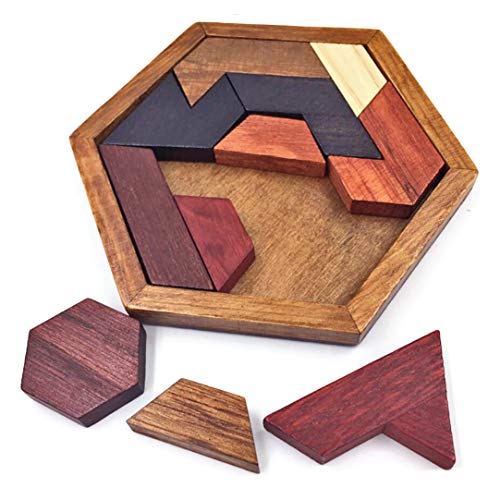
KINGOU Hexagon Tangram Puzzle Wooden Brain Puzzles for Kids & Adult Challenge Wooden Brain Teasers Puzzle Games for Family Party Gift – Brain Games for Kids
- Material: High-quality timber
- Size: 5.5 x 4.72 inches
- Brand: KINGOU, registered trademark 5034717
As an affiliate, we earn on qualifying purchases.
As an affiliate, we earn on qualifying purchases.
Frequently Asked Questions
How Does Shape Theory Apply to Modern Architecture?
Shape theory influences modern architecture by emphasizing geometric abstraction and innovative forms. You see this in bold designs that challenge traditional structures, creating dynamic spaces through complex shapes. Architects use shape theory to explore spatial dynamics, making buildings more engaging and functional. By playing with geometric concepts, you can design structures that are visually striking, enhance movement, and foster unique experiences within the built environment.
Can Shape Theory Influence Digital Graphic Design?
Absolutely, shape theory influences digital graphic design by shaping digital aesthetics through geometric patterns. For example, you might design a website using bold, interconnected shapes inspired by shape theory, creating a dynamic visual flow. This approach helps you convey modernity and complexity, engaging viewers with striking visuals. By applying geometric patterns rooted in shape theory, you enhance your designs’ visual impact and conceptual depth, making your digital work more compelling and innovative.
What Are the Key Mathematical Principles Behind Shape Transformations?
You use topological invariants to understand properties that don’t change during shape transformations, like connectedness or holes. Geometric morphisms act as functions that map shapes while preserving these properties, guiding your transformations. These principles help you manipulate shapes reliably, ensuring that key features remain consistent even when you stretch, twist, or bend them. Mastering these concepts allows you to create dynamic, coherent designs rooted in solid mathematical foundations.
How Does Shape Theory Intersect With Art and Sculpture?
You might think shape theory is just math, but it deeply influences art and sculpture by exploring fracture aesthetics and organic forms. You see artists use these principles to challenge traditional perspectives, creating works that feel both structured and fluid. This intersection invites you to appreciate how mathematical concepts shape visual language, turning geometric ideas into dynamic, expressive sculptures that evoke emotion and curiosity.
Are There Practical Tools for Visualizing Complex Shapes?
You can use practical tools like parametric modeling software to visualize complex shapes easily. These tools let you manipulate parameters to see how shapes change dynamically. Additionally, topological visualization helps you understand the structure and relationships within intricate forms. With these methods, you gain a clearer, more intuitive grasp of complex geometries, making it easier to explore, experiment, and bring bold shapes to life in your projects.

55 Pcs Alphabet & Number Dough Tool Set – Clay Play Kit for Kids with Rolling Pins, Geometric Cutters & Letter Molds, Modeling Accessories for Creative Learning
- Complete 55-Piece Dough Tool Set: Includes rolling pins, cutters, molds, and accessories
- Kid-Safe, Durable Materials: Made from non-toxic, high-quality ABS plastic
- Organized Storage Box: Keeps tools tidy after playtime
As an affiliate, we earn on qualifying purchases.
As an affiliate, we earn on qualifying purchases.
Conclusion
As you explore bold geometry, remember it’s like sculpting with ideas—each shape a story waiting to be told. When I first played with angular forms, I felt like I was revealing a secret code, discovering patterns that transformed simple lines into powerful symbols. Shape theory invites you to see beyond the surface, where every curve and edge shapes your understanding. Embrace these bold forms, and let your creativity reshape the way you perceive the world around you.

Wettarn 24 Pack 3D Shapes for Teaching Foam Geometric Solid Blocks Kids Math Manipulatives Multicolor Learning Toys Geometry Games for Preschool Elementary Kindergarten Home School Supplies, 12 Shape
- Educational Math Manipulatives: Build and explore geometric concepts
- Enhances Motor Skills: Improves fine motor and cognitive skills
- Complete 24-Piece Set: Includes 12 shapes with 2 pieces each
As an affiliate, we earn on qualifying purchases.
As an affiliate, we earn on qualifying purchases.

Alvin, MS10, Mathematical Instrument Kit – 10-Piece Set
- Complete 10-Piece Set: Includes essential drawing tools
- Durable, High-Quality Materials: Long-lasting and reliable tools
- Suitable for Students and Professionals: Ideal for various educational and professional uses
As an affiliate, we earn on qualifying purchases.
As an affiliate, we earn on qualifying purchases.