To decorate with layered neutrals and texture, start with a calming neutral palette like beige, grey, or taupe. Add variety by incorporating different fabrics such as plush velvet cushions, woven throws, and linen curtains. Mix smooth and rough textures to create depth and interest. Focus on key pieces for a polished look, and swap accents seasonally to refresh the space. Keep exploring for more tips to develop a truly inviting and timeless home.
Key Takeaways
- Use varying shades of neutral tones to create depth and interest without overwhelming the space.
- Incorporate diverse tactile fabrics like velvet, linen, and boucle to add dimension and inviting texture.
- Focus on a few key textured pieces, such as throws, cushions, and baskets, for a balanced layered look.
- Mix smooth and rough textures strategically to enhance tactile contrast and visual richness.
- Maintain a cohesive neutral palette to achieve a timeless, sophisticated, and calming interior.
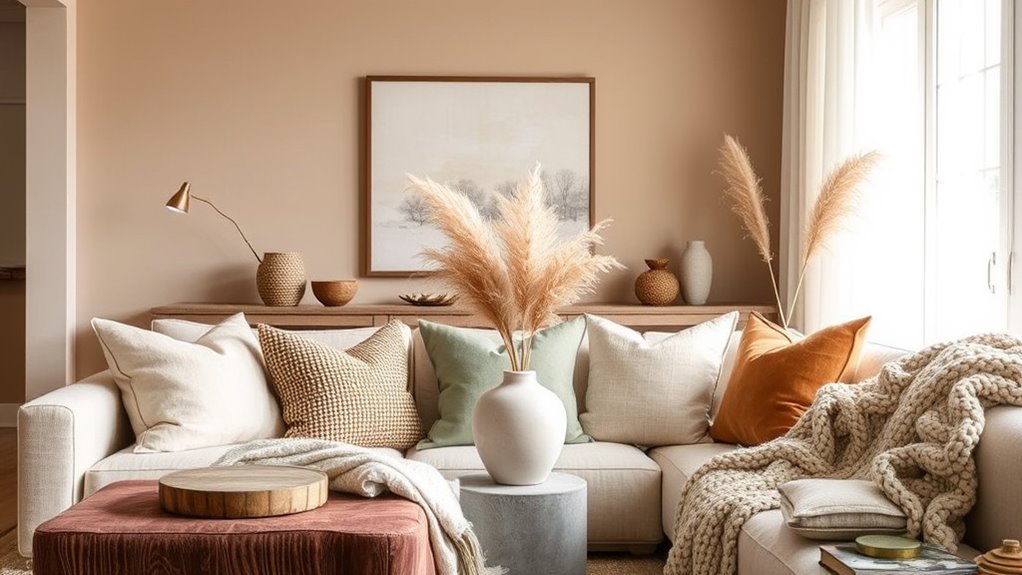
Layering neutrals and textures is a powerful way to create a sophisticated and inviting space. When you focus on neutral color schemes, you set a calming foundation that makes your room feel cohesive and timeless. Think shades like soft beiges, warm greys, creamy whites, and gentle taupes. These hues serve as a versatile backdrop, allowing you to add depth and interest without overwhelming the senses. You can keep the palette simple but still achieve a rich, layered look by varying tones slightly. For example, pair a light grey sofa with darker grey throw pillows and a beige rug to create visual harmony. The key is to maintain a consistent color theme while playing with different shades and textures.
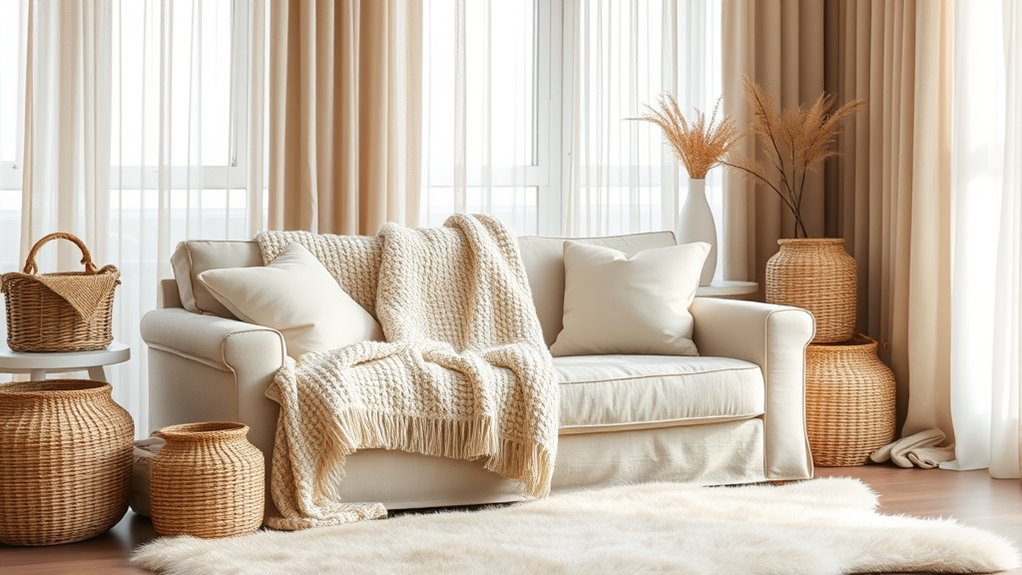
Incorporating tactile fabrics enhances this layered effect. When you choose fabrics with different textures, you add a sense of dimension that makes your space feel more curated and inviting. Think plush velvet cushions, woven throws, linen curtains, and boucle upholstery. Each fabric offers a unique tactile experience, inviting you to touch and feel the different surfaces. This variety prevents the space from looking flat or monotonous, instead creating a tactile journey for anyone who enters. Mixing smooth silk or satin with rougher textures like jute or tweed introduces a subtle contrast that elevates the overall design. When selecting fabrics, consider their function and comfort—sure, aesthetics matter, but so does how they feel under your fingertips.
You don’t need to go overboard with textures to achieve a stylish look. Select a few key pieces that stand out and layer them thoughtfully. For instance, combine a textured throw blanket with a velvet cushion and a woven basket for storage. These elements not only add visual interest but also encourage a cozy, lived-in atmosphere. Layering neutrals and incorporating tactile fabrics also allows you to change up your space easily over time. Swap out cushions or throws seasonally, or add new textures to refresh the look without redoing everything. The goal is to create a space that feels layered, harmonious, and tactile—one that invites you to relax and linger. Additionally, understanding neutral color schemes helps in establishing a balanced and timeless design foundation.
Ultimately, mastering the art of layering neutrals and textures means understanding how subtle differences in color and fabric can transform a room. By carefully selecting neutral tones and incorporating tactile fabrics, you craft a space that’s both elegant and comfortable. It’s about balance—using a neutral palette as your canvas and adding textures for depth and warmth. With this approach, your home becomes a sophisticated sanctuary that’s visually appealing and irresistibly inviting.

MIULEE Soft Decorative Chenille Pillow Covers Neutral 18×18 Pack of 4
- Premium Chenille Material: Luxuriously soft and durable fabric
- Neutral 18×18 Size: Fits most couches and decor styles
- Versatile Color Palette: Taupe, gray, and brown tones
As an affiliate, we earn on qualifying purchases.
As an affiliate, we earn on qualifying purchases.
Frequently Asked Questions
How Can I Incorporate Bold Textures Without Overwhelming the Space?
You can incorporate bold textures by balancing them with softer, neutral elements to create a harmonious look. Use textural contrast strategically, such as pairing a textured throw with smooth upholstery. Add visual interest with a mix of materials like leather, velvet, and woven textiles, but keep the overall palette neutral. This way, the bold textures stand out without overwhelming the space, maintaining a cohesive and inviting atmosphere.
What Are the Best Neutrals for Small or Dark Rooms?
Imagine opening a window to let in light—light-colored neutrals brighten up any dark or small room. Opt for soft shades like warm beige, creamy whites, or light grays to reflect more light and create a sense of space. Neutral paint options such as taupe or greige work beautifully. For added depth, try an accent wall with a subtle hue or textured wallpaper, making your room feel larger and more inviting without overwhelming it.
How Do I Maintain Balance With Layered Textures?
To maintain balance with layered textures, you should consider the visual weight of each element. Use focal points, like a textured accent wall or statement furniture, to draw attention without overloading the space. Mix lightweight fabrics with heavier textures thoughtfully, ensuring no single element dominates. Keep your color palette consistent, and step back regularly to assess the overall harmony, adjusting textures as needed to create a balanced, inviting room.
Can Layering Neutrals Work in Modern or Minimalistic Styles?
Layering neutrals can transform your space into a sanctuary of calm, even in modern or minimalistic styles. Using neutral color palettes with layered design techniques adds depth and interest without overwhelming. You’ll achieve a sophisticated look that feels effortlessly chic. Focus on varying textures like matte, glossy, and woven finishes, and keep the color palette cohesive. This approach creates a balanced, inviting environment that’s both sleek and warm.
What Are Some Budget-Friendly Ways to Add Texture to Neutrals?
You can add texture to neutrals on a budget with DIY accents like painted or stitched pillow covers, or handmade wall hangings. Incorporate natural fibers such as jute, sisal, or linen rugs and baskets, which bring warmth and tactile interest. These affordable options give your space depth without overspending, allowing you to achieve a layered, textured look that complements your neutral palette effortlessly.
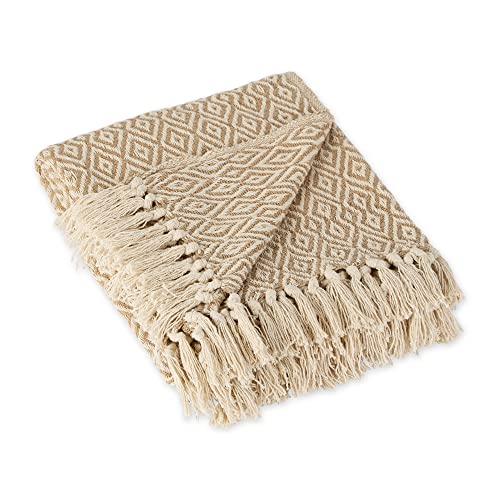
DII Rustic Farmhouse Double Diamond Woven Throw, 50×60, Stone
- Size: 50×60 inches
- Material: 100% woven cotton
- Durability: Fringed edges resist fraying
As an affiliate, we earn on qualifying purchases.
As an affiliate, we earn on qualifying purchases.
Conclusion
By embracing layered neutrals and rich textures, you create a space that feels like a cozy, woven tapestry—full of depth and warmth. Think of your room as a symphony, where soft hues and tactile elements play in harmony, inviting you to relax and unwind. When you layer thoughtfully, you turn your home into a sanctuary, a visual poem that whispers comfort and sophistication. Let your personal style be the brushstroke that brings it all to life.

MIULEE Natural White Linen Curtains 52×84 Inch Long for Bedroom Living Room
- Size: 52×84 inches per panel
- Design: 2-in-1 top style with rod pocket and back tab
- Material: 30% linen, 70% polyester blend
As an affiliate, we earn on qualifying purchases.
As an affiliate, we earn on qualifying purchases.
As an affiliate, we earn on qualifying purchases.