
TL;DR

Get home appliances delivered free with Prime
- Fast, free delivery on millions of items
- Prime Video, Amazon Music and more included
- Member-only deals all year
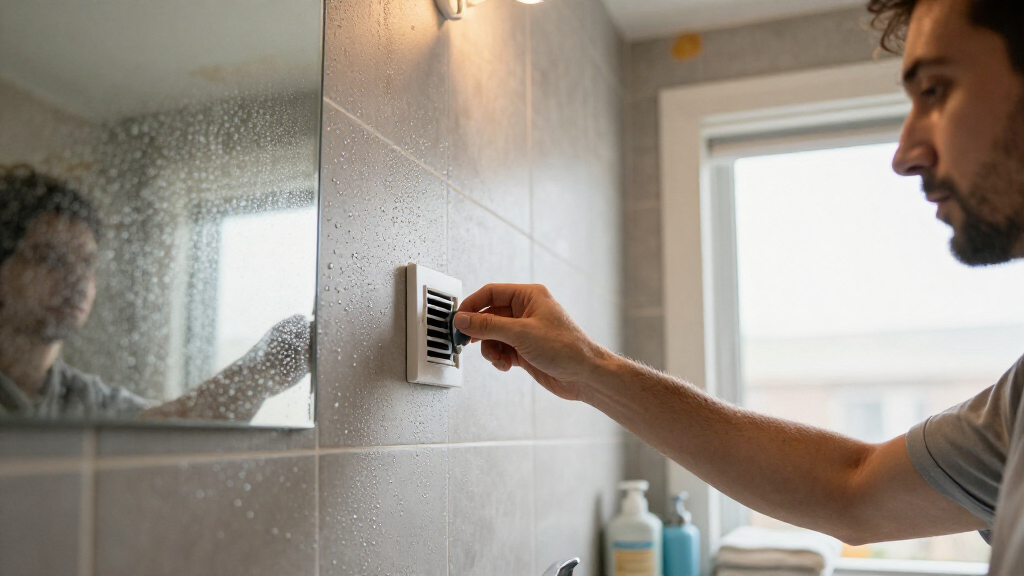
A Livingetc report, citing bathroom designers and plumbing professionals, says inadequate extraction can allow moisture to contribute to condensation, mold and damage to finishes and cabinetry. The experts recommend planning mechanical ventilation early, while exact fan requirements depend on local building rules and the project.
A Livingetc report on bathroom ventilation warns that inadequate extraction can leave moisture in the room, contributing over time to condensation, mold and damage to finishes. Designers and plumbing professionals quoted in the report say mechanical extraction should be considered early in a bathroom project, rather than treated as a cosmetic extra after the layout is set.
Bathrooms produce moisture during showers and baths. The report says that when humid air is not removed effectively, condensation and mold can develop, while paint, plaster, wallpaper, silicone and cabinetry may deteriorate. The scale and timing of any damage depend on the room, materials and ventilation; the report does not quantify rates or costs.
Several of the professionals interviewed argue that an opening window is not necessarily a substitute for a fan in a room with a bath or shower. Anthony Calvert-Harrison, architectural design lead at Levan House Design, says his firm recommends effective mechanical extraction to manage moisture and reduce condensation and mold risks. He says a window may be an acceptable alternative for a separate toilet room, but not usually for a bathroom with bathing facilities.
For projects being planned or refurbished, the experts advise deciding on the fan and duct route alongside lighting, joinery and ceiling details. Installing ducting and wiring before a ceiling is closed can make the work easier to integrate; retrofits may require opening a ceiling or adding boxing, depending on the room. The report also describes a system that runs at low speed and increases extraction when a humidity sensor detects a shower or bath, but it does not set out fan models, performance figures or a universal specification.
Moisture Can Put Finishes at Risk
Ventilation affects more than comfort after a hot shower. Persistent moisture can contribute to damage in cabinetry, paint and specialist finishes, potentially requiring repair or replacement. That is particularly relevant when a renovation includes natural stone, timber or other materials that may be costly to install.
The advice matters most before construction details are fixed. Planning extraction early can give the designer and tradespeople more options for routing ducts and concealing equipment. By contrast, a late change may mean additional disruption, although the report does not provide cost comparisons or establish how often ventilation problems lead to renovation work.
The report is expert guidance rather than a technical standard or a survey of household outcomes. Its practical point is narrower: moisture needs a route out, and homeowners should discuss how that will happen with qualified professionals before the bathroom is finished.
Products Worth Considering

Ring Alarm 14-Piece Wireless Security System Kit

Ring Alarm 8-Piece Kit (2nd Gen) Home Security System

Dyson Airwrap i.d. Multi-Styler for Straight and Wavy Hair
As an affiliate, we earn on qualifying purchases.
Why Windows May Not Be Enough
The report notes that some homeowners assume an opening window will clear steam. Experts interviewed say a window may help, but it may not remove moisture quickly enough after a shower, especially in winter when occupants are less likely to leave it open. The advice is not that windows have no value, but that their presence does not automatically remove the need for mechanical extraction.
For new builds and full renovations, the report attributes to Jo Sangster, a senior sales design consultant at Ripples London, the statement that building regulations require a fan regardless of whether a window is present. The supplied article does not identify a jurisdiction or quote the relevant rules. Requirements can vary, so anyone planning work should check local building regulations and obtain project-specific advice.
Fan placement and ducting also depend on the room. The report says a bathroom on an outside wall may be easier to retrofit than an internal bathroom, where access could involve opening a ceiling or adding discreet boxing. It does not provide detailed installation instructions or a single fan type suited to every layout.
““Condensation leads to mold and damp, and fixing that once the bathroom is finished costs far more than planning it properly from the start.””
— Arezoo Pouya, design and sales consultant at West One Bathrooms
Requirements Depend on the Project
The report does not provide a publication date, technical testing, fan-capacity calculations or a comparison of different products. It also does not quantify how much damage poor ventilation causes, how quickly it develops, or the repair costs in typical homes. The professionals’ examples describe possible problems, not outcomes that occur in every bathroom.
Exact legal requirements remain unclear from the supplied material because it does not specify the location or cite the applicable building regulations. The right fan, duct route and controls will depend on room size, layout and construction. Homeowners should confirm local requirements with the relevant building authority and discuss installation with a qualified professional.
Check Ventilation Before Work Starts
For a planned renovation, the next step is to raise ventilation with the bathroom designer and the tradespeople responsible for electrical and ductwork before ceilings are closed or tiling begins. Ask how moist air will be extracted, where the duct will run, how the fan will be controlled and whether the proposed setup meets local rules.
For an existing bathroom with recurring condensation or visible mold, the report’s advice points to reviewing whether the current fan is present and working effectively, rather than assuming a window will resolve the issue. Any replacement or new installation should be assessed for the room and carried out by appropriately qualified professionals. The supplied report does not announce a specific regulatory change or product launch; it offers planning guidance, and no further development is identified.
Key Questions
Do I need an extractor fan if my bathroom has a window?
Not necessarily in every type of room, but a window may not be enough for a bathroom with a bath or shower. The experts quoted by Livingetc recommend mechanical extraction to manage moisture; check local rules for your project.
When should ventilation be planned in a renovation?
Plan it during the layout and design stages, before the ceiling is closed and finishes are installed. That can make it easier to route ducting and wiring discreetly.
What damage can poor ventilation contribute to?
The report lists condensation, mold, peeling or bubbling paint, damaged plaster and swelling cabinetry as possible problems. The effects vary by room and materials; the report does not quantify how quickly they occur.
Do building regulations always require a bathroom fan?
The report says an expert advises that fans are required in new builds and complete renovations, even when a window is present. It does not specify the jurisdiction or cite the rules, so check the regulations where the work is taking place.
Source: livingetc.com