
TL;DR

Get home appliances delivered free with Prime
- Fast, free delivery on millions of items
- Prime Video, Amazon Music and more included
- Member-only deals all year
An Ideal Home writer’s account of renovating a 1700s house over several years argues that a slower pace can help homeowners make more informed design choices, protect work-life balance and avoid some costly mistakes. It is a personal account, not evidence that slow renovation saves money or suits every project.
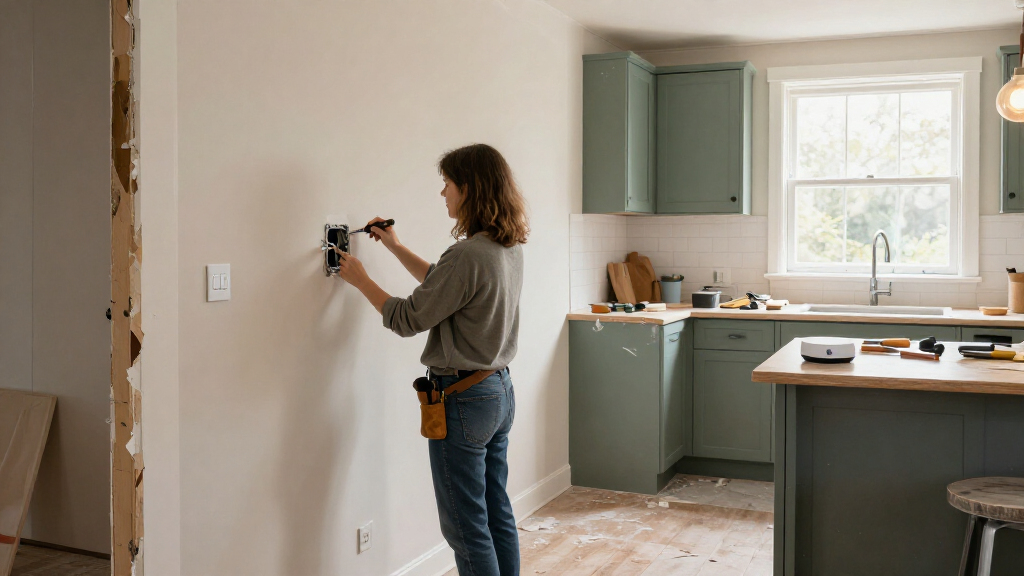
Ideal Home has published a first-person account of a renovation in a 1700s house that began in 2023 and was still underway in September 2026. The writer says the couple’s decision to work gradually helped them adapt plans to how they used the home, reduce pressure on their daily lives and make more considered purchasing decisions; those benefits are their experience, not a guarantee for other projects.
The writer, who is renovating with their partner, says they moved into the house in February 2023 and waited nine months before making major changes. During that time, they observed their usual routes through the home, where they spent evenings and how daylight changed across rooms and seasons. The writer says those observations led them to revise their original designs.
The project included a rewire, replumbing and changes to the floor plan in late 2023 and early 2024. The couple later worked on a bedroom, roof, windows and flooring, created a wildlife pond, installed a kitchen and converted another bedroom. The writer says the cottage roof was completed in 2024 and that upstairs plastering began in September 2026.
At the time of the account, two bedrooms, the staircase, a living room and an en suite remained unfinished. The writer gives six reasons for continuing at a measured pace: maintaining a better balance between renovation and life, understanding the house before designing it, reducing rushed decisions and mistakes, spending more carefully, producing less waste, and learning to enjoy the process rather than treating completion as the only goal.
A Slower Pace Changes Renovation Choices
The account offers a counterpoint to home-improvement images that show rapid transformations without the time, cost and disruption involved. For readers planning a renovation, its practical point is that living in a space before committing to major changes may reveal needs that drawings made in advance do not capture. The writer says this helped the couple alter their plans and shape rooms around their routines.
The account also describes how time pressure can affect purchasing. The writer recalls buying twice as many electrical faceplates as needed because a delivery delay threatened a deadline, then losing track of them, as well as ordering the wrong bathroom tile. These examples illustrate their experience of rushed coordination; they do not establish how often such errors occur or how much money a slower schedule would save.
Renovating gradually can also mean living with unfinished rooms and extending disruption over several years. The writer acknowledges that family and friends questioned the long timeline and worried the couple might move before enjoying a finished home. The approach is presented as a trade-off, not a universally preferable way to renovate.
Products Worth Considering

Ring Alarm 8-Piece Kit (2nd Gen) Home Security System

Ring Alarm 14-Piece Wireless Security System Kit

LEVOIT Vital 200S-P Smart Air Purifier for Large Rooms
As an affiliate, we earn on qualifying purchases.
From 2023 Move-In to Ongoing Work
The writer contrasts this project with an earlier renovation that took roughly two years before a job relocation prompted a move. For the current house, they say they chose to take more time and learn how the building worked for them before settling on lasting design decisions.
In the article, slow renovating means resisting quick cosmetic fixes and making home-improvement choices more deliberately, including limiting unnecessary consumption. The account’s timeline runs from the couple’s move in February 2023 through a new kitchen in April 2025, bedroom work continuing into July 2026 and upstairs plastering starting that September. The stated timeline and benefits come from the writer’s own report.
Costs and Completion Remain Open
The account does not provide a full project budget, a comparison of costs against a faster renovation, or a quantified estimate of waste avoided. It therefore does not show that slow renovating necessarily costs less. The writer also does not give a final completion date: several rooms and features remained unfinished when the account said upstairs plastering had begun in September 2026.
The article is a personal account rather than a survey or study. Its examples cannot establish whether the same approach would suit homeowners with limited budgets, temporary accommodation, urgent repairs or fixed deadlines. The source material also does not quantify the effect of the slower schedule on household finances or the total time the work will take.
Remaining Rooms Still Need Work
The project remains ongoing, with the writer listing two bedrooms, a staircase, a living room and an en suite as outstanding. The stated next stage was upstairs plastering, which had started in September 2026. The account gives no timetable for completing the remaining work, so the finish date is not known.
For readers considering a similar approach, the report points to the couple’s sequence: observe how the household uses the property, then make design and purchasing decisions with that experience in mind. It does not suggest delaying urgent repairs or replace professional advice where specialist work is required.
Key Questions
What does slow renovating mean in this account?
It means carrying out home improvements gradually and making considered choices rather than pursuing rapid cosmetic changes or a fixed, compressed schedule. The writer frames it as a personal approach focused on understanding the house and limiting unnecessary consumption.
How long had this renovation been underway?
The couple moved into their 1700s house in February 2023. The writer described the project as ongoing in September 2026, with several rooms and features still to complete.
Why did the couple wait before making major design decisions?
The writer says they lived in the house for nine months first, observing circulation, where they spent time in the evenings and how light changed through the day and seasons. Those observations led them to change their initial plans.
Does the account show that slow renovating is cheaper?
No. The writer says taking more time helped them make clearer decisions and describes specific purchasing mistakes made under deadline pressure. The account gives no full budget or cost comparison proving that a slower renovation saves money.
What work remained unfinished?
The writer listed two bedrooms, the staircase, a living room and an en suite as still to be completed. Upstairs plastering had started in September 2026, but no final completion date was provided.
Source: idealhome.co.uk