
TL;DR

Get home appliances delivered free with Prime
- Fast, free delivery on millions of items
- Prime Video, Amazon Music and more included
- Member-only deals all year
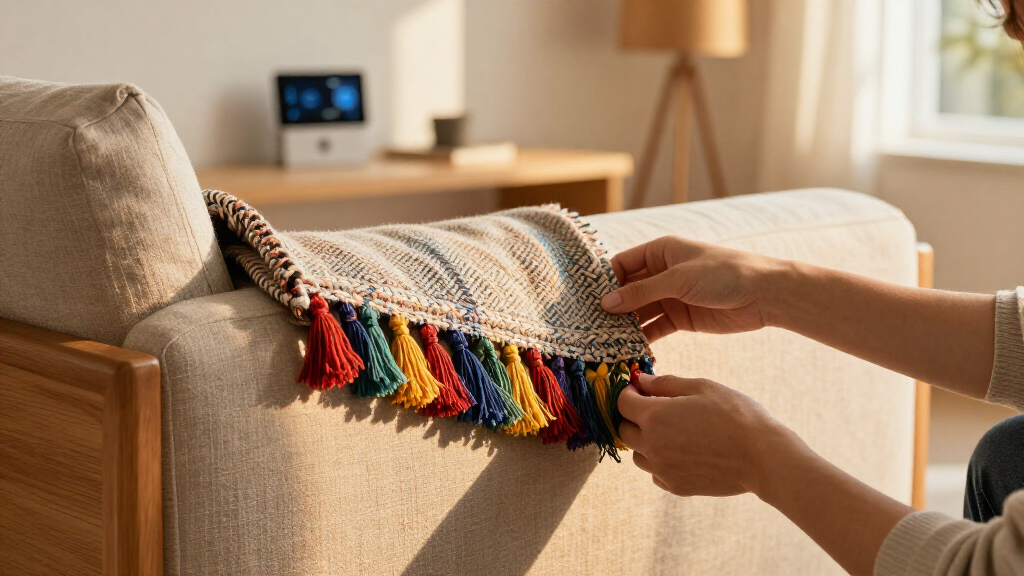
Livingetc reports that interior designers are incorporating tassels and other passementerie into contemporary spaces, often as a single decorative accent against a pared-back backdrop. Designers describe uses including curtain tiebacks, light pulls, pendant lights and furniture details; the report presents this as a current design direction, not a measured industry-wide trend.
Interior designers are bringing tassels and passementerie into modern rooms, often using a single trim, tieback or lighting detail to add texture and color without changing a space’s pared-back character, according to a Livingetc report. The examples range from monochrome curtain tiebacks to oversized decorative tassels and show how a heritage craft is being applied in contemporary interiors.
The report focuses on passementerie—decorative textile trims that include tassels, cords and tiebacks—and describes designers using it selectively rather than covering furnishings in ornament. London maker Jessica Light, who has worked by hand on tassels and trims for more than 30 years, told Livingetc that one decorative piece can stand out in a sparse room. She said she is receiving bespoke commissions for statement tassels intended to act as focal points.
Light’s work includes linen, wool, horsehair and paper, and she says she uses deadstock materials from her atelier where possible. She recommends experimenting with contrast, such as an ice-blue trim against earthy colors, or using different colors of the same tieback design. The report also quotes Marisa Gutmacher, senior vice president of design at New York trim studio Samuel & Sons, on pairing an unexpected hue with patterned fabric or using tonal color with a difference in texture or sheen.
Examples cited include monochrome silk tassels on tiebacks, light pulls and keys selected by East London Cloth; a black tassel tieback in a bathroom project by Penrose Tilbury; and tasseled pendant lights by French studio Hauvette & Madani. The studio’s Betty Lamp dates to 2021, while its 2026 La 23ème Heur furniture collection includes a chair cushion secured with passementerie cords finished in tassels.
Small Trims, Visible Design Impact
The design approach matters because it offers a way to add color, texture and visual emphasis without making an entire room feel ornate. In the examples reported by Livingetc, tassels appear on functional elements—curtains, light pulls and furniture cords—as well as on lighting designed to draw attention. A limited use of trim can therefore change how a detail reads while leaving the broader scheme clean-lined.
The report also connects current design work with a long-standing craft tradition. Light describes passementerie as a heritage practice, while the designers’ examples suggest ways to adapt its techniques and materials to contemporary forms. That is a design interpretation, rather than evidence that tassels have become widespread in homes or that the trend will last.
As an affiliate, we earn on qualifying purchases.
A Heritage Craft in New Settings
Livingetc describes passementerie as a craft with a history reaching back to ancient Egypt, though the report does not give a detailed historical account. Light, identified as a London-based passementerie weaver, said the craft has ebbed and flowed with changing tastes and that modernism nearly finished it off. Her comments frame the latest examples as a renewed design application, not a new invention.
The report points to recent collaborations and products rather than sales figures or broad market research. Hauvette & Madani’s Betty Lamp was launched in 2021 after the designers encountered Paris passementerie atelier Verrier. In 2026, the studio worked with Verrier artisans again for its La 23ème Heur collection. These projects provide examples of established design studios using craft techniques in contemporary products.
““They’re almost like an exclamation mark: a piece of passementerie punctuation in your space.””
— Jessica Light, passementerie weaver and tassel maker, speaking to Livingetc
As an affiliate, we earn on qualifying purchases.
How Broad Is the Tassel Revival?
The report offers designer interviews and selected project examples, but no survey, sales data or other measurement showing how common tassels are in contemporary homes. Light’s account of receiving bespoke commissions reflects her own business and does not establish demand across the wider interiors market. It is also unclear whether the examples signal a lasting shift or a short-lived styling preference.
The article does not provide prices, availability or durability comparisons for the cited products and materials. Readers cannot determine from the report alone how widely the named pieces are stocked, or whether the pictured details are custom commissions. The design guidance is presented as professional preference, not as a universal rule for decorating.
As an affiliate, we earn on qualifying purchases.
More Projects Will Test the Trend
The report identifies no scheduled industry milestone or forecast date for the trend. The clearest next developments will be new product launches, designer projects and commissions that show whether passementerie continues to appear in contemporary interiors. The 2026 La 23ème Heur collection is one recent example cited, but the source does not set out any further release plans.
For now, the practical takeaway from the designers interviewed is limited: a tassel can be used as a single accent or incorporated into a functional detail, with color and texture chosen to suit the surrounding room. Whether that approach becomes more common remains to be seen.
As an affiliate, we earn on qualifying purchases.
Key Questions
What is passementerie?
Passementerie is decorative textile trimming, including tassels, cords and tiebacks. The report discusses it as a heritage craft being used in contemporary interiors.
How are designers using tassels in modern rooms?
The examples include curtain tiebacks, light pulls, pendant lights and furniture cords. Some designs use a restrained monochrome detail; others make the tassel a focal point.
Who are the designers and makers featured?
Livingetc features tassel maker Jessica Light, Samuel & Sons design executive Marisa Gutmacher, British studio Penrose Tilbury, East London Cloth and French studio Hauvette & Madani.
Does the report show that tassels are now common in homes?
No. The article provides selected projects and expert comments, but no market data or survey establishing how widespread the look is.
Source: rss
Fall Picks
fall essentials
As an affiliate, we earn on qualifying purchases.