
TL;DR

Get home appliances delivered free — and shop member deals
- Fast, free delivery on millions of items
- Access to Prime Big Deal Days deals on October 6–7
- Prime Video, Amazon Music and more included
Livingetc published a guide to choosing bed sheets that questions the idea that a higher thread count automatically means better quality. It cites bedding consultant Paul Donegan on fiber, weaving and finishing, and textile scientist Rachel McQueen on the limits of the term “breathable.”
Livingetc has published a guide to choosing bed sheets that cautions shoppers against treating high thread counts or the word “breathable” as reliable quality guarantees. The article draws on bedding industry consultant Paul Donegan and textile scientist Rachel McQueen to explain why fiber quality, fabric construction and moisture handling can matter alongside the claims on a product label.
Donegan, founder of The Linen Consultancy, says thread count is one part of sheet quality, not a stand-alone measure. He gives 200 to 400 as a general range for good-quality cotton bedding and says premium products can reach 600 to 800 or higher when made with high-quality fibers. Those ranges are his guidance, not a universal grading standard.
The guide says some high-count labels can be misleading because certain manufacturers count the strands in multi-ply yarns in ways that raise the stated number. It advises looking beyond the label to fiber quality, weaving, finishing and craftsmanship. Donegan also recommends considering how responsibly a product is made, including environmental practices and social responsibility.
On the term “breathable,” McQueen, a professor of textile science at the University of Alberta, says the word is imprecise: woven fabrics are porous, but sleeping comfort also depends on how fibers interact with moisture. According to her, polyester absorbs little moisture, while cotton and silk take in more. The supplied report does not provide comparative test results for specific sheet products.
What Sheet Labels Can Tell Shoppers
Bed linen can be a costly purchase, and a prominent number or comfort claim may make it difficult to compare products fairly. The guide’s practical point is that one marketing label cannot establish overall quality: shoppers may need to weigh material, construction and care information together.
The explanation of moisture handling also gives readers a reason to look more closely at fiber composition when choosing sheets for comfort. The article does not claim that one fabric suits every sleeper, and the supplied material does not quantify how different sheets perform across temperatures, humidity or washing cycles.
As an affiliate, we earn on qualifying purchases.
Thread Count and Fiber Basics
The Livingetc article is a consumer advice report based on the writer’s bedding testing and interviews with specialists. Its author says the work included speaking with textile researchers, bedding industry veterans and color consultants. That background gives the guide a mix of product experience and expert comment, though the material provided here does not include a full list of tested products or the testing methods.
Thread count refers to the number of horizontal and vertical threads in a square inch of fabric. The report notes that construction choices can affect the number, and recounts a 2008 class-action lawsuit involving Bed Bath & Beyond and thread-count representations. The supplied text does not give the lawsuit’s outcome, so it cannot establish what a court found.
“Thread count matters, but it’s only one part of the quality equation.”
— Paul Donegan, founder of The Linen Consultancy
As an affiliate, we earn on qualifying purchases.
Limits of the Available Evidence
The supplied report excerpt does not include the guide’s full material-by-material comparison, wash-care advice or complete recommendations for styles and weaves. It also provides no standardized test data, product-by-product measurements or independent verification of retailer claims. How a specific set performs therefore cannot be determined from the excerpt alone.
The article’s quoted thread-count ranges are presented as a general guide from Donegan. The material does not specify how those ranges apply across different cotton types, weave constructions or manufacturers, nor does it explain the legal status or outcome of the lawsuit it mentions.
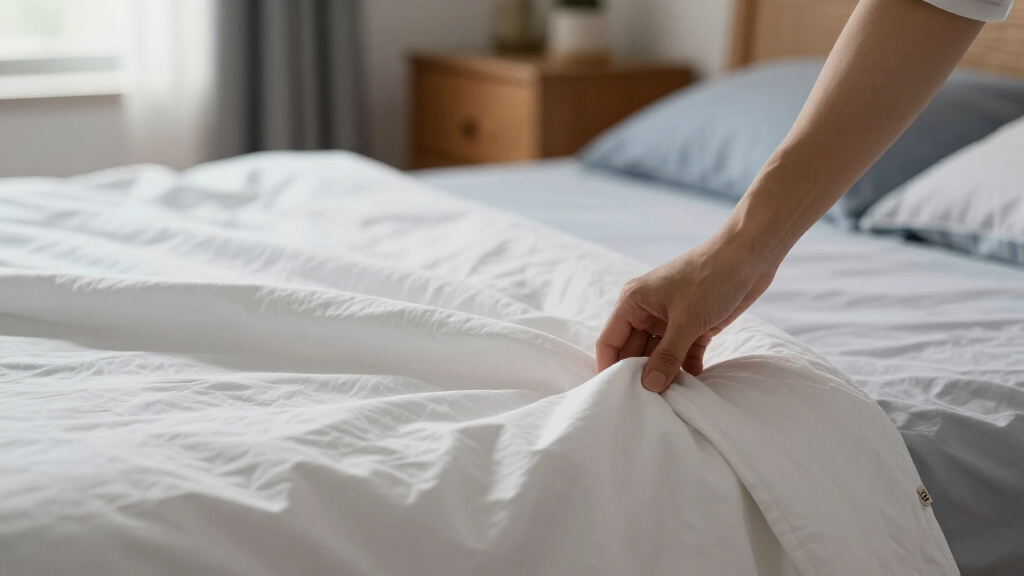
luxury bed sheets 600 thread count
As an affiliate, we earn on qualifying purchases.
As an affiliate, we earn on qualifying purchases.
Compare Materials Before Buying
For readers considering new bedding, the report’s advice is to compare the fiber and construction details alongside thread count, and to treat broad claims such as “breathable” as incomplete descriptions. Buyers can also review care instructions and maker information before choosing a set, while recognizing that the supplied article excerpt does not provide a universal test for comfort or durability.
Livingetc’s guide covers style and materials more broadly, but the source material provided here does not state a follow-up date, product-testing schedule or other next milestone. Further details about its recommendations are not available in the excerpt.
As an affiliate, we earn on qualifying purchases.
Key Questions
Does a higher thread count automatically mean better sheets?
No. The Livingetc guide cites Paul Donegan saying thread count is only one part of quality; fiber and manufacturing also matter.
What thread count does the source describe as good quality for cotton bedding?
Donegan gives 200 to 400 as a general guide for good-quality cotton bedding. The report does not present this as a universal grading rule.
What does “breathable” mean on a sheet label?
The term is imprecise, according to textile scientist Rachel McQueen. Woven fabrics are porous, while fibers differ in how they take in moisture; the excerpt does not offer a standardized breathability rating.
What should shoppers compare besides thread count?
The guide recommends considering fiber quality, weaving, finishing and craftsmanship, as well as responsible production practices.
Source: rss
Fall yard work Picks
leaf blowers
As an affiliate, we earn on qualifying purchases.