
TL;DR

Get home appliances delivered free — and shop member deals
- Fast, free delivery on millions of items
- Access to Prime Big Deal Days deals on October 6–7
- Prime Video, Amazon Music and more included
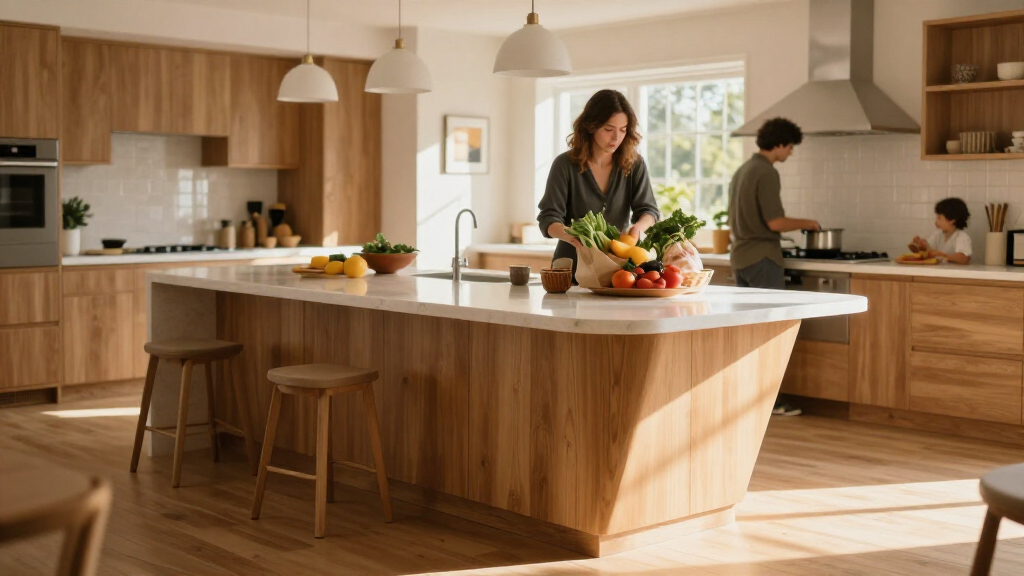
Interior designers featured by Livingetc say angular kitchen islands can echo a home’s architecture, add sculptural interest and help keep walkways open. They also say nonstandard shapes need careful planning for seating, storage, appliances and work surfaces.
Interior designers are using angular kitchen islands to give kitchens a sculptural focal point and, in some layouts, improve movement through the room, according to a Livingetc report. The designs range from lightly beveled rectangular blocks to distinctly faceted forms, though designers say their practical benefits depend on careful planning.
The report traces the recent interest to a project by Polish studio Akurat, whose “chopped” island was designed for a home with an irregularly shaped room. Studio founder and creative director Maciej Ryniewicz said the angled form offset the directions of the walls and felt suited to the space from different approaches. Livingetc says it has since seen angled islands appear more often in designers’ projects.
For Romaine Alwill, director of Sydney studio Atelier Alwill, an island can act as more than a work surface. She described kitchen islands as utility items that can be treated like sculpture and used to establish a home’s design tone. In her own project, the angles took cues from chamfered window blades on the house’s front facade.
The examples in the report include a hexagonal terrazzo island by Madrid studio Plutarco, an island combining angled sides and a curved edge in a Belgian home, and a marble design by Studio Duggan with a beveled underside and pedestal-like base. The projects show different ways to use geometry; the report does not provide cost figures or comparative evidence about how well the designs function across kitchens.
How Angles Can Shape Kitchen Movement
An island’s outline affects how people approach it, pass around it and use its work surfaces. In one Belgian home, owner Eline De Bruyne said the combination of angled sides and a curved edge helped keep the walkway open while softening the appearance of a large volume. That is a project-specific account, rather than evidence that angled islands improve circulation in every kitchen.
The shape can also connect a kitchen to details elsewhere in the home. Alwill said the geometry in her project picked up on the house’s window design, while the report’s designers describe islands as opportunities to set a visual tone. For readers planning a kitchen, the trend illustrates how a prominent fixture can respond to both room layout and architecture, as well as storage and cooking needs.
From Irregular Rooms to Sculptural Forms
Livingetc frames angular islands as part of broader experimentation with kitchen design, where designers vary an island’s color, material and shape. The report says interest picked up after its coverage of Akurat’s island for an irregularly shaped property. Ryniewicz said the team adjusted the island’s direction in relation to the walls so it would sit in harmony with the surroundings.
The featured projects use different materials and degrees of geometric expression. Plutarco combined terrazzo with cherry wood, dark blue stained pine and blue tiles with red grout, according to co-founder Enrique Ventosa. Other examples use curves alongside angles or make the island appear as a single mass of stone. The report presents them as individual design choices, not as a single standardized approach.
“We were faced with a challenging space that was highly irregular in shape.”
— Maciej Ryniewicz, founder and creative director of Akurat
Design Benefits Depend on Each Layout
The report does not establish how much an angled island typically changes circulation, usable counter area or storage compared with a rectangular island. Results depend on the room’s dimensions and the island’s design. Alwill said her project had extra room for greater depth and that leaving a sink off the bench helped with planning; those conditions may not apply elsewhere.
Costs, construction requirements and measured space savings are not given in the supplied report. It is also unclear how widely the trend has spread beyond the projects and designers Livingetc selected. Claims about improved flow should be read as descriptions of particular designs, not universal results.
Planning Around Appliances and Clearances
Anyone considering a nonstandard island will need to fit its shape to everyday requirements, including legroom, storage, appliances and usable work surfaces. The designers quoted by Livingetc describe collaboration with kitchen designers or architects as part of resolving those details, especially when the island’s angles affect available depth and circulation.
Livingetc’s report offers examples rather than announcing a formal industry forecast or a next scheduled milestone. The practical question for each project is whether the chosen geometry works with the actual room and household needs; the source gives no further project updates or broader measurements to track.
Key Questions
What is an angular kitchen island?
It is an island with a nonstandard outline, such as beveled or faceted sides, a hexagonal form, or a combination of angled and curved edges.
Can an angled island improve kitchen flow?
Designers featured by Livingetc say particular shapes can help keep walkways open or respond to an irregular room. The report does not show that angled islands improve circulation in every kitchen.
What practical issues need planning?
Designers cited clearances for seating, storage, dishwashers and work surfaces. The island’s dimensions and the room layout affect how those features fit.
What materials appear in the reported projects?
The examples include terrazzo, cherry wood, stained pine and marble, among other finishes. The report presents them as choices in individual projects rather than requirements for the trend.
Source: rss
NFL season / tailgating Picks
team gear
As an affiliate, we earn on qualifying purchases.