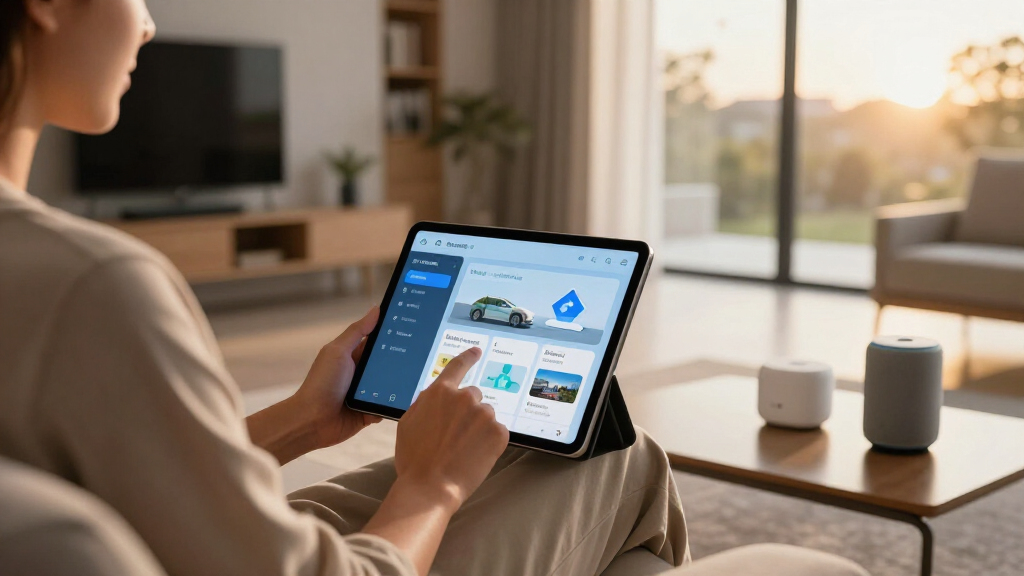

Smart home learning devices can automate comfort, lighting, and everyday routines, but the right choice depends on what you want your home to learn. My best overall pick is the Google Nest Learning Thermostat with a temperature sensor, which pairs adaptive temperature control with room-level input. The Echo Hub starter kit is a stronger fit for people building a broader smart-home setup, while the Linkind Matter plugs offer a simpler way to automate existing lamps and small appliances. The main tradeoff is between a device that learns household patterns, a hub that brings controls together, and accessories that add targeted automation. Read on for how these options compare and which one fits your home.

Get home appliances delivered free with Prime
- Fast, free delivery on millions of items
- Prime Video, Amazon Music and more included
- Member-only deals all year
Complete the kit



Key Takeaways
- The Nest thermostat is the clearest learning-focused choice: its temperature sensor adds room-level context that a plug or speaker does not provide.
- Color does not change the core Nest decision: the Silver, Obsidian, and Polished Gold listings represent finish variations, so choose by appearance and verify the included sensor and compatibility details.
- The Echo Hub starter kit offers the broadest starting point: it combines a central control interface with a plug and bulbs, but buyers should check device compatibility before building around it.
- Linkind plugs are the practical entry for existing devices: their Matter support and four-pack format suit basic outlet automation, though they do not learn routines in the same way as a thermostat.
- Echo Dot Max color variants are not separate capability tiers: compare the Graphite and Glacier White listings by finish and confirm the exact model details rather than paying more for a color alone.
| Google Nest Learning Thermostat (4th Gen) with Nest Temperature Sensor (2nd Gen), Silver |  | Best Overall for Room-by-Room Comfort | System compatibility: Most 24V systems, including gas, electric, oil, forced air, heat pump, and radiant | Connectivity: Wi-Fi | Display: 3.5-inch touchscreen | VIEW LATEST PRICE | See Our Full Breakdown |
| Google Nest Learning Thermostat (4th Gen) with Nest Temperature Sensor (2nd Gen), Obsidian |  | Best for Alexa and Google Home Households | System voltage: 24 volts | System use: Heating and cooling | Connectivity: Wi-Fi | VIEW LATEST PRICE | See Our Full Breakdown |
| Google Nest Learning Thermostat (4th Gen, 2024) with Nest Temperature Sensor, Polished Gold |  | Best for a Coordinated Premium Finish | Generation: 4th Gen (2024) | System compatibility: Most 24V heating and cooling systems | Display: Graphical LCD, IPS | VIEW LATEST PRICE | See Our Full Breakdown |
| Smart Home Starter Kit with Echo Hub, Amazon Smart Plug, and 4 Amazon Basics Smart Bulbs |  | Best for First-Time Smart Home Learners | Included hub: Echo Hub | Included plug: Amazon Smart Plug | Included bulbs: Four Amazon Basics Smart Bulbs | VIEW LATEST PRICE | See Our Full Breakdown |
| Amazon Echo Dot Max (newest model), Alexa speaker with room-filling sound and deep bass, Graphite |  | Best for Learning Through Voice and Audio | Sound: Room-filling sound with nearly three times the bass of the previous model | Smart home hub: Built in | Technology: Omnisense | VIEW LATEST PRICE | See Our Full Breakdown |
| Linkind Matter Smart Plug 4 Pack with Night Light, Timer, Dusk to Dawn, 2.4G WiFi, Compatible with Apple Home, Alexa, Google Home |  | Best for Learning Everyday Automation | Number of outlets: 4 | Power capacity: 15A/1800W | Wi-Fi: 2.4GHz | VIEW LATEST PRICE | See Our Full Breakdown |
| Amazon Echo Dot Max (newest model), Alexa speaker with room-filling sound and nearly 3x bass, Glacier White |  | Best for Alexa-Based Smart Home Learning | Sound: Room-filling audio with nearly 3x bass | Smart home hub: Built-in | Technology: Omnisense, eero Built-in | VIEW LATEST PRICE | See Our Full Breakdown |
| smart home learning device | Control |
|---|---|
| Google Nest Learning Thermosta | App and button |
| Google Nest Learning Thermosta | App, buttons, and voice |
| Google Nest Learning Thermosta | App and buttons |
| Smart Home Starter Kit with Ec | Remote control and Alexa voice control |
| Amazon Echo Dot Max | — |
| Linkind Matter Smart Plug 4 Pa | App, voice, and remote |
| Amazon Echo Dot Max | — |
More Details on Our Top Picks
Google Nest Learning Thermostat (4th Gen) with Nest Temperature Sensor (2nd Gen), Silver
I rank the silver Nest first for households that want a thermostat to learn everyday routines while giving them a way to address uneven temperatures between rooms. Its included second-generation temperature sensor adds a practical layer the Echo Hub starter kit does not: it helps manage comfort where the sensor is placed, rather than just grouping smart devices for routines. The thermostat also supports app and voice control and works with many common 24V systems, making it a more focused choice for climate control than the Echo Dot Max, which puts more emphasis on audio and broader smart-home functions.
The tradeoff is that system compatibility still needs checking before installation, and some homes may need a C wire despite the usual no-C-wire setup. I’d choose this silver version for adaptable comfort, not as a complete home automation hub.
Pros:- Learns temperature preferences and adjusts scheduling around routines
- Includes a temperature sensor for managing comfort in another room
- Supports app and compatible voice-assistant control
- Works with many common 24V heating and cooling systems
Cons:- Some installations may require a C wire
- Heating and cooling system compatibility must be checked before purchase
Best for: Households with several rooms that have different comfort needs and a compatible 24V heating or cooling system.
Not ideal for: Renters or homeowners who cannot verify thermostat wiring and system compatibility before installation, or shoppers seeking a general-purpose smart home hub.
- System compatibility:Most 24V systems, including gas, electric, oil, forced air, heat pump, and radiant
- Connectivity:Wi-Fi
- Display:3.5-inch touchscreen
- Control:App and button
- Included sensor:Nest Temperature Sensor (2nd Gen)
- C wire:Not required in most homes
- Smart home compatibility:Amazon Alexa, Google Assistant, Apple HomeKit, and Matter
- Finish:Polished silver
Our verdict“Choose the silver Nest if learning schedules and room-specific temperature management matter more than the broader device control offered by an Echo hub.”
Google Nest Learning Thermostat (4th Gen) with Nest Temperature Sensor (2nd Gen), Obsidian
The Obsidian Nest suits buyers who want a learning thermostat with flexible control options: its listed compatibility spans Alexa, Google Assistant, and Apple HomeKit, and it includes a room sensor for addressing comfort beyond the wall-mounted thermostat. It shares the silver model’s core learning and climate-control approach, so I’d pick between them by finish and the specific setup details rather than expecting a different level of temperature learning. Compared with the Echo Dot Max, this is the more direct choice for managing heating and cooling; the Echo adds audio and smart-home hub functions instead.
That specialization is also its limit. The Nest does not replace a broader device hub, and some features depend on the Google Home app. Wiring needs vary by home, so the no-C-wire-in-most-homes claim is not a guarantee for every installation.
Pros:- Learns temperature preferences and changing routines
- Includes a second-generation temperature sensor
- Offers app, voice, and button control
- Supports heating and cooling on many 24V systems
Cons:- C-wire needs depend on the home and installation
- Some smart features require the Google Home app
Best for: Smart-home households already using Alexa or Google Assistant that want a learning thermostat and a sensor for room-to-room comfort.
Not ideal for: Buyers who need one device to serve as an entertainment speaker and general smart-home hub, or who cannot check their system’s wiring and compatibility.
- System voltage:24 volts
- System use:Heating and cooling
- Connectivity:Wi-Fi
- Control:App, buttons, and voice
- Included accessory:Nest Temperature Sensor (2nd Gen)
- Power:Battery powered; one CR2 battery included
- Smart home compatibility:Amazon Alexa, Google Assistant, and Apple HomeKit
- Finish and material:Polished Obsidian; aluminum
Our verdict“Pick the Obsidian Nest for learning-based climate control across supported ecosystems, but choose an Echo device if audio and general hub functions matter more.”
Google Nest Learning Thermostat (4th Gen, 2024) with Nest Temperature Sensor, Polished Gold
The polished gold Nest earns a distinct place for buyers who want the same learning thermostat and included room sensor approach in a more decorative finish. Its stated strengths are familiar from the silver and Obsidian versions: it learns temperature routines, supports common 24V systems, and connects with Google Home, Alexa, and Apple HomeKit. That makes the finish—not a clearly stated difference in learning capability—the reason to choose it over the other two Nest options. Compared with the Echo Hub starter kit, it offers a more specialized lesson in home automation: adapting heating and cooling rather than coordinating bulbs, plugs, and routines.
The gold finish will not suit every interior, and the system still needs a compatibility check. Some smart features use the Google Home app, so this is less appealing to buyers seeking app-independent operation or a full smart-home starter set.
Pros:- Learns temperature preferences and household routines
- Includes a second-generation Nest Temperature Sensor
- Works with most 24V heating and cooling systems
- Supports Google Home, Alexa, and Apple HomeKit
Cons:- The polished gold finish may not suit every room
- Compatibility depends on the home’s heating and cooling system
- Some smart features require the Google Home app
Best for: Homeowners who want a learning thermostat with a room sensor and prefer a polished gold finish that fits their decor.
Not ideal for: Buyers who want a neutral thermostat finish, a complete kit for controlling lights and plugs, or a device that works with any heating system.
- Generation:4th Gen (2024)
- System compatibility:Most 24V heating and cooling systems
- Display:Graphical LCD, IPS
- Control:App and buttons
- Included sensor:Nest Temperature Sensor (2nd Gen)
- Power:Battery powered; one CR2 battery included
- C wire:Not required in most homes
- Smart home compatibility:Google Home, Amazon Alexa, and Apple HomeKit
- Finish and material:Polished gold; aluminum
Our verdict“Choose the polished gold Nest when its finish suits your home and you want learning-based climate control with an included room sensor.”
Smart Home Starter Kit with Echo Hub, Amazon Smart Plug, and 4 Amazon Basics Smart Bulbs
This kit is the most hands-on starting point in the group for someone learning how connected home devices work. The Echo Hub, smart plug, and four bulbs give a new user several device types to connect, control remotely, and organize into Alexa routines. That makes it broader as a learning set than any Nest thermostat here, which concentrates on temperature schedules and room comfort. It also offers a clearer introduction to everyday automation than the Echo Dot Max, since the included plug and bulbs provide devices to control right away.
The tradeoff is ecosystem dependence: the kit is built around Alexa-compatible devices, so buyers invested in another platform should check compatibility before choosing it. The product data also gives limited detail about hub connectivity, making it harder to judge how it will fit more complex setups.
Pros:- Includes a hub, smart plug, and four smart bulbs
- Supports Alexa routines and voice control
- Provides several device types for learning basic automation
- Bulbs can be used for lighting and security routines
Cons:- Full functionality depends on Alexa-compatible devices
- Hub connectivity options are not specified in the product details
- Does not include a learning thermostat or room temperature sensor
Best for: People setting up their first Alexa-based smart home who want a hub, a plug, and multiple bulbs to practice routines and remote control.
Not ideal for: Households committed to another smart-home platform or buyers who need detailed connectivity specifications before selecting a hub.
- Included hub:Echo Hub
- Included plug:Amazon Smart Plug
- Included bulbs:Four Amazon Basics Smart Bulbs
- Compatibility:Alexa-compatible devices
- Automation:Smart routines
- Control:Remote control and Alexa voice control
- Lighting use:Security lighting and ambiance
Our verdict“Choose this kit to learn Alexa routines across lights and a plug; choose a Nest thermostat instead if your main goal is climate automation.”
Amazon Echo Dot Max (newest model), Alexa speaker with room-filling sound and deep bass, Graphite
The Echo Dot Max is the strongest fit here for someone who wants a voice-controlled entry point to smart home functions without giving up a substantial music speaker. Its built-in smart home hub and Omnisense technology add automation potential, while the Wi-Fi extender can help extend coverage for compatible devices. Compared with the Echo Hub starter kit, this model emphasizes audio and a single multifunction speaker rather than including separate bulbs and a plug for immediate experimentation. It also plays a different role from the Nest thermostats: it can anchor broader Alexa interactions, but it does not learn household temperature preferences.
The feature mix calls for compatible devices to reach its full potential, and its larger form may be awkward in tight spaces. Buyers focused on room-by-room heating and cooling should choose a Nest instead; this speaker is better suited to learning voice-led control and entertainment together.
Pros:- Room-filling sound with nearly three times the bass of the previous model
- Built-in smart home hub
- Wi-Fi extender coverage listed up to 1,000 square feet
- Microphone disable button and other privacy controls
Cons:- May be bulky for small spaces
- Full smart-home functionality depends on compatible devices
- Does not provide the learning temperature schedules or included room sensor found with the Nest thermostats
Best for: Alexa users who want a room-filling speaker that also provides a smart-home hub and Wi-Fi extension for compatible devices.
Not ideal for: People with limited shelf space, buyers who mainly want adaptive heating and cooling, or households without compatible smart-home devices.
- Sound:Room-filling sound with nearly three times the bass of the previous model
- Smart home hub:Built in
- Technology:Omnisense
- Wi-Fi extender:Coverage listed up to 1,000 sq. ft.
- Streaming compatibility:Amazon Music, Apple Music, Spotify, and SiriusXM
- Privacy controls:Microphones enable/disable button and multiple privacy controls
- Color:Graphite
Our verdict“Choose the Echo Dot Max if you want to learn voice-led Alexa control alongside music playback, not if climate learning is your main priority.”
Linkind Matter Smart Plug 4 Pack with Night Light, Timer, Dusk to Dawn, 2.4G WiFi, Compatible with Apple Home, Alexa, Google Home
I’d choose the Linkind Matter Smart Plug for learning how small automations can make a home more convenient. Its four outlets combine controllable power with an adjustable night light, while schedules and dusk-to-dawn sensing show how routines can respond to time and ambient light. Matter compatibility gives it broader platform reach than a plug tied to a single ecosystem, though full voice integration requires a Matter-certified hub. That setup requirement makes it less immediate than the Smart Home Starter Kit with Echo Hub, which includes its own hub and bulbs. The Linkind is a more focused way to experiment with connected outlets and lighting, but its 2.4GHz-only Wi-Fi and 30-lumen light limit flexibility: it won’t join a 5GHz network, and the glow may not be enough as a room’s main night light.
Pros:- Combines a smart outlet and adjustable night light in one space-saving device
- Matter compatibility works with major smart-home platforms
- Scheduling and dusk-to-dawn sensing support useful automation experiments
- Supports loads up to 15A/1800W
Cons:- Connects only to 2.4GHz Wi-Fi
- Full voice-platform integration requires a Matter-certified hub
- The 30-lumen night light may be too dim for very dark rooms
Best for: Smart-home beginners who want to learn schedules and light-based automation using compatible Apple, Alexa, or Google Home setups.
Not ideal for: People with only a 5GHz Wi-Fi network, or buyers who need bright room lighting or voice control without adding a Matter-certified hub.
- Number of outlets:4
- Power capacity:15A/1800W
- Wi-Fi:2.4GHz
- Compatibility:Apple Home, Alexa, Google Home
- Certification:ETL, FCC
- Night light:30 lumens; adjustable brightness
- Automation:Scheduling and dusk-to-dawn auto-sensing
- Control:App, voice, and remote
Our verdict“Choose the Linkind if you want a compact, multi-platform way to learn outlet and lighting routines and already have the hub needed for voice control.”
Amazon Echo Dot Max (newest model), Alexa speaker with room-filling sound and nearly 3x bass, Glacier White
The Echo Dot Max makes the most sense for someone who wants one central Alexa device for voice control, sound, and smart-home features. Its built-in smart home hub can reduce the need for separate hub hardware, while Omnisense adds support for personalized experiences and eero Built-in can extend compatible Wi-Fi coverage. Those extras give it a broader role than the Linkind Matter Smart Plug, which focuses on automating outlets and a night light rather than acting as a household control point. The Dot Max also suits a medium-sized space where its room-filling audio and stronger bass can serve music as well as commands. The tradeoff is size: it’s larger than a typical smart speaker, and hub and extender features depend on compatible devices and setup. If your learning goal is focused on hands-on outlet routines, the Linkind is the simpler, more targeted pick.
Pros:- Room-filling sound with nearly three times the bass
- Built-in smart home hub supports connected-device control
- eero Built-in can extend Wi-Fi coverage by up to 1,000 sq. ft.
- Omnisense supports personalized experiences
Cons:- Larger than typical smart speakers
- Hub and Wi-Fi extender benefits depend on compatible devices and setup
- Alexa-centered experience may not suit households built around other platforms
Best for: Alexa households looking to learn voice-led device control while adding a capable speaker and compatible smart-home hub to a medium-sized room.
Not ideal for: Buyers seeking a compact speaker, a platform-neutral control point, or full use of hub and Wi-Fi features without compatible devices.
- Sound:Room-filling audio with nearly 3x bass
- Smart home hub:Built-in
- Technology:Omnisense, eero Built-in
- Wi-Fi coverage:Up to 1,000 sq. ft.
- Color:Glacier White
- Music compatibility:Amazon Music, Apple Music, Spotify, SiriusXM
- TV compatibility:Fire TV
Our verdict“Pick the Echo Dot Max if you want an Alexa-centered learning hub that also fills a medium-sized room with music, rather than a compact, single-purpose automation device.”

How We Picked
I ranked these devices by how directly they help a household automate or learn from everyday behavior, then weighed ease of setup, usefulness beyond a single task, and the role each product can play in a larger system. A thermostat with a room sensor offers a more specific form of learning than a smart plug, while a hub kit can add broader control at the cost of more setup and compatibility checks.
The order also reflects how clearly each listing presents a distinct buyer benefit. The Nest finish variants and Echo Dot Max color variants share their respective core product identities, so they do not earn separate capability advantages merely for color. I treated the Linkind plugs as a value-oriented accessory choice and considered the starter kit for breadth, while noting that neither replaces a learning thermostat for adaptive temperature management.
| smart home learning device | Control |
|---|---|
| Google Nest Learning Thermosta | App and button |
| Google Nest Learning Thermosta | App, buttons, and voice |
| Google Nest Learning Thermosta | App and buttons |
| Smart Home Starter Kit with Ec | Remote control and Alexa voice control |
| Amazon Echo Dot Max | — |
| Linkind Matter Smart Plug 4 Pa | App, voice, and remote |
| Amazon Echo Dot Max | — |
Factors to Consider When Choosing Smart Home Learning Devices
Before choosing, decide what you want the device to learn or control: temperature patterns, voice commands, lighting schedules, or outlet use. A smart-home purchase can look capable on its own yet add little if it does not work with your existing devices or match the routines you actually want to automate.
Match the Device to the Job You Want Automated
Start with the task, not the word “smart.” A learning thermostat is aimed at recurring comfort patterns, while a hub coordinates compatible devices and a plug automates a device that already uses a standard outlet. A voice speaker can make hands-free control easier, but it is not a substitute for a thermostat or a hub when those are the real need. A common mistake is buying a speaker because it sounds versatile, then finding that the main problem was inconsistent heating or lighting. Write down one or two repeated tasks you want handled and choose the device that controls them directly.
Check Compatibility Before Building a System
Compatibility can shape a system more than a device’s feature list. Check the product’s supported platforms, wireless requirements, and any app or account dependencies against what your home already uses. Matter support can help devices work across compatible ecosystems, but it does not mean every feature will behave identically in every app. Some accessories may need a suitable hub or network setup for the controls you expect. Avoid assuming that a product works with your setup simply because it mentions a familiar assistant; confirm the exact device and feature support before buying.
Think About What “Learning” Means in Practice
Learning can mean adapting temperature schedules, responding to room conditions, or making routines easier to trigger; these are different capabilities. Ask what information the device uses and whether you can review or adjust its automation. If you prefer predictable control, a fixed schedule or timer may be more useful than behavior-based automation. If your household’s routines change often, a device that can adapt may reduce repeated manual adjustments, but it may also need time and accurate settings to become useful. Choose the kind of automation you will trust enough to leave active.
Plan for Sensors, Placement, and Coverage
Where a device sits can affect how well it serves the household. A thermostat may read the temperature near its installation point, while a separate sensor can provide information from another room; that distinction matters in homes with uneven heating or rooms used at different times. Plugs need accessible outlets and should be used only with devices suited to their electrical limits and intended operation. Speakers and control panels work best where people can reach or hear them without creating clutter. Map the rooms and devices you want to include before deciding how many accessories or sensors you need.
Weigh Setup Effort Against Long-Term Use
A kit with several components can cover more needs at once, but it also means more pairing, naming, and troubleshooting. A single plug is easier to start with, though it may leave you with separate apps or controls if you later add devices from other brands. Check whether household members can use the controls comfortably and whether schedules are easy to edit after setup. For shared homes, simple manual controls can matter as much as automation. Pay for a broader system when you expect to use its central controls, not just because it bundles more hardware.
Compare Function, Not Finish Names
When listings show the same model in different colors, treat finish as a style decision unless the included hardware or model details differ. This roundup includes multiple Nest finishes and two Echo Dot Max colors, so check the exact package contents rather than assuming each listing adds a new capability. For the Nest options, confirm whether the temperature sensor is included and which generation is specified. For speakers, compare the model name and stated features before choosing a finish. This avoids paying attention to duplicate listings when your real decision is between product types.
Frequently Asked Questions
Should I choose a learning thermostat or a smart-home hub first?
Choose the thermostat first if temperature routines are your main frustration and your heating system is compatible. A hub makes more sense when you already own several compatible devices and want a shared control point. These solve different problems, so buying a hub will not add adaptive temperature control by itself. If you are still forming a system, list the devices you own and check their platform support before choosing the hub. Start with the device tied to the routine you most want to improve.
Are the three Nest thermostat listings meaningfully different?
The listed options share the Google Nest Learning Thermostat 4th Gen and a Nest Temperature Sensor, with finish names distinguishing Silver, Obsidian, and Polished Gold. The listings do not describe a different learning function by color alone. Verify the included sensor generation, package contents, and compatibility details on the exact listing before ordering. Pick the finish that suits the room or existing hardware. If a listing has different included accessories, that package difference matters more than the color.
Can the Linkind Matter plugs make a home learn my routines?
The plugs are suited to scheduled or app-triggered control of compatible outlet-powered devices, rather than adaptive learning like a thermostat. Their timers and dusk-to-dawn feature can support recurring patterns without requiring you to change the device being plugged in. Matter support may help connect them to compatible platforms, but available controls can vary by ecosystem. Check that the appliance is appropriate for smart-plug use and that its behavior after power is restored suits your needs. Choose these for straightforward outlet automation, not for a system that infers household habits.
Is the Echo Hub starter kit a better first purchase than a speaker?
The starter kit is the stronger starting point if you want a control screen plus bulbs and a plug in one package. An Echo Dot Max is a speaker-led choice, better suited to voice interaction and audio than to serving as a dedicated visual control panel. Before choosing the kit, confirm that its included devices and any planned additions work with your preferred smart-home setup. A screen can help household members see and operate controls, but it also takes space and setup time. If you mainly want voice control or music, the speaker may fit better.
Do the Graphite and Glacier White Echo Dot Max listings have different capabilities?
The provided names identify the same Echo Dot Max model in different finishes, and the descriptions do not establish a capability difference between the two colors. Compare the exact product details and included features on each listing rather than treating color as a performance tier. Choose based on how the speaker will fit your room. If the listing wording differs, confirm the model and generation before making a decision. The color should be the deciding factor only after the model details match your needs.
Conclusion
Best overall: I’d choose the Google Nest Learning Thermostat with a temperature sensor for households focused on adaptive comfort. Best value: the Linkind Matter Smart Plug 4 Pack suits buyers who want to automate existing lamps or small appliances without replacing them. Best premium, broad-control option: the Echo Hub starter kit is the better fit for a home ready to coordinate bulbs and plugs through a central screen. Best for beginners: start with the Linkind plugs for a contained automation project, or the Echo Hub kit if you want several starter devices together and are comfortable with setup. Best for specific needs: choose an Echo Dot Max for voice control and room-filling audio, or pick among the Nest finishes based on your room’s style; the listed color variations do not, by themselves, signal different capabilities.
NFL season / tailgating Picks
team gear
As an affiliate, we earn on qualifying purchases.